Don't worry about the people in your past; There's a reason they didn't make it to your future.
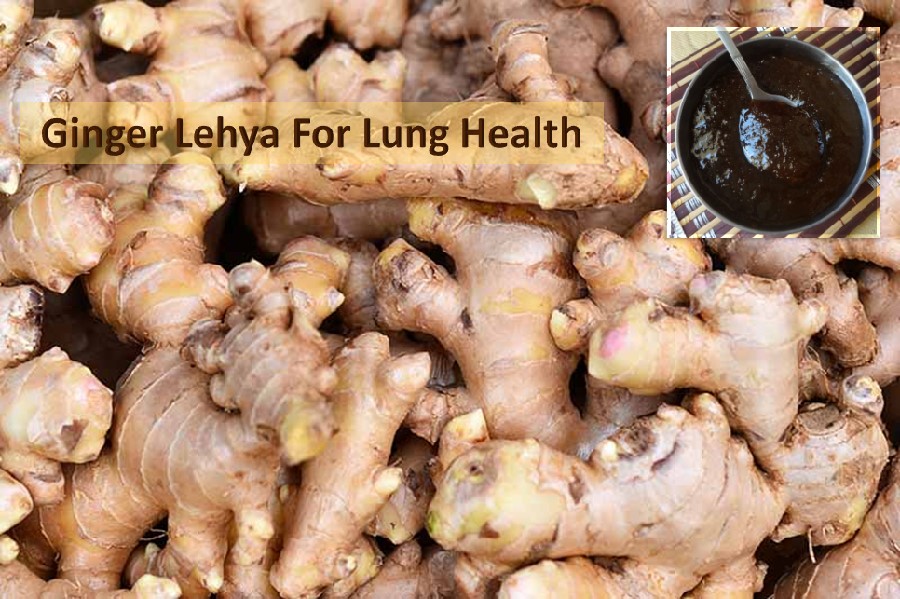
Ginger lehya for lung health
Generally, ginger lehya is prepared during cold days – rainy and winter season (commonly known as Diwali medicine). Ginger helps to keep body warm and reduces infections. Ginger lehya is prepared during October- November months to help body to protect from flu season. It also prevents breathing issues by reducing inflammation.
Methods:
Cut ginger – 1 cup
Cumin powder – 1 Tbsp
Coriander powder – 1.5 Tbsp
Powdered jaggery – 1 cup
Cardamom powder – 1 tsp
Clarified butter (ghee) – 2 tsp
Preparation:
Grind ginger, cumin and coriander powder with
very little water into a paste.
Place a vessel on medium heat, add ¼ water.
Dissolve jaggery.
Dissolve ghee on medium heat, add ginger paste
and mix well.
Add dissolved jaggery, cardamom powder to ginger
paste and continue mixing.
After few minutes, ghee will start separating
from the mix. Turn off the heat and allow mix to cool.
Transfer lehya into an airtight container. Take
one tsp of this lehya when you need it.
Benefits of ginger lehya:
Ginger lehya prevents infections and helps in breathing problems. Consuming half to one tsp of ginger lehyam during cold days helps to protect body from cold. It reduces inflammation and body pain related to fever. Dosage: 1 tsp daily. Consuming more ginger lehya can cause irritation
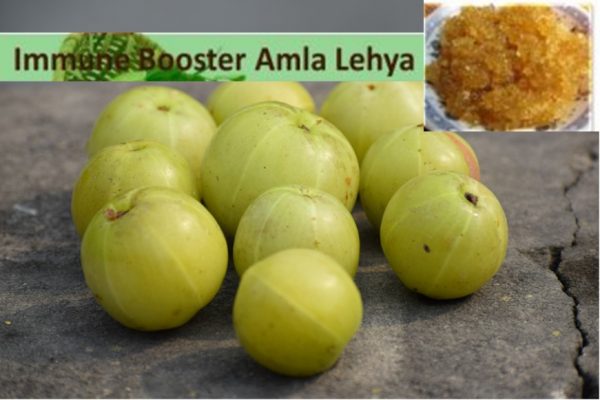
Amla is rich in Vitamin C and tastes both sour and bitter.
But the benefits that we get from eating amla is plenty. You can use amla in
kitchen as well as in home remedies to improve your health.
Ingredients:
Grated Amla – 4 to 5 cups
Powdered jaggery – 4 cups
Water – 2 cups
Black pepper – 1 tsp
Preparation:
Wash amla and remove seeds. Grate amla or cut
into very small pieces.
Transfer grated amla to a vessel, add water and
cook on medium heat. Let amla cook.
Meanwhile, dissolve jaggery in half cup water on
medium heat. Strain jaggery water.
Add dissolved jaggery into cooked amla. On
medium heat continue mixing, add pepper powder. Mix till the amla and jaggery
mixes well.
Cool amla lehya and transfer to an airtight
bottle
Benefits of amla lehya:
Indian gooseberry is rich in Vitamin C. Consuming this lehya helps in various conditions.
Lehya is a traditional herbal
preparation, herbal jam form of herbal elixirs. Lehya, leha or lehyam used for
curing or preparing body to fight different conditions. Various fresh or dry
herbs, herbal parts like leaves, root, stem, seed or sometimes the entire plant
is used for preparing lehya.
Lehya preparation helps to keep the herbal medicine longtime. Generally, all lehya requires use of clarified butter or ghee, honey, jaggery, water, pepper, cumin, coriander, cardamom powder etc. These sub- ingredients help to keep the main active principles intact in the main herb. If honey is not available, one can use jaggery as a substitute for honey. In Ayurvedic formula of lehya, different forms of minerals are used. If one prepares lehya at home for common conditions minerals and metals are not used. Lehya preparation requires heating and cooking contents and it provides longer shelf-life period and lehya does not spoil easily.
Lehya types that we explain in
next few slides are simple, everyday home remedy recipes for different
conditions and to get overall health benefits. Advantage of taking lehya:
Contains other volatile healthy ingredients helps to digest easily
Presence of ghee (clarified butter) in most lehya makes it more palatable and richer in nutrients
Lehya tastes better than bitter medicines
Lehya are good for those who are recovering from severe conditions such as chronic bronchitis, low immune system, low blood count, chronic fever etc.
Lehyas are good digestive care remedies
Dosage of all lehyam given in slides :1 to 2 tsp daily or alternate days.
Disclaimer: If you are allergic, pregnant or have conditions then contact your doctor before consuming any such herbal lehya preparations. Do not take your medications and herbal lehya together.
More Teenage Girls Are Feeling Hopeless And Sad – CDC Report
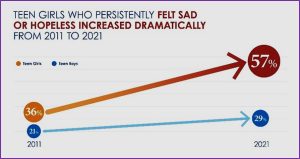
Recently CDC reported that teenage girls in United states are experiencing higher levels of sadness, acts of violence. The report published earlier this month with analysis and survey by Youth Risk Behavior Survey reveals that nearly 3 in 5 girls persistently feel sad or hopeless and this is up from 36 % (in year 2011)and has reached highest level to 57%. According to Dr. Debra Houry CDC’s CM officer America’s teen girls are engulfed in a growing wave of sadness, violence and trauma. One of the reason for this is, these girls are experiencing an increase in mental health issues, violence, sexual abuse and with this there is also an increase of suicide risk.
Is this report holds good only for US or to the world? Girls are more vulnerable and are subject to abuses in various ways in different part of the world. No doubt girls are getting more educated, meanwhile the violence and sexual abuse has been increasing with girls. Why there is an increase in sadness and hopelessness in teenage girls? In interviews with teenage girls, many girls revealed that they had been forced to have sex, there is sexual violence and LGBQ students are facing mental health challenges due to violence. A constant exposure to such environment is driving teenage girls towards suicidal thoughts. LGBTQ students and students who have same sex partners were more likely to seriously consider suicide attempt at 45% to 58% respectively – as per the report. It is important for other countries also (if not already) to take this matter seriously in their respective countries to stop violence and abuse that makes children hopeless and sad – Healthy Life
Read full report from CDC below:
While all teens reported increasing mental health challenges, experiences of violence, and suicidal thoughts and behaviors, girls fared worse than boys across nearly all measures. The new report also confirms ongoing and extreme distress among teens who identify as lesbian, gay, bisexual, or questioning (LGBQ+).
“High school should be a time for trailblazing, not trauma. These data show our kids need far more support to cope, hope, and thrive,” Debra Houry, M.D., M.P.H., CDC’s Chief Medical Officer and Deputy Director for Program and Science. “Proven school prevention programs can offer teens a vital lifeline in these growing waves of trauma.”
The analysis includes 2021 data and trends from the Youth Risk Behavior Survey (YRBS), which examines health behaviors and experiences among U.S. high school students. Youth mental health has continued to worsen—with particularly stark increases in widespread reports of harmful experiences among teen girls:
Nearly 1 in 3 (30%) seriously considered attempting suicide—up nearly 60% from a decade ago.
1 in 5 (18%) experienced sexual violence in the past year—up 20% since 2017, when CDC started monitoring this measure.
More than 1 in 10 (14%) had ever been forced to have sex—up 27% since 2019 and the first increase since CDC began monitoring this measure.
Sadness in teenage girls
The report also found more than half (52%) of LGBQ+ students had recently experienced poor mental health and, concerningly, that more than 1 in 5 (22%) attempted suicide in the past year. Trend data are not available for students who identify as LGBQ+ due to changes in survey methods.
Findings by race and ethnicity also show high and worsening levels of persistent sadness or hopelessness across all racial and ethnic groups; and that reported suicide attempts increased among Black youth and White youth.
“Young people are experiencing a level of distress that calls on us to act with urgency and compassion,” said CDC Division of Adolescent and School Health Director Kathleen Ethier, Ph.D. “With the right programs and services in place, schools have the unique ability to help our youth flourish.”
School-based activities can make a profound difference in the lives of teens with a relatively small infusion of support to schools. More than 95% of U.S. youth spend much of their daily lives in school. While their primary goal is academic learning, schools can take evidence-based steps to foster the knowledge, skills and support needed to help prevent and reduce thenegative impact of violenceand other trauma and improve mental health. For example, safe and trusted adults—like mentors, trained teachers, and staff—can help foster school connectedness, so that teens know the people around them care about them, their well-being, and their success. Schools can provide education that equips teens with essential skills, such as understanding and ensuring true sexual consent, managing emotions, and asking for what they need. Schools can also connect teens to their classmates and communities through school-based clubs and community outreach.
CDC has collected and analyzed data on youth health and well-being for more than three decades. These data are a critical first step to revealing, understanding, and addressing emerging threats to the health and well-being of the nation’s youth.
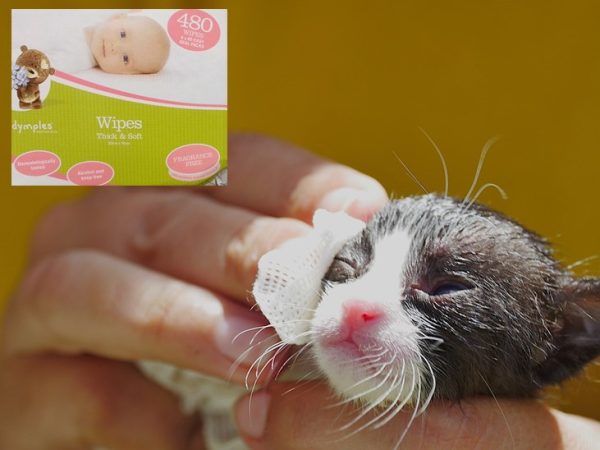
Baby wipes are pre moistened wipes designed to clean as well as soothe baby’s soft skin during diaper changes. Baby wipes are much safer to use as the formula is designed to protect baby’s soft skin. If you have extra baby wipes or if you are not a fan of regular adult wipes, then use baby wipes various purposes including for personal care.
What is in baby wipes? Baby wipes are made of materials like cotton, cellulose, bamboo fibers, viscose, polyester blend. Moistened with a combination of water, baby oil, cleanser, and preservative. These are generally simpler formulations. Using baby wipes for different purposes can be advantageous as it is good for adult skin too.
For personal care:
For oily face: Wipe face using baby wipes to give fresh look.
For hair dye stains: After applying hair dye, it could drip on your face and neck. Use gentle baby wipes to remove those stains.
Make up removal: Baby wipe is a friendly, effective, and inexpensive make up remover.
To keep hair tidy: Instead of using hairspray or if you run out of hairspray, just run baby wipe all over on your hair. It keeps hair tidy for longtime.
For cooling effect: When you step inside home after a long day, you need something cool on your face. Use refrigerated wipes to wipe face for dual effect – it acts as coolant as well as wipes dirt.
For regular cleaning purposes:
Clean countertop and surfaces: During deep cleaning use baby wipes on your regular or marble countertop and other kitchen surfaces including appliances fridge, microwave, blender, food processor coffee machine etc.
For floor cleaning: Stick baby wipe to mop and use it clean all types of floors. Avoid cleaning hardwood flooring with any type of harsh chemicals.
For bathroom: You can use baby wipes to clean sink, toilet seat, faucets, doorknob etc. clean both dryer and washing machines surfaces and remove dust from the surfaces.
Wipe trash can: Wipe down food stains and liquid spills inside trash cans and smaller recycle bins.
Remove grease and pans: Before loading pans and pots in dishwasher, wipe grease from these utensils with baby wipes.
Cleaning furniture: Wipe dust from furniture surfaces
Remove stains: Stains on surfaces as well as on carpet can be removed using baby wipes.
Other uses of baby wipes:
House plant surface: If indoor plants are accumulating dust on leaves, use baby wipes and remove dust. Plants not only look fresh, also grow well.
Clean light switch surface area: Many times, around light switches we tend to leave our finger marks. Remove it using baby wipes.
Cleaning photo frame: Baby wipes are great to clean glass surfaces.
Remove crayon and pencil marks: children love to draw on walls. Use baby wipes to remove those lines and artwork on the wall. Baby wipes are great for removing these types of stains.
Clean toys: Wipe baby’s toys using these wipes instead of using harsh cleaners.
For cleaning screens: Phone, TV, lens, and your computer screens need to be cleaned once a while. Use baby wipes to remove dust and marks from screen.
For remote control and mouses: these objects also need to be cleaned often. Use baby wipes for cleaning mouse, desk surface, remote controls.
During travel: Carry baby wipes during travel. These comes handy when you must use public bathroom, to clean seat, food tray, handles etc.
At office: To clean office desk, chair and dirt keep baby wipes near your desk.
To remove glue and chewing gum: Sticky glues and stuck chewing gum can be removed from surfaces with these wipes.
For your vehicles: To remove stains, dust, marks, old coffee/tea spill marks, dust from seats, bird dropping, to wipe steering wheel, dashboard, mirrors.
Use at gym: Your gym may provide surface cleaner. Sometimes these cleaners can contain ammonia. For cleaning yoga mat, gym equipment’s handle, seat, surfaces – put baby wipes in your gym bag and use it before and after use.
Clean shoes surface: Wipe your shoe surface including leather shoes with these gentle and soft wipes.
Three coiled serpent around the neck: What it symbolizes?
Achieving independency from ego, time and death. The three coils of the snake symbolize the past, present and future – time in cycles. The snake named Vasuki naga is a deadly cobra. The Lord wearing the deadly snake like an ornament signifies that He is independent of time and death. The snake looking in the right direction of Shiva signifies that the Lord’s perpetual laws of reason and justice preserve natural order in the universe. Shiva’s center is supposed to be vishuddhi and he is Vishakantha -as he filters all the poison. He does not allow it to enter his system. Poisons are not necessarily that which you may consume through food. Poisons can enter you in so many ways: a wrong thought, a wrong emotion, a wrong idea, a wrong energy or a wrong impulse can poison your life. If your vishuddhi is active, it filters everything.
The Bull: What it symbolizes?Eternal companion and power of wisdom. The bull who is meditating in front of Shiva is a constant follower of Shiva and a great devotee of Lord Shiva. The bull is a symbol both of power and ignorance which suggests that Lord Shiva removes ignorance of his devotees and gives them the power of wisdom. The Nandi bull beside Lord Shiva indicates that He is the eternal companion of righteousness. Lord Shiva′s use of the bull (Vrisha – righteousness) as his vehicle expresses the idea Lord Shiva takes us to path that leads to wisdom and knowledge.
Ganga: What it symbolizes:End of ignorance and the dawn of knowledge and peace.
The river Ganga is the most sacred river for Hindus. Ignorance should not be an excuse to achieve good things in life. Ignorance can damage both mind and body. Ganga represents knowledge and wisdom and, purity of heart. It also indicates that Shiva is not only the Lord of destruction but also the bestower of knowledge, purity and peace on the devotees.
Kamandalam: What it symbolizes:Removal of all the evil from the body
Get rid of bad thoughts this is what Kamandala- the pot in Shiva’s hand tells us. Kamandala is carried by yogis. Shiva is Guru of Yogis. Kamandala is made of ripe pumpkin and has amrit in it. Similar to ripe pumpkin and nectar, an individual too must give up his attachment to the physical world and clean his inner self of egoistic desires to experience the bliss of the self, symbolized by the nectar in the Kamandalu.
Anger and anxiety can destroy life. Anger can lead to confusion, improper decision and rage. It also can lead to emotional imbalance, health issues – acidity asthma, fatigue, indigestion and other damages. Lord Shiva’s blue throats indicates that we should not be a slave of anger and should not swallow anger that can cause harm to our mind and body.
Dhamru: What it symbolizes:Ridding your body of all desire and gaining will power
The musical instrument indicates the removal of all types of desire and evil from the body— making body clean and disease free. When shaken it produces sound “nada” which is cosmic sound of OM. OM is the universal sound or sound of creation that helps in deep meditation to clear the mind from desire and to gain the will power. The music produced by dhamaru indicates the removal of all desire and evil from the body— making the body clean and disease free.