All posts by Sumana Rao

Don't worry about the people in your past; There's a reason they didn't make it to your future.
Yoga for Diabetes Patients

Yoga for Diabetes Patients

Yoga is science of spirituality and health both. Practicing yoga reduces stress and anxiety and improves health. For those who are suffering from diabetes yoga practice helps in improving the health condition. How yoga promotes health by controlling blood sugar level? Answer is, yoga helps in relaxation and is particularly good for stress reduction. High levels of the stress hormone cortisol can raise blood sugar levels. This  can lead to more diabetes complications. Yoga can bring back the cortisol level to normal.  Yoga helps us center ourselves, and centering calms us and can help keep blood sugar levels balanced. In the Journal of Diabetic research it is explained that yoga helps to improve blood sugar control, cholesterol profiles, and weight. Studies conducted also showed to lower blood pressure, enhance lung function, mood, sleep, and quality of life.

For diabetic patients yoga not only reduces the stress, it also helps in rejuvenating the organ systems that are responsible for blood sugar elevation.

The four yoga poses that are recommended for diabetes conditions are explained.

 1 . Halasana (Plow pose)

How it improves health? It stimulates the pancreas, spleen and activates immune system by massaging all the internal organs including pancreas. It also rejuvenates the mind.

How to get into the pose?

  1. Lie on your back with your arms beside you, palms downwards.
  2. As you inhale, use your abdominal muscles to lift your feet off the floor, raising your legs vertically at a 90-degree angle. Continue to breathe normally and supporting your hips and back with your hands, lift them off the ground.
  3. Allow your legs to sweep in a 180-degree angle over your head till your toes touch the floor.
  4. Your back should be perpendicular to the floor. This may be difficult initially, but make an attempt for a few seconds.
  5. Hold this pose and let your body relax more and more with each steady breath. After about a minute (a few seconds for beginners) of resting in this pose, you may gently bring your legs down on exhalation. Avoid jerking your body, while bringing the legs down.

Precautions: Avoid this pose if you are already suffering from spinal disorders, neck injury, if you are menstruating, pregnant and high blood pressure.

  1. Dhanurasana (Bow pose

How it is beneficial? Improves digestion and appetite. Improves the functioning of pancreas, liver, enzyme producing organs ,kidney and intestines. It also helps in rejuvenating reproductive organs.

How to get into the pose?

  1. Lie down on the abdomen .
  2. Fold your both knees and hold the legs just above the ankles by both the hands.
  3. Breathing in, lift your chest off the ground and pull your legs up and back – Look straight ahead .In this position your whole weight will come on your abdomen
  4. Hold this position for few seconds and continue taking a deep breath. Exhale slowly and come back to starting position.

Precaution: If you are suffering from high blood pressure, back pain, hernia, headache, migraine or abdomen surgery  avoid this pose.

  1. Pavanamukthasana (Wind Relieving Pose)

Benefits: This is an effective exercise to cure constipation and digestive disorders.  It cures indigestion and promotes digestive function. It releases strain on abdominal organs and strengthens abdomen, releases gas from the system and aids in digestion.

How to get into pose?

  1. Lie flat on your back and keep the legs straight and breath deeply.
  2. Inhale slowly and lift the legs and bend in the knee. Bring upwards to the chest till your thigh touches to stomach.
  3. Hug your knees in place and lock your fingers.
  4. Try to touch the knee with your nose tip. Hold this position for few seconds.
  5. Now exhale slowly and come back to the initial position.

Precaution: Avoid this asana in high blood pressure, slip disc, and pregnancy.

  1. Ardha matsyendrasana ( Half spinal twist)

Benefits: This pose is a boon for diabetic patients. This pose helps in secrete more insulin as it stimulates pancreas. It also opens the chest and increases the oxygen supply to the lungs.

How to get into the pose?

  1. Sit on the ground with spreading your legs in front of you.
  2. Bend your left leg so that the left foot comes close to your hips while the right foot is placed outside the left knee.
  3. Place the left arm over the right knee and grasp the toes of the right foot with the left hand.
  4. Now, put your right arm behind back around the waist in order to touch the navel from behind.
  5. Try to look behind by turning your head towards right side.
  6. The same thing should be repeated from the other side
  7. Hold and continue with gentle long breaths in and out.
  8. Breathing out, release the right hand first (the hand behind you), release the waist, then chest, lastly the neck and sit up relaxed yet straight. Repeat to the other side.
  9. At the end, breathing out, come back to the initial stage and relax.

Precautions: Avoid this asana in spinal injuries and back pain. Twist your spine as per your flexibility

Image credit: Photo by Cliff Booth from Pexels (Free for commercial use)


Author: Sumana Rao | Posted on: December 8, 2022
« »
« »

Recommended for you

Instand oats idli recipe

Oats Idli Recipe A Healthy And Quick Breakfast

We all know oats serves good amount of fiber and helps to meet daily fiber amount intake. Oats being a perfect breakfast item, can be made into idli which not only tastes delicious also can be prepared in half an hour time.

It is a diabetic and vegan friendly recipe.

Ingredients:

  1. Oats – 2 cups
  2. Yogurt – 2 cups
  3. Salt – as per taste
  4. Chana dal – 1 tsp
  5. Urad dal – 1  tsp
  6. Mustard – 1 tsp
  7. Ginger – grated ½ tsp
  8. Cilantro – chopped ¼ cup
  9. Carrot – grated ¼ cup
  10. Green chili – 1, finely cut
  11. Oil – 1 Tbsp

Preparation:

  1. On medium heat dry roast oats to golden brown and allow it to cool.
  2. Once it completely cools down, prepare coarse powder of dry roasted oats.
  3. Prepare seasoning by placing frying pan on medium heat. Add oil. To heated oil add mustard seed followed by urad and chana dal, green chili, grated ginger. Sauté the contents to light brown.
  4. Add yogurt to oats powder, add grated carrot, cilantro, salt and seasoning. Mix well. Batter should be similar to normal idli batter consistency – medium thick. Leave it for 5-10 mins.
  5. Apply little oil to idli maker and pour batter into mould. Place the idli stand in steamer.
  6. Steam cook for about ten minutes on medium flame.
  7. Remove hot idli into serving plates.
  8. Serve oats idli with coconut chutney and hot sambar. 

Image credit: Imagen de Daria Hurst en Pixabay  (cc by 0) 


Author: Sumana Rao | Posted on: December 7, 2022
« »
« »

Recommended for you

Smart phone habits to stop

Five Smartphone Habits You Should Stop Immediately

We all are dependent on mobile phones, smart phones so much that we mostly forgotten how to use landline! While smartphone is helping us to communicate on regular basis and connecting to the world there are many habits that we develop while using smart phone. If you have already developed these following habits then you should consider stopping them right away because of following reasons.

  1. Constantly checking phone: Whether you are eating, sleeping, reading, walking or dining outside with friends and families holding and looking at your smartphone does not do any good. Constantly looking at chat, messages, text alerts or playing games prevents you from interacting and focusing on the important tasks and attending to important matters in life. It may not seem so now, but if you analyze what you should be doing, how much attention you have given to your tasks, how much you have interacted with your family recently, how far behind you are in your studies – it will tell you what you are missing in your life and how much far behind you are in reaching your goals.
  2. Watching phone at bedtime: Scrolling on news, messages, especially being on social media before going to sleep will only increase your sleepless nights. Your mind will be thinking about “what message I would have received for my today’s post, my Instagram photos, how many likes I got, what response I received? Etc.” Having sleepless night increases chances of having high blood pressure, lathery, affects your circadian rhythm and harmful for your brain and eyes. Keep your phone away after your dinner or at least two hours before bedtime to get good quality of sleep to keep good health.
  3. Charging phone continuously: Charging phone all the time is not a good idea. It not only reduces smartphone life span also, if you have habit of charging phone overnight can be harmful as you may keep it below your pillow or next to your bed. Some people use cheaper version of power charger and it could overheat the phone resulting in damage of the battery and phone. It could be a hazard for you and your loved ones.
  4. Talking over phone: Apart from texting, some people will receive phone no matter where ever they are.  They even take phone to restroom and bathroom. Is it a good idea? Absolutely not. Apart from chances of your phone falling in toilet or sink and spoiling it, you can also lose important moments with loved ones who are right in front of you. There are instances while attending to a phone call, people forgetting to turn off the stove or to close the tap resulting in damage to the house. Keep a schedule to talk and tell the caller that you will call back or mute it. And don’t forget to turnoff Bluetooth when you are in public. Listening to your one-way conversion can be annoying to people next to you and it disturbs the peace.
  5. Taking selfies constantly: Whether in a meeting, function, going to college, dining out some people have a habit of taking selfie constantly. They also drag others for a group selfie whether they want to be in it or not. Ask before including others. If you are a traveler and visiting places and constantly taking selfie can annoy other tourists because you are blocking them. Sometimes taking selfie in places where they should not like standing on cliff, in front of water fall, bank of river, railway platform, roadside etc. can be dangerous. Be mindful and be alert when you take selfie.

Image credit: Imagen de Pexels en Pixabay (CC by 0)


Author: Sumana Rao | Posted on: December 5, 2022
« »
« »

Recommended for you

Measles outbreak

Measles Is contagious And Making a Come Back In the World

There are many cases of Measles reported in children in India recently. Measles can cause serious health issues in children especially of the age younger than five years. Sometimes parents think that measles is just fever with rash and recovery happens in few days. What they don’t know is, if unattended measles can cause serious complications in kids.

What is measles? Measles is an acute viral respiratory illness characterized by a prodrome of fever (as high as 105°F) and malaise and three C symptoms – cough, coryza, and conjunctivitis associated with skin rash. It is caused by a virus that lives in nose and throat.

According to health reports and CDC, one in five kids who get measles can be hospitalized because of complications. One out of 1000 people who get infected with measles could develop brain swelling and leading to brain damage and one out of three persons infected with this condition can die.

Measles is eliminated from many countries; however, it is still appearing in many parts of the world like in India it appeared recently. Unvaccinated international travelers can carry measles and spread in other countries. Those who are not vaccinated for measles are at high risk of contaminated and especially kids of younger age <5

What are symptoms of measles?

  • Cough
  • High fever
  • Running nose
  • Sore throat
  • Conjunctivitis with watery eyes
  • Rashes in the body.
  • Fever can be as high as 105F

It begins with moderate fever, dry cough, runny nose and inflamed red eyes. Rash appears as red spots and sometimes slightly raised on skin. Slowly rash spreads to entire body and breaks out in face first. It lasts about seven to ten days.

Is measles contagious?

Answer is Yes, it is contagious. It can spread through infected person by cough and sneeze. In fact, it is highly contagious. If the child is in the same room where a person with measles has been for just couple of hours, chances of kids getting measles infection is high. As per health experts, a person can spread measles even before the prominent symptoms like four days before rashes develop and four days after rashes appear in the body.

Which vaccine protects child?

Two doses of Measles-mumps-rubella vaccine -MMR vaccine provides long lasting protection to child from all strains of measles viral infection. Measles vaccine is not recommended for infants younger than 6 months.

  • The first dose at 12 month through 15 months
  • Second dose at age of 4 though 6 years.

For those families who are traveling internationally with infants and younger kids plan on getting vaccine well before your travel date.

  • If baby is 6 to 11 month old, baby should get first dose of MMR vaccine before the travel
  • If the baby is 12 month or older, then two doses of MMR vaccine before traveling separated by 28 days is needed to prevent the infection.
  • MMRV – Measles-mumps-rubella-varicella vaccine protects against four types of diseases also available for children 12 month and above.

Apart from India, following countries are reporting measles – Israel, Thailand, Vietnam, Japan, Philippines, Nepal and Middle eastern countries, Africa and Asia. Before planning on your travel, look for travel notice by visiting the country website.

Remember: Taking or giving vitamin supplements (like Vitamin A) is not preventing measles.

Call your pediatrician, your local health department, or locate hospitals or clinic near you to schedule an appointment for a MMR vaccine for your child or for yourself if you have not had MMR vaccine before.

Further reading please visit:

https://www.cdc.gov/

https://indianexpress.com/ (Measles outbreak in  Mumbai, Maharashtra) Image credit: Photos of Measles and People with Measles | CDC


Author: Sumana Rao | Posted on:
« »
« »

Recommended for you

Avoid these foods for IBS

Foods To Avoid If You Have Irritable Bowel Syndrome

Irritable bowel syndrome IBS makes it tough to enjoy holiday seasons. It can lead to stomach discomfort and feeling of bloated tummy, gas, irritational bowel and abdominal pain. If you have IBS then then these below mentioned foods can make the condition worse.  These foods trigger IBS by influencing gut.

By avoiding these food or foods prepared foods with these ingredients, you can enjoy your holiday feast.

Caffeine: In some people caffeine can increase IBS. It could lead to diarrhea and pain. Avoid – coffee, tea, coke, chocolate drinks. Drinking gut friendly herbal tea is best option.

Milk: Lactose in milk and other dairy products such as ice cream will cause bloating and gas. Lactose intolerance is related to IBS. Those who have lactose intolerance condition cannot digest lactose due to lack of lactase enzyme that breaks down sugar in dairy products. Without lactase, lactose will accumulate in colon causing bloating and gas. One exception amongst the dairy products that helps to relieve IBS symptom is curd or yogurt as it has gut friendly bacteria.

Greasy food: Holiday means time for fried or greasy food. Avoid French fries, food with heavy cream, red meat burgers, pizza and other unhealthy fatty foods must be avoided. These foods can increase gastrocolic reflex contractions leading to uneasiness.

Fructose containing food: Fructose is added in many processed foods. For example, fructose corn syrup. It is added to holiday snacks, sweets, pies. In addition to corn syrup, fructose which is a fruit sugar also present in high amount in commonly available fruits such as dried fruits, apple, peach, plums, apricots, nectarines and pear. Fructose has same effect as lactose and cause problem of bloating. Consider eating fruits like oranges, bananas to avoid the symptoms and suffering of IBS.

Vegetables to avoid: Some of the vegetables contribute for IBS are brussels sprouts, celery, cauliflower, broccoli, artichokes, asparagus, peas, mushroom, garlic, beetroot. Consume these vegetables in moderation. Other foods that are could lead to bowel are legumes, lentils and chickpeas.

Wheat and IBS: Wheat and those grains are good for health because of presence of good amount of fiber. However, people with celiac disease who can consume gluten protein must avoid wheat and grains containing gluten. When our immune system does not recognize gluten, it will attack our own cells in stomach causing sickness.

Artificial sweeteners: Sorbitol, xylitol are sugar substitutes present in diet foods. These sugars known to cause irritation and diarrhea. These artificial sugars are not tolerated by gut leading to bloating and gas. Avoid chewing gum, sugar free ice cream, sugar substitutes in drinks. In fact, chewing gum can lead to more gas accumulation.

Carbonated beverages: Apart from high sugar content, fizzy beverages like soda are carbonated with bubbles. Drinking soda will have same fizzy effect causing irritation in GI tract.  Drinking warm water or non-caffeinated herbal tea will reduce carbonated drink effect.

Best way to overcome IBS is to avoid or minimize consuming such foods. While holidays are busy take time to rest and relax. In addition to food sometimes stress can impact the gut. Get adequate sleep and consider eating foods that are gut friendly. In case if you develop irritation take prescribed medicines, keep warm pad on stomach. Sometimes drinking water containing dates -soaked in warm water helps to relieve the symptoms.

Image credit: Image by Jan Vašek from Pixabay  (CC by 0)


Author: Sumana Rao | Posted on: November 21, 2022
« »
« »

Recommended for you

Anger management with herbs

Reduce Anger With These Herbal Remedies

People get angry for various reasons. Frustration, neglect, feeling of insignificant, irritation, stress, finance matters, failed relationship, carrier problem and many other reasons can lead to stress and anger.   Some people constantly get angry for no reasons, and some get angry occasionally for different reasons. No matter what, anger can put us all in trouble.

Do you know a person who exhibits anger can reduce anger with help of herbs as well as by changing healthy diet? According to Ayurveda when a person suffers from aggravated pitta it has a negative effect on his or her behavior. Pitta balance is essential for a person to understand and stay calm at any situations. If it is out of balance, then the person might show impaired judgement that leads to anger.

By changing diet and using herbal treatment at home, one can balance pitta and keep calm. If a person has imbalanced pitta dosha and exhibits anger often these below remedies could help.

  1. Keep body cool. Do not expose body to hot water, sauna, or hot sun. Exposing to hot temperatures irritates mind and body and, the person eventually gets angry. When the weather is bit cool going for walk is good to bring down aggravated pitta.
  2. Diet should not include spicy, hot, sour foods. Reducing spice and salt in daily food is essential to reduce pitta. The other foods that aggravate pitta are caffeine, alcoholic drinks.  
  3. Avoid oily and deep-fried foods. Eating such food increases calorie intake and increases lethargy. Feeling of lethargy could lead to irritation and anger.

Herbal home remedies for anger management:

  1. Drinking chamomile tea before going to bed, not only brings sound sleep also, reduces anger tension.
  2. Tulsi tea with rose petals – Prepare tulsi tea with rose petals at 1:2 combination by steeping both herbs in hot water and drinking 3 times a day.
  3. To tulsi and rose petals tea add chamomile – 1 part of chamomile, 1 part of tulsi leaves and 1 part of rose petals. Steep in hot water and drink three times a day.
  4. Apply half teaspoon of cow ghee on top of head and smear little inside nostrils. Inhaling natural ghee aroma helps to calm the mind.
  5. Crush 1 teas spoon roasted fenugreek, few dried curry leaves and gotukola dry leaves (Centella asiatica). Add this to melted ghee and mix well. Apply few drops of this herbal ghee mix on top of head to keep body cool. Consuming gotukola has positive effect on brain’s health.
  6. Another Ayurveda drink that helps to reduce and pacify pitta effect is made using grape juice. To a cup of grape juice add crushed 1 teaspoon cumin, 1 teaspoon fennel seeds, and ¼ teas spoon sandalwood powder. Mix well and drink. This preparation reduces disturbed feelings, anger and any burning symptoms that is troubling the stomach.
  7. If the anger is due to stress and anxiety, consider taking Ashwagandha. In powder form Ashwagandha can be taken in water or milk. It helps to get good sleep, reduces stress, anxiety and improves mood.
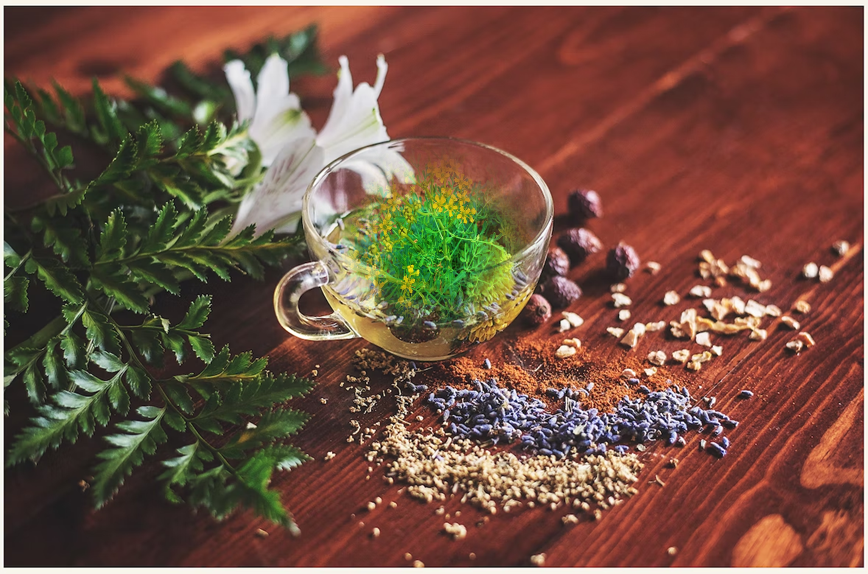
  8. Lavender tea: For balancing and soothing effect use lavender flower tea. Steep 1 teaspoon o of dried lavender flower in boiled water. Leave it for 5-7 mins and drink.
  9. Passiflora tea –also known as passionflower tea-improves sleep, mood and reduces body pain. Use dried Passiflora flower or Passiflora tea bags to steep in boiling water and drink.

Other ways to reduce anger:

Practice meditation: Guided meditation or any form of meditation will help to focus and bring calmness.

Yoga practice: Consider doing moon yoga, which has cooling effect. Yoga asanas that are considered as moon yoga asanas to reduce mood swings, to bring balance to mind are: Cow-cat pose, bridge pose, boat pose, Goddess pose, camel pose, cobra pose, garland or malasana, hanuman pose and half moon pose. These poses help to improve focus and bring sense of achievement while calming the mind.

Sometimes a person experience mood changes and feel anger because of medical conditions. Such conditions need proper diagnosis and anger management guidance. Pregnant and lactating women should not try herbal remedies without doctor’s advice.

Image curtesy: Image by Miriam Verheyden from Pixabay (CC by 0)


Author: Sumana Rao | Posted on: November 14, 2022
« »
« »

Recommended for you

Quinoa balls with cauliflower

Quinoa is one of the healthiest nutrient rich food on earth! Quinoa is a preferred fiber rich food in many diets. It not only promotes weight loss, also improves blood sugar and cholesterol levels. There are many ways we can cook and eat quinoa. To name a few recipes: Quinoa pulav, quinoa salad, quinoa fritters, quinoa khichadi etc. Quinoa can be mixed with varieties of vegetables to prepare different dishes.

We are presenting another recipe using quinoa . A simple, yummy recipe with cauliflower and cheese is a good snack item. You can either bake them or deep fry them. Try quinoa balls with cauliflower and get benefits of eating quinoa!

Ingredients:

  1. Quinoa 2/3 cup
  2. Cauliflower florets – grated 1 cup
  3. Cheese – ¼ cup
  4. Chopped cilantro – 2 Tbsp
  5. Chickpea flour (Besan) –3/4 cup
  6. Salt
  7. Green chilli – 1 finely chopped
  8. Pepper powder – 1 tsp
  9. Garlic – 2 cloves finely chopped
  10. Lemon juice – 1 tsp

Preparation:

  1. In a bowl soak quinoa overnight
  2. Cook quinoa to tender for about 5-10 minutes, drain the water
  3. Transfer quinoa back to same cooking pan, on low heat fluff quinoa by covering lid for another 3-5 minutes. Turn off heat and cool quinoa
  4.  In a bowl mix cooked quinoa, cauliflower , cheese and rest of the ingredients.
  5. Prepare small balls of quinoa cauliflower
  6. To cook – either you can deep fry the quinoa balls or bake in the oven at 375° for 30 minutes until they turn golden brown.
  7. Remove and serve hot with tomato ketchup or green chutney

Author: Sumana Rao | Posted on: November 8, 2022
« »
« »

Recommended for you

Respiratory Syncytial Virus in child

Respiratory Syncytial Virus RSV Infection In Infants And Children

As the winter is approaching, young children are tending to get sick. This time of the year many parents visit hospital for child’s respiratory issues particularly.  One of the common virus Respiratory Syncytial Virus (RSV), infection of lungs and airways makes young ones sicker.  According to CDC in past month RSV in children is increased and more hospitalization is expected in next couple of months.

RSV is the most common cause of inflammation of airways of lungs and pneumonia in infants.

In most children RSV generally causes mild cold symptoms such as

  • Cough
  • Running nose
  • Decreased appetite
  • Fever
  • Cold, sneezing
  • Sore throat
  • Headache
  • Wheezing
  • Decreased activity

Most children by the time they are two year’s old will be exposed and infected with RSV and suffer from mild symptoms. However, children under age one whose immune system is much weaker could develop more severe symptoms. Those children who suffer from congenital heart condition, asthma, chronic lung disease generally will have low immunity to fight the disease suffer more. These children might develop infection in airways that could le to bronchiolitis.

What causes RSV in children?

  • It spreads through contaminated surfaces
  • If child comes in contact with fluids of infected person
  • By inhaling droplets of sneeze or cough of infected person.

What parents should do if child is sick with RSV.

  1. Let child rest, do not force child to be active
  2. Give fluid to avoid dehydration
  3. If there is fever, talk to pediatrician
  4. If your child is suffering preexisting condition, chances of getting sick is more.  Talk to pediatrician to understand what care you should be giving.

How to prevent RSV infection?

  1. Avoid contact with sick people
  2. Avoid sharing utensils
  3. Disinfect and clean the surfaces counter tops, doorknobs,  
  4. Disinfect toys, kids stuffs and wash kids clothes separately
  5. Do not send child to day care to avoid spreading of RSV
  6. If any adults have cold it is better to cover while sneezing and coughing
  7. Wear mask  
  8. Washing hands frequently or using hand sanitizer when necessary, it helps to prevent virus spreading

How RSV is treated in children?

Depending on severity of symptoms, age and health condition of child RSV treatment is given to child.

  1. Fluids: Fluid intake is very critical to avoid dehydration. If needed fluid will be given through intravenous (IV)
  2. Removing mucus: Using suctioning method mucus will be removed
  3. Tube feeding: If child has trouble eating, nutritious liquid food is given through tube
  4. Ventilation: To help child’s breathing
  5. Antiviral medicines: To reduce infection antiviral medications might be used.
  6. Oxygen: Extra oxygen will be given by different means – nasal prongs or oxygen tent.

If child develops fever 100.4°F or more and display severe cough, breathlessness, experiencing wheezing, drowsiness and if skin, lips and nails appear blue – contact doctor and take child to emergency.

References:


Author: Sumana Rao | Posted on: November 3, 2022
« »
« »

Recommended for you