HealthyLife is a part of www.WeRIndia.com, an all India – centric website (https://healthylife.werindia.com) and is solely owned and operated by WeRIndia.com. It is a Indian nutritional portal providing educational articles.This nutritional port was launched on February 5th, 2015.
8 relationship rules for married couple
Some people does not bother about falling in and out of relationships. However, if someone wants to settle down, get married and want to have a blissful life then they must understand that relationships can be complicated and goes through rough paths on and off. There are certain (unwritten) rules that are passed from generations to today’s couples to take right path in life. These rules help to develop true compatibility by means of learning quality – good and bad in a relationship.
Grandma’s 8 relationship rules for married couple –
Understanding & respect: One mistake we all make when we enter a married life is forgetting to focus on partner’s feelings. We all try to become victim and win the emotional battle. It is important to recognize feeling and the needs of the partner. This helps to understand partner in better way and you will start respecting him/her as human being. To gain respect we should give respect. If there is not respect given, then the relationship becomes sour and married life takes U turn.
Loyalty: If you are into a marriage and if your love is true, then be loyal to your life partner. Always remember, whatever your religion might be, you entered this union because you wanted to. Loyalty is should not be shaken. It means you remain loyal to your relationship.
Fair fighting: Every human has flaws and no one is perfect either in appearance or internally. This should not make us call life partner in bad names. When a person addresses and calls life partner by mean name it is an insult and it hurts the feeling of other. This results in fight. Instead of calling by names, focus on the problem that is in front of you and talk to your spouse calmly.
Sense of humor: Laughing and smiling helps to ease the tense situation. It helps to breath and to look at any issues in a positive way. Agood sense of humorwill make other person melt and helps to create a stronger bond in relationship.
Intimacy: Sex is not everything in life. Intimacy is important to feel the love. After few years of marriage, one understands that body attraction is limited. Once you understand the value of your life partner, your focus will be only on wellbeing of the partner. Whatever may be the situation that life throws at you, spend quality time together and your bond becomes stronger.
Keeping promises: If you know you cannot keep up the promise then don’t make one. If you know your weakness then don’t says “I promise”. Before promising for any reasons -big or small, think hard. If you cannot keep promise then to be honest. If you cannot keep up with what you promised for, your partner might be disappointed in you. Instead of committing by saying I promise, say I will try.
Appreciate: Always appreciate other persons enthusiasm, caring nature and the contribution to you and your relationship. Feeling wanted and getting appreciation is encouraging for life partner and it guarantees a life that is healthy and happy.
Apologies: In relationship there should not be superior factor. If there is a mistake from your side then apologies. If both of you not sure whose mistake it is then both should apologize to each other. Apologizing, saying sorry does not make you a weak person. It means you care and value about your relationship than fighting to win. Do not drag arguments to hours and days. Do not keep pointing out at the mistake that your partner committed. Forgive and move on with healthy relationship.
It is both partners responsibility to keep relationship going strong and healthy for many years! Many years of togetherness means, a understanding, compatible, loyal relationship with a strong bond!
Listen to grandma: www.healthylife.werindia.com
Author: HealthyLife | Posted on: December 26, 2018
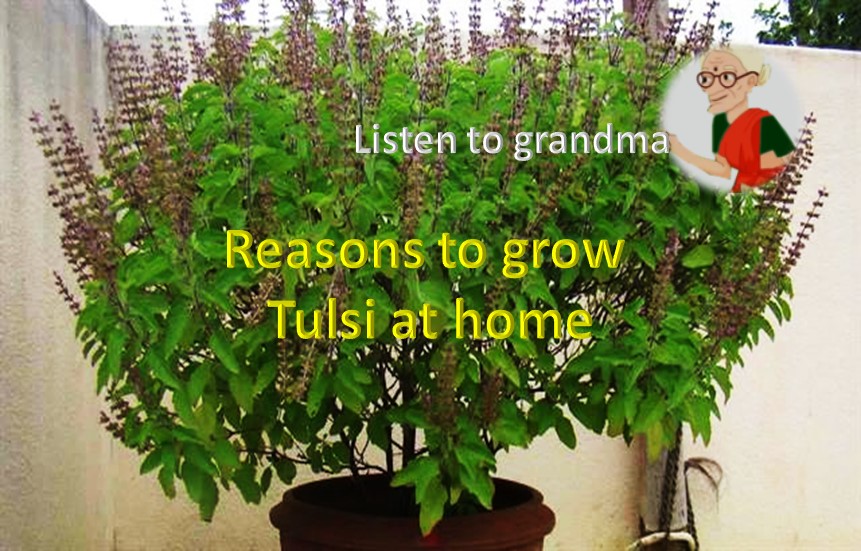
Tulsi also known as Tulasi orHoly Basil plant is very auspicious and holiest of all the plants for various reasons. It has gained a prominent place in Hindu culture for good reasons.
Having a Tulsi plant at home gives positive energy for the house and for people who live in it. The positive energy comes from the evergreen leaves, plants fragrance and its beauty.
Tulsi’s benefits are backed by science. Scientists are exploring those phytochemicals that are present in Tulsi for Cancer treatment!
Do you know –Tulsi plant appears in environment in three different kinds based on the color and texture of leaf. Krishna Tuli, Sri Tulsi or Rama Tulsi and Vana Tulsi.
Rama Tulsi: Green Tulsi also known as Sri Tulsi has light purple flowers and produces scent somewhat like clove. The aroma is soothing and one can eat these leaves raw easily.
Krishna Tulsi: As the name indicates leaves of Krishna Tulsi is somewhat bluish or purplish and blackish It also gives clove like bit stronger aroma and has a bit of spicy flavor.
Vana Tulsi : Brighter green leaves and grows wild. It has a lemony aroma with bit of clove flavor.
The reasons to have Tulsi in every home is for following reasons : In Atharva veda there is mention about Tulsi’s medicinal values. We all know Tulsi provides many medicinal benefit – It is very useful home remedy for conditions like cough, cold, asthma, mouth odor, diarrhea, stomach ache, skin problem, diabetes, blood purification, fever etc. (see here). In Ayurveda both Rama and Krishna Tulsi are used for various medicine preparations. All Tulsi varieties are known for boosting immune system.
Apart from these home remedies, Tulsi has been part of our offerings, traditions and festivals.
Whether in pot or around the house having this holy plant is beneficial for our overall health.
Tulsi is known for removing mosquito problems around house.
It reduces air pollution and gives fresh, healthy air.
Eating Tulsi leaves not only calms mind, also restores confidence – this is the reason Tulsi is offered to God
Every morning watering Tulsi plants gives a sense of happiness and throughout the day the positive smile radiates.
Tulsi stem beads are useful for meditation purpose and helps to keep mind focused.
Drinking Tulsi water helps us to focus on effective communication.
Sprinkling Tulsi water inside home is also for a reason – it removes negative energy
Drinking Tulsi seed water (seeds soaked in water) helps to relax and gives a sense of happiness.
According to Hindu Vaastu Shastra, a house that has Tulsi removes all the obstacles presented to the house.
Why wait?Grow Tulsi plants in your home not just for above reasons, also for environment because Tulsi takes out pollution very effectively.
How to grow Tulsi plant?Tulsi need moderate Sun light. If you are growing Tulsi from seed stage, then sow Tulsi seeds 1-2 inches deep in soil and cover a thin layer of soil so that seed will come in contact with soil and water. Water seeds using a spray bottle and let the pot receive morning sun light. Seeds will germinate in -1-2 weeks. After 2 weeks take out small plants and transfer them to small pots or soil bed. If you are living in severe winter weather area, during winter bring pots inside and provide enough light for Tulsi and treat it as an indoor plant.
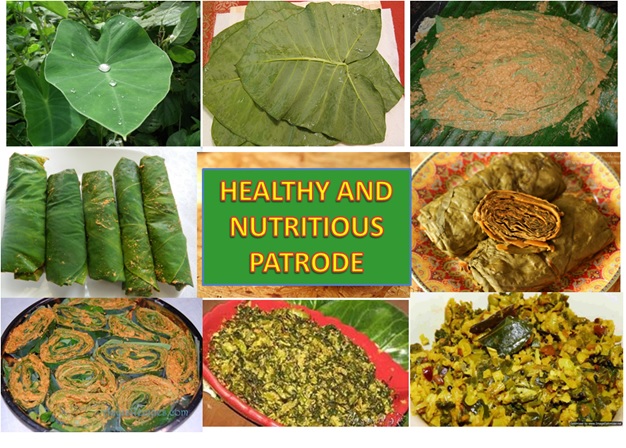
Colacacia or Arbi is the common leafy and root vegetable plant available throughout the year in many parts of tropical countries. It is very popular in India and Malaysia. Roots, stems and leaves of this plant are highly nutritious and fibrous. Plant is rich in good fiber, iron, magnesium, calcium, zinc and vitamin K. Roots of these plants are known as taro roots that are rich in carbohydrates. Both roots and leaves have great flavors. Roots can be cooked and impart a nutty flavor, whereas the leaves taste somewhat like cabbage. Several dishes can be prepared using root- like curries, chips, can be roasted, boiled, steamed, pureed etc. Tender stem can also be made into curry, saambar and various other dishes. In addition, using leaves one can prepare curry, daal curry, saambar and a famous dish called patra or pathrode.Pathrode is a delicious winter and monsoon dish prepared in Karnataka, India and is a delicacy of Karnataka. Here is the recipe for pathrode.
Ingredients:
12 – Colocasia leaves (make sure to get tender leaves and not fully grown leaves )
1/2 cup – grated coconut
8-10 red chillies
2- green chillies
medium lemon sized tamarind
1/2 cup soaked chenna daal
1/4 cup soaked toor daal
1/4 cup soaked rice
Salt as needed
Asafetida – little
Preparation:
Thoroughly wash the leaves. Remove the stalk and thick veins from the back of the leaves.
Grind the coconut,green and red chillies , tamarind, soaked daals, rice. Add hing and salt at the end of grinding. Use very little water for grinding, after grinding masala should be like paste.
Place big leaf upside down on a paper or a plate and apply the masala on both side of the midrib. Place a second leaf upside down on the first leaf and apply masala again. Similarly prepare 6 or 3 sets of masala leaves using 12 leaves. Now, roll leaves into a log.
Place the rolled leaves in a steam cooker and cook this for about 30 to 35 minutes
After releasing the steam, remove pathrode from the cooker and allow it to cool.
One can eat pathrode in 3 different ways – a) after cooled down cut into slices and eat with coconut oil b) Cut into slices and place it on thava – fry both sides with little oil c) Make small pieces of pathrode and in a pan put oil, mustard, curry leaves, one red chilli -transfer pathrode pieces and mix. Serve with white rice, chapatti, roti or as a side dish.
Reclining baddha konasana is a restorative hip opener pose. It increases flexibility in hips and motion in legs. While relaxing this pose helps in stretching abdominal and gluteal muscles. In addition it releases tension from hips in women. It helps to build long, lean rotator and flexor muscles. This pose gives a deep sense of relaxation and good pose for those who wants to relax in busy schedules. This pose is also known as reclined cobbler’s pose or reclined goddess pose – Healthy life
supta = reclined, supine baddha = bound kona = angle
BENEFITS:Lengthens and releases adductor muscles of the groin
Relaxes the low spine
Improves external rotation of the hips
Opens the pelvis
Stimulates the abdominal organs and aids digestion
Relieves symptoms of PMS and menopause
CONTRAINDICATIONS
Hip pathologies
Ankle pathologies
Low back pathologies (if supine positioning creates pain)
Knee, hip, or groin injury
HOW TO
Gently recline the body, lowering your torso all the way to the ground. Use your hands to shift your buttocks and release your lower back onto the mat.
As you inhale, bend your knees and draw your feet together on the mat. Bring your heels in toward your groin.
Exhale and let your knees fall out to the sides, toward the ground. Allow the soles of your feet to join and the outer edges of your feet to rest on the mat. Rotate your thighs externally by using your hands to shift the outer thighs away from the sides of your torso.
With your next inhale, draw your hands overhead to open the chest and stretch the abdominals.
As you exhale, soften the elbows and melt the shoulders away from your ears.
Hold this pose for 30 seconds to a minute.
To exit, inhale and draw the knees toward the midline. Exhale and relax your legs to the mat, or draw knees into chest.
MODIFY OR REPLACE
Extend the feet further out in front of you.
Utilize blocks under the knees for support.
SEQUENCING TIPS
Before:
Baddha Konasana (Bound Angle pose)
Bakasana (Crow pose)
Upavishta Konasana A (Wide-Angle Seated Forward Bend A)
Upavishta Konasana B (Wide-Angle Seated Forward Bend B)
After:
Ardha Pavanamuktasana (Half Knee to Chest pose)
Paschimottanasana (Seated Forward Bend)
TEACHING CUES
Send your breath all the way down to your pelvis.
Let the knees fold out to the sides and relax.
Draw the hands overhead to open the chest.
On each inhale, feel your chest lift and spine lengthen. On each exhale, let your knees dissolve and inner hips open.
VARIATIONS
To deepen the posture, draw the heels toward the body and bend forward at the hips to rest the chest onto the feet.
WATCH OUT FOR
Strain in the inner thighs and groin
Low back, hip, or knee pain
This article and image published here with prior permission from https://beyogi.com/
Author: HealthyLife | Posted on: December 14, 2018
Parents want their kids to be smart and gifted and that is every parent wish too. Every child is unique and still some parents wants to know whether their child is extraordinary and has any hidden talent. All children might not be good at math, they might be good at sports, music, gymnastics, social skills, science etc.
To find out whether your child is gifted with any talent or extraordinary skills there are few signs to look for. These signs could appear often in children and they can express it on separate occasions.
Reasons for a child’s gifted skill is physical make up of brain and genetics. Genes transferred from both parents, especially mother as proven by science is responsible for a kid’s intelligence. Highly developed cognition is due to a child’s own brain capability to make use of information faster than the other kids in same age group. Some of the signs and skills kids who have high cognition can express are:
Memory and remembering things: Kids who has remarkable memory from early age can remember where they left their stuff. They will remember names of things in the house easily. If parents forgotten some tools, they may be able to remind you.
Alertness: These kids will connect with surroundings very early. If babies are gifted with this trait, they will turn their head by recognizing the voice of a third person and will look into the direction. Sometimes they might even focus on the eyes of adults as if they understood what the talk about is.
Language skills: Kids with this skill will pick up more words than other kids of same age group. They form long sentences early and will be able to learn and recognize different languages. With little effort from parents they can even read wordings from different languages.
Art: Many kids are bestowed with art skills at young age. They are creative and imagine things in their head at early age. For example, painting – their imagination brings beautiful art on canvas. This trait can be seen even in toddlers.
Good with numbers: Adding, subtracting, multiplication or division – all these will be easy and they solve problems with few seconds by looking and calculating numbers in their mind. There are many child prodigies amongst us as examples
Thinking and imagination: If your child has imaginary friend and discusses various complex subjects which you cannot understand then the child’s brain is much more active and complex than you can imagine!
Ability to be alone: As per psychology, children who are bestowed wants to be creative and active all the time. You may find your child sitting and reading or playing alone calmly. It is not anti-socializing, it is how their brain works – the hidden hunger to learn and be creative. Encourage them also to be part of peer group.
Good observer:If there is a change in someone’s look or something missing at home your child might be able to notice soon. Gifted child might even notice your sadness or change in situations at home. This is a sign of advanced perception of a child. These kids will be able to learn to speakand hold specific information in their brain for long term which helps them to do great in life.
Love for music: Some kids will recognize distinct types of musicand instruments at very early stage of development. When you play music if they start carefully listening and follow the music, ask you to repeat the music, show interest in certain type of music and artists, imitate instrument – then find out what is there in little storage.
Gifted or talented children will need recognition before it fades. It can be in nonacademic areas or academic areas. Sometimes these children might have difficulty in focusing or may have learning disability. Instead of pushing your child to what you want to do, find out that hidden talent and put positivity and optimism in your child’s life. This will help them to grow and get recognition in society.
When babies are happy they lie on back and hold both feet in hand and roll while giggling. Performing this pose helps to stress hidden in digestive system and improves digestion. In a If you are looking for a simple and a magical posture that can help your entire body and mind try beginners Ananda balasana or popularly known as happy baby pose. Performing this pose helps to release stress hidden in digestive system and improves digestion. In addition hamstrings get stretched, calves muscles get active, gives awareness to hip joint, opens hip and lower back pain reduces. Even if you are into advanced yoga pose, get into happy baby pose to release stress and to get out of fatigue easily -Healthylife.
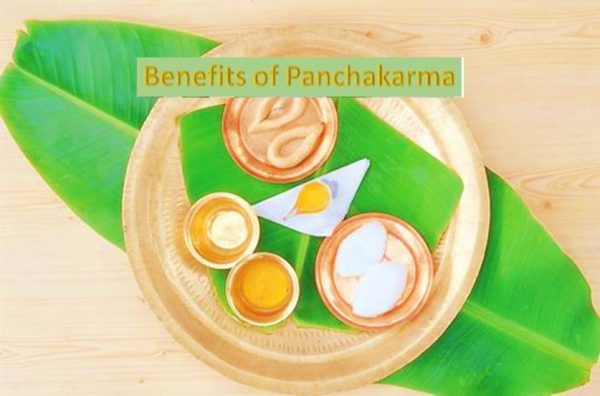
Panchakarma reverses the disease path from its manifestation stage back into the blood stream and eventually gastrointestinal tract (Lifespa.com) Detoxification and cleaning of body is done by special diets, steam therapy and oil massage.
We know wonderful benefits of turmeric. We use turmeric powder for cooking and drinking. Fresh turmeric roots also gives same health benefits. Turmeric root is helpful in skin careand culinary purposes. Today we are introducing you toturmericroot currywhich is a popular dish in Rajasthan.
Turmeric root curry
Ingredients:
Fresh Turmeric (2-3 inch piece) 3
Frozen / Fresh Green peas ½ cup
Yogurt/ Curd 1 cup
Tomato medium size 2
Minced Ginger 1 tsp
Crushed peppercorns, cloves, cinnamon ¼ tsp
Fennel powder ¼ tsp
Coriander powder ¼ tsp
Green chillies 2
Cumin seeds ¼ tsp
Asafoetida pinch
Cilantro chopped ¼ cup
Ghee 2-3 tsp
Salt
Method:
Wash and scrape the turmeric. Again wash turmeric and grate. Keep aside.
Chop tomatoes, green chillies and cilantro.
Combine one tomato (chopped), green chillies and ginger in a blender and blend into smooth paste. Keep aside.
Heat a tsp of ghee in a pan, add grated turmeric and fry them till brown and crispy. Transfer into a plate.
Fry green peas in same pan for few minutes. Transfer into a plate.
Add remaining ghee into the same pan and add asafoetida, cumin seeds. Now add crushed peppercorns, cloves and cinnamon. Add fennel powder and coriander powder. Fry them.
Add tomato – ginger paste (step 3). Cook for few minutes in medium heat.
Add Yogurt mix well and cook for another 2-3 minutes in medium heat.
Once the gravy starts boiling, add chopped tomatoes, fried turmeric, green peas and salt. Mix well, cover the lid and cook for few minutes.
Finally add cilantro, mix well cover the lid, cook for few minutes, and switch off the stove.
Turmeric curry goes well with chapati, roti and rice.
Credit: This recipe and image is by Mamtha Anil @bhakshyabhojana.com