14 APPS Parents should be concerned about
Author: HealthyLife | Posted on: February 25, 2019
Until recently landscaping with varieties of decorative plants, green lawn is a must have feature for new homes and office buildings in many countries. Reason to add this feature is, it adds beauty and value for the concrete building. For landscaping mostly flowering plants, grasses, herbs, gymnosperms are used. Some of these plants attracts bees and other animals. Some are annuals that need every year planting. Instead of just focusing on annual plants that need replacement, a new design that helps to grow our own food in the landscape is an idea that is attracting millennials. It gives fresh produce, helps saving and moreover gives satisfaction of growing our own food. This new way of garden designing is called Foodscaping or edible landscaping.
According to gardening author, speaker Brie Arthur – Foodscaping is planting edible plants in landscape or in the available space in existing landscaping. It is mix of ornamentals and edibles in same planting area.
Foodscaping involves designing gardens with edible plants It will help to create an ecological living environment that allows consumers to produce fresh organic and inexpensive food. Edible plants means – fruit trees, shrubs, medicinal herbs, vegetables etc. Selected plants should have ability to produce fruits or vegetables in abundance with little maintenance like permaculture.
What we can grow in foodscaping?
Vegetable plants does not attract many people. People grow them in backyard or in a corner. But, many vegetable plants are very attractive, and we must able to see the beauty in these plants. Edible plants such as strawberries, colorful varieties of peppers, scarlet runner beans are very attractive plants. Mint, tulsi, lavender, lemongrass, rosemary, chamomile, sage, beebalm, scented leaf geranium etc give fragrant flowers and leaves. They are either perennials or annual plants. One can grow marigold, dianthus, pansies with most vegetables.
Adding edible plants in the border of already existing garden is easy. This way non-productive borders will convert to garden that gives benefit with beauty.
Brie Arthur in her book The Foodscape Revolution says ‘you don’t have to grow everything you eat but you can grow somethings. She also suggests starting with garlic for those who don’t know gardening. Growing garlic and other herbs in the edge detours pets and pests and keeps plants safe. Some plants can be grown along edges of beds, paths and borders.
To start foodscaping Arthur gives tips:
Foodscaping is new trend with millennials. It is gaining more attention for all right reasons. Grow plants in a way that introduces more biological diversity to help nature and soil and enjoy watching your plants growing.
References:
https://gardentherapy.ca
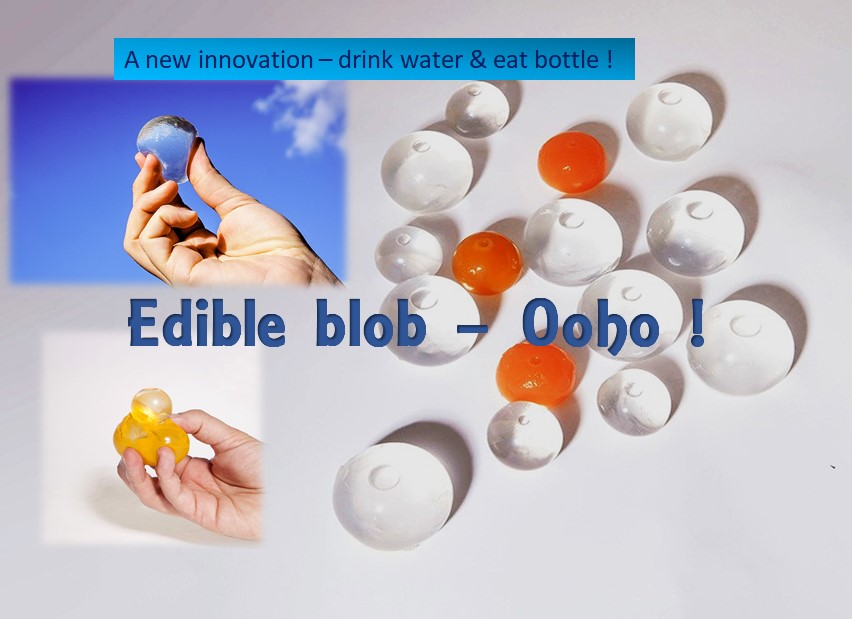
Have you ever imagined that one day you would be able to eat water bottle too? Answer is yes. It is a reality now!! London based new startup company has come up with a product -after drinking water one can eat the container!! This is edible blob !!!
Skipping Rocks Lab is a seaweed technology startup company. They have created a product called Ooho and it is an edible water bottle product.
Skipping Rocks Lab is a part of the climate KIC startup acceleration program. It is funded by European Institute of Innovation and Technology (EIT) and Imperial College Scientific team.
The round, spherical packaging made of entirely seaweed is natural and biodegradable. The material is safe and cheaper than plastic. If consumer don’t feel like eating the packaging material, the flexible, bubble-like packaging biodegrades in just 4-6 weeks, the same time as a piece of fruit. This algal membrane can be flavored and colored and seaweed material encapsulates any beverages including water, soft drinks and spirits. It also can hold cosmetics!
“The London-based sustainable packaging start-up want to transfer from simply selling their water bubbles from pop-ups to challenging plastic waste on a global scale, piloting their water bubbles at major sporting events in 2018”
How these drinkable and edible spheres are made?
Ooho spheres are made by dipping frozen balls of water or any liquid into an algal mixture that forms a membrane around the frozen liquid (ice). The ice melts into liquid water and membrane, which is edible and biodegradable, forms a watertight seal around it. To consume the liquid, one can either bite into the tasteless membrane and sip it out or just eat the entire ball, membrane and all.
This seems to be a solution for plastic bottle usage that is harming our environment. The amount of waste we human regenerate is a great cause of concern from past many decades. The aim of Ooho is to provide the convenience of plastic bottle by limiting plastic bottle impact on environment.
Currently Skipping Rocks is fundraising online, and nearly 1,000 independent investors contributing money to the company.
The innovation is excellent. However, the size of the sphere matters. One must think, is one or few spheres can fulfill the thirst? It might be good for sports, marathon and other events. If someone must pack the spheres then how it works – because these spheres are delicate. Unless they find a way to pack it in edible, biodegradable bags that makes it easy to carry the spheres.
Skipping Rocks Lab was awarded 2014 Lexus Design Award, 2014 World Technology Award that was held in association with TIME and Fortune, 2016 UK Energy Global Award and 2015 SEA Award.
See more about Skipping Rocks Lab innovation here:
https://www.designboom.com/technology/skipping-rocks-lab-ooho-edible-water-bottle-04-12-2017/
References:
Fragile and vulnerable settings : An estimated 22% of global population live in places where health services either cannot reach them or leave them without access to basic care. Drought, famine, war conflicts, population displacement are some of the fragile and vulnerable settings in the current world. It is present in almost every part of the world where child and maternal health is under huge threat. WHO will work in these countries to provide better health system and immunization so that it will be somewhat easy to detect and respond to any outbreak.
Image credit: https://commons.wikimedia.org/wiki/File:African_Children_on_transit.jpg
Attribution: Ifexmeco / CC BY-SA (https://creativecommons.org/licenses/by-sa/4.0)
Lion pose is simple, beginner’s pose in Yoga. This simple pose provides many health benefits – it relieves tension from system, improves blood circulation to face, keeps vocal cord and chest healthy. It stimulates platysma, prevents sore throat, asthma and other respiratory ailments. Overall it strengthens lungs, throat, chest by stimulating tonsils and boosting immune system. When we breath out and roar like lion it takes out all the stress and brings back calmness to system. One can try this pose anywhere, anytime – www.healthylife.werindia.com
LEVEL :Beginner
Anatomy :Face, Jaw, Neck, Tongue
Pose Type :Seated
Sanskrit: Simhasana (sim-HAHS-anna) simha = lion
BENEFITS:
CONTRAINDICATIONS
HOW TO
MODIFY OR REPLACE
Alternatives:
Kapalabhati Pranayama (Breath of Fire)
Modifications:
SEQUENCING TIPS
Before:
After:
TEACHING CUES
VARIATIONS
WATCH OUT FOR
This article and image published here with prior permission from www.beyogi.com
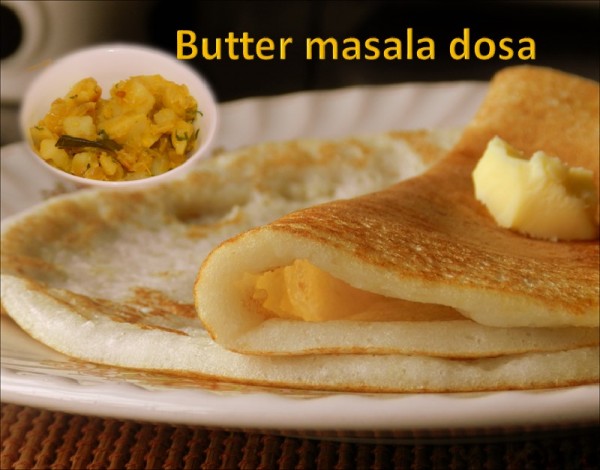
Butter masala dosa is another popular dosa in South Indian restaurants. Locally it is also known as “benne dose”. With touch of butter soft dosa will be served with potato curry and coconut chutney. It is one of winter favorite breakfast and evening snack item too.
Ingredients for dosa:
Ingredients for potato curry
Method:
Potato curry: