All posts by Sumana Rao

Don't worry about the people in your past; There's a reason they didn't make it to your future.
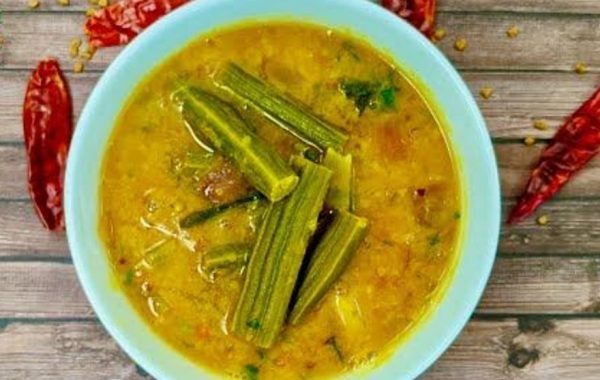
Drumstick small onion sambar recipe

Drumstick small onion sambar recipe

To boost immune system including drumstick is highly recommended by nutritionists. Moringa is the name for drumstick plant. Its leaves are highly nutritious and known to improve overall health. Moringa fruits are commonly known as drumsticks due to its appearance. It rich in vitamin A, C and supplies calcium. Fruit is known to be aphrodisiac.

This drumstick season, start including Moringa in your diet to get all the benefits that it offers. People in South India get plenty of drumsticks during this season and it is often used with small onions to prepare delicious sambar.

Drumstick-small onion sambar recipe:

Ingredients:

  1. Drumsticks – 4
  2. Small onions – 10
  3. Toor daal – ¾ cup
  4. Turmeric – 1 tsp
  5. Curry leaves – few
  6. Asafetida – pinch
  7. Mustard – ½ tsp
  8. Red chili – 1
  9. Sambar masala – see instructions

Ingredients for sambar masala

  1. Grated coconut – 1 cup
  2. Coriander seeds – 1 Tbsp
  3. Tamarind – 3 inch (or small lemon size)
  4. Salt – as per taste
  5. Jaggery – small piece
  6. Red chili – 6-8 (Byadagi chili is recommended)
  7. Fenugreek – ½ tsp

Preparation of sambar masala.

  1. In a frying pan, dry fry all ingredients except coconut, jaggery and salt.
  2. Transfer fried items, coconut, salt, jaggery and add one cup water. Grind ingredients to a paste and keep it aside. (you can also grind ingredients without frying)

Preparation of sambar:

  1. Pressure cook toor daal with turmeric and few drops of oil.
  2. Wash and cut drumsticks to 2-inch pieces. Remove outer skin of onions.
  3. Boil 2 cups of water.
  4. Place a deep vessel on medium heat. Add 1.5 Tbsp cooking oil. Add cut drumsticks and onion. Fry for 2-3 minutes. Add boiled water to fried drumstick and onions. Continue cooking the vegetables on medium heat. Cover the vessel with a lid. In between check to see whether drumsticks are cooked (Option: you can add one cut tomato too)
  5. Once drumsticks are cooked, add sambar masala paste, stir and continue to boil. After the content reaches boiling point, add cooked toor daal and stir the contents. If needed add little more salt. Continue boiling.
  6. Prepare seasoning using oil, mustard, curry leaves and asafetida.
  7. Transfer seasoning to sambar and turn off the heat.
  8. Serve hot drumstick – onion sambar with rice, chapati or idli.

Image credit: https://in.pinterest.com/pin/843580573946123713/


Author: Sumana Rao | Posted on: May 10, 2021
« »
« »

Recommended for you

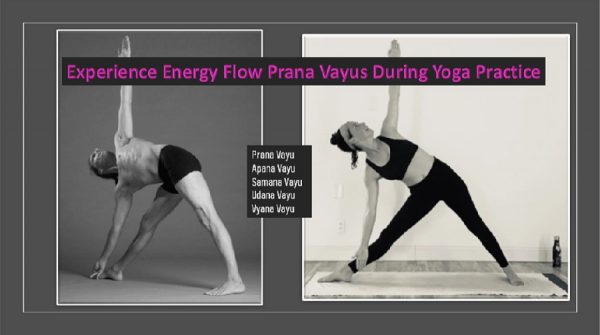
Experience prana vayus during yoga practice

Experience Energy Flow Vayus In Yoga Practice

Have you ever experienced energy flow as you get into a pose in your yoga practice? In yoga, vayu refers to an energetic force that moves in specific direction in our body and influences body function, health and activities. Saints and Yogis in India found 49 distinct types of such energetic movements or vayus in human body. Out of 49 vayus only five Vayus are considered as Pancha (five) prana and are used in yoga practice. These five forces are tools that help us in healing mind, body, and spirit. These distinguished vayus govern specific area of the body and helps in keeping functions of the body in harmony. Any change or subtle movement in Vayus affect our mental and physical health. Any imbalance in any Vayu will have negative impact on associated Chakra and the organs associated with. 

Vayus is a Sanskrit word. It means “wind”. The five vital forces of Vayus can be experienced through several yoga poses. These five Vayus that yogis should be aware of are:

Prana Vayu: Situated in the heart, Prana vayu is often considered to be the main energy force flow. It refers to forward moving air that flows inwards and upward. It nourishes eyes and brain. It is the fundamental energy in the body that influences other types of vayus. Any change in Prana vayu or if it turns to be weak, mind cannot think, focus or experiences anxiety, worry, low energy and weak immune system.

To feel prana vayu – close your eyes, sit straight and relax the body as you are into meditation. As you inhale focus on third eye and imagine and feel an energy flowing from belly to torso and reaching third eye.  Yoga poses that are heart and chest opening will activate Prana vayu energy. Camel pose, Inverted plank, dancer pose, bridge pose, cobra pose, bow pose – activates and strengthen prana vayu.

Apana Vayu: Situated in the pelvic floor and responsible for the energy in lower abdomen. The air that moves away and flows downwards and out is Apana vayu.  The energy from apana vayu influences health of reproductive, digestive and excrete organs. It is also known as elimination energy. Any disturbance in Apana Vayu causes problem in muladhara chakra and creates a feeling of uneasiness, weakness in legs. It affects kidney, intestine and urinary functions.

If one must feel Apana vayu, sit in meditation pose with straight back. Exhale and feel the flow of energy down from head to tailbone to feet. To strengthen the week apana vayu, forward bends and twisted poses helps. Poses that involve leg muscles are good for this purpose. Thrikonasana, warrior 1 and 2, chair pose, extended leg to toe poses, forward bend, childpose, downward dog pose -strengthens apana vayu.

Samana Vayu: Situated in abdomen, the energy originated in navel. It is referred as balancing air, moves from periphery to center of the body. It’s function attributed to assimilation and Manipura chakra (fire). Any imbalance in samana vayu reduces desire, confidence, lack of motivation. Digestive system problem is also attributed to weak samana vayu.

Sit straight, while inhaling and exhaling feel the flow of energy flowing from periphery -on sides, back and front of torso.  This gives you the feeling of samana vayu.  Core strengthening and twisting poses makes samana vayu flow strong and active.

Udana Vayu: It is situated in throat region and flows circular around head and neck. Udana vayu mean “the air flows upwards” from heart to head and brain. It influences the way we speak, express and think. It is associated with vishuddha chakra. Any subtle movement in udana causes problem in breathing and sickness in throat. Loss of balance as well as lack of self-expression is because of weak udana vayu.

Sit straight and breath deep. Imagine the flow of breath that circulates around your head and neck while focusing on third eye. This eventually gives you the experience of udana vayu flow. Head stand, shoulder stand, circulating head /neck  and other inversion poses as well as the back bending poses strengthens the udana vayu flow.

Vyana Vayu: Situated in lungs and heart. The energy flows throughout the body. It is referred as outward moving air, flows from the center of the body towards periphery. It is associated with Svadisthana Chakra (and water element). Any subtle movement in this energy results in poor blood circulation, nerve weakness, skin problem and feeling of loneliness, separation.

While sitting or standing stright, imagine the flow of energy from your navel towards both legs and arms. The feeling of energy flow in this way is vyana vayu. Sun salutations and warrior poses, that makes you aware of your entire body through blood circulation will help strengthen the vyana vayu.

Experiencing all five vayus during yoga practice will give us more calming experience. For example, to experience all five vayus try triangle or trikonasana. Apart from stretching the legs and arms while you are in trikonasana, if you focus on energy flow you will notice all five vayus inside your body. While you are into the triangle pose, feel the flow of energy move down legs and reaching feet – it is Apana vayu. While you breath and expand lungs, it is prana vayu flow.  As you elongate and straighten the spine from neck to tail – it is udana vayu. The bit of twisting and looking up gives you the feel of samana vayu. The extension of arms in both directions and stretch of legs will give you vyana vayu!

In your next yoga practice focus on prana vayus and feel the energy flow. Awakening the prana vayus during yoga practice gives us more benefit than we think!

References:


Author: Sumana Rao | Posted on: May 9, 2021
« »
« »

Recommended for you

GO SLOW WHOA FOODS

GO SLOW WHOA FOODS

Making healthy changes and adopting to healthy eating habits at young age will help children to be fit as they grow. Parents and teachers can help children in selecting food, encourage them to be physically active and in healthy lifestyle choices. These selections will help Kids to have a stronger immune system and will be ready to fight any diseases.

Now a day’s kids are smart and want to keep fit and healthy. However, it is very confusing when it comes to selection of food.

Kids might not understand nutritional aspect of food that they eat. They need guidance. To be help kids teach them the difference between GO, SLOW, WHOA foods.

NIH has designed this concept based on the nutritional value and to make sure every kid gets sufficient nutrients from the food they eat.

The purpose of this concept is to introduce healthy food choices, balance and moderation in kid’s food. Kids cannot control their food unless we step in and guide them.

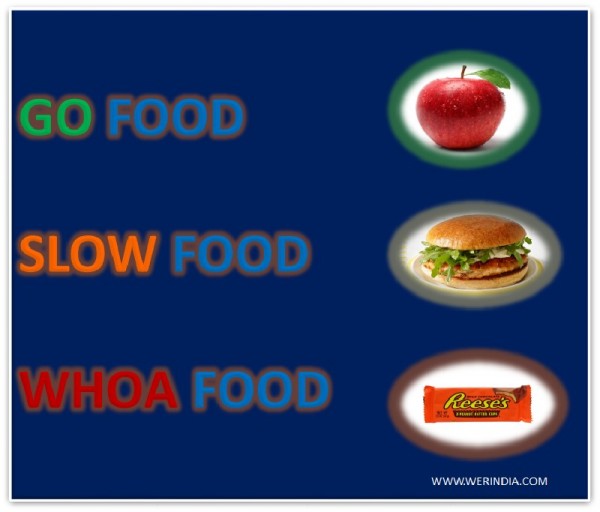
In this educational tool, Foods are divided into three groups: GO FOODS, SLOW FOODS AND WHOA FOODS.

  1. A GO Food is very healthy for kids and can be eaten every day. It has essential nutrients that are required by the body to grow and good for kids. Example: Apple, carrots. GO foods contain very little or smallest amount of unhealthy fats and sugars
  2. A SLOW Food is in between GO and WHOA. It’s a food that is good to eat may be even every day. However, SLOW foods should be taken in smaller quantities. Example: Bagel and cream cheese.
  3. WHOA food is a food that is not healthy at all. It can be a special treat, eaten occasionally. For example, candy bar or birthday cake. Anything that contains heavy fat, oil is not good for the body.

You may also want to talk about how foods are prepared and how that can impact whether a food is GO, SLOW, or WHOA.

  • For example, oatmeal with no sugar added is a GO food. But if you make the oatmeal with 2% milk, it becomes a SLOW food.
  • A peanut butter and jelly sandwich on white bread is a WHOA food, but if you use whole-grain bread, sugar free jelly and low-fat peanut butter, it becomes a SLOW food.
  • Corn without butter is a GO food, but add butter and it becomes a SLOW food.

Parents must be able to explain young children the concept of food, calorie and energy balance. Here are some of the nutritional concepts that are key for kids to understand and parents can help them in the process.

  • Healthy diet: All foods that we eat should be formulated to be healthy diet and should contain both GO and SLOW foods. WHOA foods in least amount or none.
  • Eating large quantities of foods, even GO foods can be unhealthy. Moderation is essential when we eat – this should be taught to children while differentiating the three-food category.
  • Example of GO Foods: fresh, raw fruits, fresh and raw vegetables, whole wheat bread, corn tortillas, black beans, low fat yogurt, brown rice, quinoa, skim milk products, oatmeal, tofu and baked items
  • SLOW Foods: graham crackers, juice, bagel, pretzels, white rice, white bread, waffles, pancakes, peanuts, jelly, ketchup, veggie burger
  • WHOA Foods: Milkshakes, fried rice, French fries, fast foods, fried snacks, candy bar, pies, cookies, whole milk products, sour cream, ice cream, canned fruits, biscuits, doughnuts, muffins, hot dogs, energy drinks, syrup, mayonnaise, sports drinks
  • Another important aspect to teach kids is energy balance. This concept depends on their food consumption and physical activity level. To move, to be active, to grow, to read, one needs food. Food contains energy and measured in the form of calorie. Body uses calories to grow and move.
  • Different foods have different amounts of calories. Apple mediums size supplies 60 calories and it is a GO food. GO foods have less sugar and less fat and thus supplies less calorie. More and excessive calorie intake and less activity leads to obesity and excessive weight gain.
  • When we exercise body uses the calories from the food that we eat. Everyday exercise helps to burn the calorie and builds good muscle. Energy balances during this process.

For more information: https://www.nhlbi.nih.gov/health/educational/wecan/downloads/gswflashcards.pdf (Image credit: https://www.nhlbi.nih.gov -Public Domain image)


Author: Sumana Rao | Posted on: May 5, 2021
« »
« »

Recommended for you

Yoga & BharathaNatyam

Divine & Disciplined: Yoga and Bharathanatyam

There are hundreds of different dance forms around the world. India offers many traditional dance forms that helps to get into flexibility, improves mental health and brings balance in life. Bharathanatyam is one such divine dance form that helps to improve not just body postures, helps to bring focus in life. Both yoga and Bharathanatyam goes way back and are intertwined to one another.  One need to realize that Bharathanatyam is not just a dance or decorative performing art and Yoga is not just an exercise. They both are divine and well-disciplined manifestations that help in the union of body and mind. On World Dance Day let us understand how the two forms help us to improve quality of life

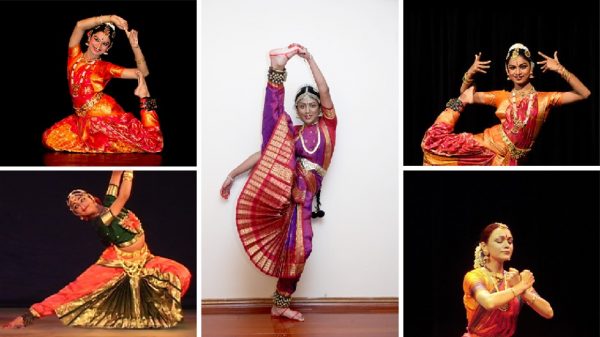
Bharatanatyam is nothing but Yoga, Yoga means union- union of body and mind. Both are traditions of Indian culture. If you watch Bharathanatyam you will be mesmerized to see the poses that are exactly similar to yoga poses. Bharathanatyam and Yoga are two ways that exist to help us understand the manifestation of the Divine in the human form. The Natya (sanskrit = dance) Shastra of Saint Bharata Muni lays emphasis on not merely the physical aspects of Bharathanatyam, but also on the spiritual and esoteric nature of this art form. Both of these arts are also evolutionary sciences for the spiritual evolution of the human being to the state of the super human and finally the Divine.

Bharathanatyam is a dance that is meditative and spiritual, yet highly fun-filled and entertaining. The resemblances between both yoga and bharathanatyam are so much that if you are a yogi then you will find it easy to perform Bharathanatyam. Bharathanatyam gives same benefit for the body and mind similar to yoga. Bharatanaatyam encourages people to see a world of joy, symmetry, rhythm and beauty, as well as a world of peace and harmony.

Both Yoga and Bharathanatyam complement each other in many ways.

Guru bhakti: As we sit in Yoga classes we silently follow yoga instructor’s instruction. The yoga class environment is such that it makes most yogis to go to meditation mood with lots of devotion. Yogis follow their Guru (teacher).  Even though lot of this tradition and culture has become more academic the basic value of Guru bhakti in yoga and Bharathanatyam remains the same. One cannot learn and be expert in Bharathanatyam without Guru. To understand the classical songs, expressions, proper pose one need Guru. Understanding and doing yoga poses takes several years of practice. Similarly, the Bharathanatyam learning takes many years.  It involves more communications and expressions of one self.

Discipline: Discipline is an important requirement of both yoga and natya. Yoga is defined as the desire to discipline the body and mind. Yoga emphasizes that learning with dedication and determination is key to success.

Concentration: Yoga involves balancing and focusing on body and mind. Similarly, Bharathanatyam too needs lot of concentration, focus and balancing. The dancer requires a similar state of utmost concentration in order to bring about the union of Bhava, Raga and Tala in her presentation. Yogis do ,many balancing poses -tree, warrior, crane, dance poses etc. – all these need lot of concentration. It comes by practice. Bharathanatyam dancer need similar concentration to perform these poses and to go through the flow. Both will concentrate on various chakras – that are psychophysical connections of the body.

Meditation: The practice of Indian classical dances and other classical arts is said to be akin to meditation. When the dancer achieves peak of concentration in her performance, she loses herself into the state of meditation. Dancing poses becomes the meditation. The Yogic state of Dhyana and the trance like states experienced by the dancers while performing are quite similar in their universal nature.

Mudras: Both Yoga and Bharathanatyam practices involves mudras. Mudras are hand gestures related to body and mind with lots of health benefits. There is a good basis for acceptance that the Mudra does control the mind-brain processes and the functions within the nervous system by uniting various nerve terminals of the sympathetic and para-sympathetic function. Various mudras -Hastha, Anjali, Namaskara, Yoga, Gyana, Prana, Pritvi, Linga, Surya, Ganesha, Shankha Akasha Mudras and more all are mudras are part of both yoga as well as bharathanatyam.

Benefits of both: Yoga has a lot to offer in terms of strength, balance, concentration, carriage, stamina, flexibility, coordination, musculoskeletal benefits, physiological function, energy and right attitude.

Bharathanatyam dance form is elevating and fun, bringing joy and peace.  It also helps in following ways-

  • It improves physical and mental health
  • It develops focus, coordination, balance and fine motor skills
  • It helps in easily understanding concepts in math, science, music, history and English
  • It makes the culture of India come alive, showcasing her diversity and values
  • Use of Mudras to cleanse body and mind
  • Concentration of mind
  • Balancing of the body and system
  • Control on excess eating.
  • It improves flexibility
  • Doing Bharatanatyam is like doing an aerobic workout and is a good physical exercise. It is a good fitness regime

When practiced as natya yoga, bharathanatyam embodies ashtaanga principles of yoga, as described in Patanjali’s Yoga Sutras.  Yoga and Bharathanatyam are both spiritual and elevated art forms. One need to realize that Bharathanatyam is not just a dance or decorative performing art and Yoga is not just an exercise. They both are Divine and well-disciplined manifestations that help in the union of body and mind.

Images: Google images & India dance

References:

•https://commons.wikimedia.org/wiki/File:Bharathanatyam_By_Ranjitha.jpg
Kamranahmedar, CC BY-SA 4.0 <https://creativecommons.org/licenses/by-sa/4.0>, via Wikimedia Commons

•https://commons.wikimedia.org/wiki/File:Bharatanatyam_danseuse.jpg
https://www.flickr.com/photos/dalbera/, CC BY 2.0 <https://creativecommons.org/licenses/by/2.0>, via Wikimedia Commons

•https://commons.wikimedia.org/wiki/File:Bharatanatyam_6.jpg#/media/File:Bharatanatyam_6.jpg CC BY-SA 3.0
•Bharata Natyam Performance DS.jpg https://sat.wikipedia.org/wiki CC by 3.0
https://commons.wikimedia.org/wiki/File:Bharatanatyam_photoshoot.jpg

•0reteki at the English Wikipedia, CC BY-SA 3.0 <http://creativecommons.org/licenses/by-sa/3.0/>, via Wikimedia Commons


Author: Sumana Rao | Posted on: April 29, 2021
« »
« »

Recommended for you

Gazpacho soup

Cold Healthy Soup for Hot Summer

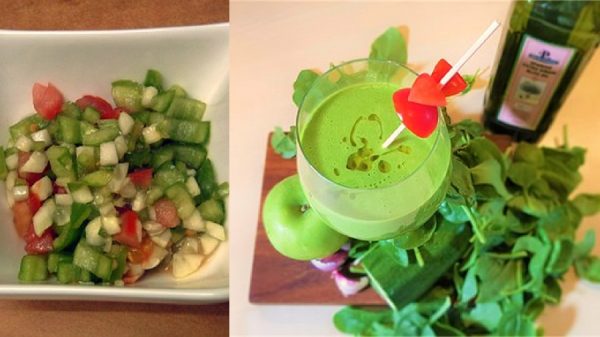
A vitamin C rich Spanish soup popularly known as Gazpacho is good for summer heat. Generally, this soup calls for cucumber and green bell pepper. If you desire, you can make variation by adding your choice of veggies.

Beat summer hot with this cool soup.

Ingredients:

  1. Medium sized tomatoes: 4-5
  2. Cucumber medium size-2
  3. Red onion medium – 1
  4. Garlic – 2 cloves
  5. Bell pepper – 1
  6. Lemon juice – 2 Tbsp
  7. Salt – Per taste
  8. Chopped coriander – 2 Tbsp
  9. Bread slices (optional) – 2
  10. Green apple – half
  11. Olive oil – 2 tsp
  12. Black pepper  – 1/4 tsp (or use cayenne pepper)

Preparation:

  1. Peel cucumber skin and cut into small pieces. Cut tomatoes into 4 pieces. Cut onion into small pieces. Cut bell pepper and green apple also into small pieces.
  2. Soak bread pieces in water for a minute and squeeze to remove excess water
  3. Transfer all ingredients including black pepper and salt into a mixer blender and blend to a puree, if needed add little water.
  4. Strain the blended contents into a bowl. Add chopped cilantro. Stir the contents.
  5. Cover the bowl and refrigerate for minimum  2 hours.
  6. Serve with croutons.

Image credit: Cut veggies Image by solucionindividual from Pixabay & Soup Image by jfliebanes from Pixabay (Free for commercial use)


Author: Sumana Rao | Posted on:
« »
« »

Recommended for you

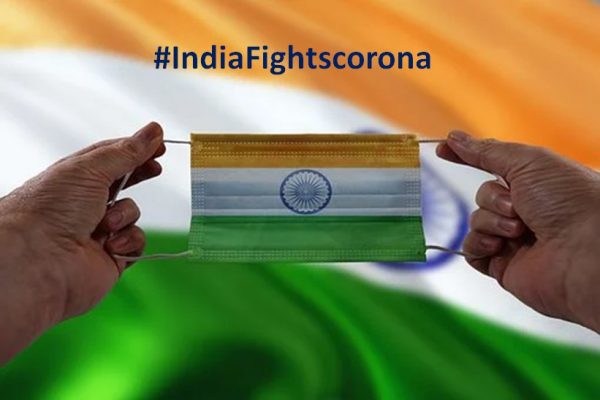
#Indiafightscorona

India Fights Covid – Support pours in from countries

#IndiaFightscorona #Unite2Fightcorona

For the sixth consecutive day India has reported more new Coronavirus cases on April 27th, 2021. These numbers have overwhelmed Indians and health care system. New double mutant Coronavirus variant is found in India and spreading faster than earlier variants.  According to WHO “The B.1.617 variant of Covid-19 found in India had as of Tuesday been detected in over 1,200 sequences uploaded to the GISAID open-access database from at least 17 countries”

India has been always helping other countries when in need. Indian Government has supplied made in India Covid vaccine to more than 90 countries *https://www.mea.gov.in/vaccine-supply.htm). Now when India itself is going through the crisis many nations are stepping in to help.

UK, E.U, France, Russia, Singapore, Israel, Germany, Mongolia, and many other countries are already supporting India’s fight against Covid-19. After USA’s refusal to supply critical raw materials to India, that led to shock and anger worldwide, USA Govt faced huge backlash from global community.  Now USA is pledged to help India.  Soon after a call with India’s PM Narendra Modi, President Biden tweeted saying “India was there for us and we will be there for them” India’s fight against Covid-19 will be supported by US by providing emergency assistance and resources. India’s PM Narendra Modi and President Biden spoke on Monday regarding the crisis and support. White House announced supply of oxygen, raw materials for Covi-19 vaccines and live saving drugs to PPEs.

As India’s request United States is looking at option to provide oxygen and other supplies. US will also provide the necessary raw materials for AstraZeneca Covishield vaccine which is produced at Serum Institute of India. In addition, Biden administration is exploring options to provide oxygen concentrators and ventilators.

Even though, India has sufficient oxygen, problem is transportation of oxygen from Industrial locations to hospitals where it is needed. While India is setting up 551 new oxygen generators at hospitals across the country, special oxygen carrying trains were also transported to shortage hit cities. India is also facing shortage of critical drugs for treating severe covid cases including Remedesivir and sedatives for those patients who are on ventilators.

India has submitted seven essential items that is helpful in the crisis. These include

  1. Oxygen concentrators
  2. Oxygen cylinders with 10 liter and 45-liter capacity
  3. Oxygen generators
  4. Oxygen generation plants
  5. Remedesivir
  6. Favipiravir
  7. Tocilizumab.

US Chamberfoundation.org has provided detailed support that India needs in this crisis. The Immediate Health needs for India as per the Central and State Government Officials of India as well as non-governmental experts are: 

Infrastructure

  • Build makeshift hospitals and the technical support to build these quickly
  • Expand bed capacity, especially in smaller cities

Supplies

  • Strengthen oxygen supply chain and expand capacity for:_
  • Transporting oxygen: 100 ISO tank containers for liquid medical oxygen, e.g., here
  • Generating oxygen closer to areas of need, for example:
  • Military grade oxygen generators
  • Oxygen concentrators for individual use
  • Medical devices and supplies that support respiratory intervention support:-
  • BiPAP machines
  • Mechanical ventilators
  • ECMO equipment
  • IV drips and other peripherals
  • Drugs, specifically:-
  • Dexamethazone
  • Remdesivir
  • Tocilizumab

While India is fighting the Covid, as citizens of India let us do our part. Let us wear mask, keep social distancing, follow hygiene practices, and take vaccination to build resistance for Coronavirus. If anyone needs help step in, take care of those who are fragile and not able to help themselves.

If you wish to donate and help India during this crisis, please do so by clicking on any of below links:

https://www.giveindia.org/

https://www.pmcares.gov.in/en/

https://sewausa.org/

References:

https://time.com/

https://www.uschamberfoundation.org/indiaresources

https://www.cnbc.com/

Image credit: Image by Gerd Altmann from Pixabay (Free for commercial use)


Author: Sumana Rao | Posted on: April 28, 2021
« »
« »

Recommended for you

Post covid cough control tips

Post COVID 19 -Tips to manage cough

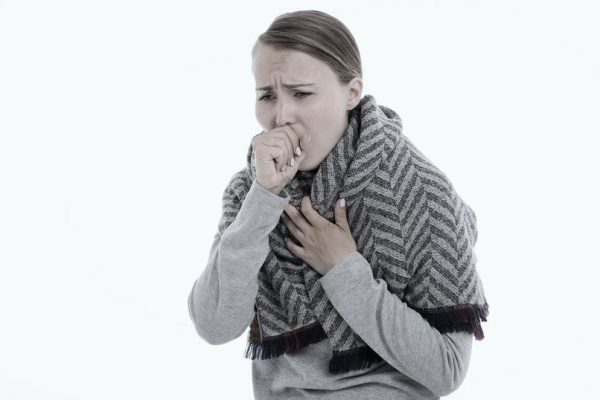
One of the symptoms of Covid-19 is cough that puts strain on lungs and the body. During recovery, one will feel exhausted with continuous cough. Cough is generally a reflex action of phlegm, allergens, dust that irritates windpipe and lungs. People who recovering from Covid-19 might experience dry cough for few more days.

Coughing excessively can make a person breath through mouth that again irritates lungs and could increase the coughing. How to manage cough?

Practicing normal breathing or yogic breathing will help. Tummy breathing – where breathing rises tummy while taking breath in, and fall during breathing out, Pranayama breathing with alternate nostril breathing will help to control cough.

To reduce cough one can try these techniques:

  • Gentle breathing in and out through nose until cough goes away
  • Slowly sipping hot water
  • Close mouth and swallow
  • Chewing menthol drops

Experts tips to manage a dry cough (Source: Medanta)

A dry cough is likely to put greater strain on your throat. The following strategies can be used to manage a dry cough-

• Stay hydrated by drinking plenty of water (lukewarm preferably)

• Take small sips of fluids instead of taking large sips to facilitate swallowing.

Steam inhalation is necessary to cure a dry cough. So pour hot water into a bowl and put your head over the bowl and breathe in the steam.

-If comfortable, cover your head and bowl with a towel. You can also use a steam inhalation machine if you have one.

• Drink warm honey and lemon or another warm drink like kadha to soothe irritated throat

• Salt water gargle or Betadine gargle (1 part betadine & 3 part of water) can be effective for treating a sore throat.

• If you feel the need to cough but don’t have a soothing drink or water at hand, swallow repeatedly.

Tips to manage a productive cough:

A phlegmatic or productive cough can become difficult to manage since you have to spit out the phlegm-filled sputum regularly. It’s also important to note that viral infections, especially COVID-19, are contagious, so proper disposal of sputum is very important. You should also ensure that the sink where you dispose of your sputum is regularly disinfected. The following strategies can be used to manage a productive cough:

• Keep yourself hydrated with lukewarm water, broths, soups, herbal teas and kadha.

• Take steam inhalation at least thrice a day to loosen the phlegm congested in your lungs.

• Lie on either the left or the right side, instead of lying on your back. This might help drain the phlegm faster.

• Movement makes the lungs function, and it can also move the phlegm to facilitate your spitting it out. So, try to be mobile by walking around your room.

While India and other countries are into second wave of Covid-19 with new mutants, it is becoming obvious that hygiene and other instructions all should follow. 

Image credit: Image by Anastasia Gepp from Pixabay  (Free for commercial use)


Author: Sumana Rao | Posted on:
« »
« »

Recommended for you