All posts by HealthyLife

HealthyLife is a part of www.WeRIndia.com, an all India – centric website (https://healthylife.werindia.com) and is solely owned and operated by WeRIndia.com. It is a Indian nutritional portal providing educational articles.This nutritional port was launched on February 5th, 2015.
Nutrition and health benefits of sattu

Nutrients and health benefits of Sattu

Do you know ? In India Body builders use sattu powder to stay fit and healthy! A glass of sattu water is a must for body builders to keep cool and for tissue repair.

Presence of iron, calcium, manganese, magnesium, insoluble fiber and more than 20% protein makes sattu highly nutritious. This combination of important nutrients in sattu gives all necessary and daily nutrients needed for our body.

A 100 gram of sattu powder contains -,

20.6 % protein, 7.2 % fat, 1.35 %  crude fiber, 65.2 % carbohydrates, 2.7 %  total ash, 2.95 %  moisture and 406 calories.

Sattu provide high nutrition and combination of pulses, cereals, Bengal gram in sattu helps vegetarians to get enough protein. Apart from this, sattu has several other health benefits:

  • Sattu is a preferred ingredient amongst those who love to stay fit and energetic. One can include it in daily diet to be stay healthy.
  • Sattu helps to keep body hydrated. Drinking Sattu sharabat during hot summer days prevents dehydration as it keeps system cool and prevents indigestion.
  • Drinking cool sattu helps to prevent sunstroke
  • Those who want to reduce or maintain healthy weight can benefit from sattu by increasing metabolism

Sattu benefits continued in next slide…. Image: https://www.pikrepo.com/fxrqn/four-brown-wooden-round-containers-on-brown-wooden-table


Author: HealthyLife | Posted on: August 26, 2020
« »
« »

Recommended for you

Detoxifying sattu liquid

More Health Benefits of Sattu

Combination of pulses, cereals, Bengal gram in sattu helps vegetarians to get enough protein.

  • Sattu has low glycemic index and is good for high sugar patients. It helps to maintain blood sugar level.
  • Sattu is good for maintaining good cholesterol, promotes heart health and regulates blood pressure and thus promotes good heart health.
  • It improves bowel movement and also  reduces problems associated with digestive organ and stomach. Consuming sattu increases appetite and sametime keeps stomach full thus helps us prevent eating junk food.
  • It is a good detoxifying agent and keeps body energetic and sickness free.
  • Sattu stimulates and promotes red blood cells that carry oxygen essential for all cells and tissues.
  • Sattu is good for hair and glowing skin!

Image: https://www.pikist.com/free-photo-iuzwn

Image: Blueberry smoothie: https://pxhere.com/en/photo/1438951 (CC0)


Author: HealthyLife | Posted on:
« »
« »

Recommended for you

Sattu Indian bread

Ways to use sattu

Sattu with single ingredient Bengal gram or combination of cereals, pulses can be consumed in different ways.

  1. Mix sattu with water, jaggery and black salt and drink to boost energy
  2. Add chopped onion, green chilli, black salt, lemon, roasted cumin powder to sattu, mix well and drink.
  3. Mix sattu in water with sugar, salt and little cardamom powder and drink
  4. Mix sattu with dry roasted nuts, grind and store in an airtight container. Add 2 to 3 spoons of this mix to breakfast cereal, or add to milk or soymilk and drink.
  5. To stimulate RBC, add sattu in water and drink in empty stomach
  6. One can add sattu to curry along with curry powder.
  7. Add chopped onion, garlic, green chilli, red chili powder, salt  and water to sattu to prepare Indian sattu bread
  8. To 2 tsp clarified butter (ghee) add a cup of sattu, saute till it turns brown. After cooling, mix it with milk, add sugar, cardamom powder and stir slowly on low flame. Mix well, add little water to reduce thickness and drink.
  9. You can add sattu powder to milkshakes, smoothies, dessert, bread.

Image credit: https://commons.wikimedia.org/wiki/File:Kistibij.jpg#/media/File:Kistibij.jpg (CC BY-SA 3.0)


Author: HealthyLife | Posted on:
« »
« »

Recommended for you

Side effects of sattu

Side effects of sattu powder

Sattu is an ideal food for children, pregnant women, young adults and even elderly people. It is easy to prepare and very easy to digest. Whether a single or combination of ingredients, sattu serves the much needed nutrients for human body and is a good nutrition one should consider to add in daily diet. It is one of the best food for those who want to lose weight!

Does consuming sattu has any side effects?

Sattu in high quantity can cause gas and bloating. People who suffer from gas must consume less quantity of sattu especially if sattu is made of only Bengal gram. Expert say, people who have gall bladder and kidney stones should avoid Bengal gram sattu.

Image credit: Pulses: https://www.pikist.com/free-photo-sihgt (Free for commercial use)

Bengal gram: https://commons.wikimedia.org/wiki/File:A_photo_of_roasted_bengal_gram.JPG Thamizhpparithi Maari / CC BY-SA (https://creativecommons.org/licenses/by-sa/3.0)


Author: HealthyLife | Posted on:
« »
« »

Recommended for you

Infrared thermometer

Non-contact Infrared Thermometer

Thermometer is one of the instrument that is worth having at home. Many types of thermometer – digital as well as mercury reading thermometers are available in market. However measuring a person’s body temperature without coming in contact with the person is not possible with regular thermometer. This is where non-contact infrared thermometers are gaining much popularity in this pandemic.

Using non-contact infrared thermometers (NCITs) reduces cross contamination and minimizes the risk of spreading Covid-19. The typical body temperature should be at 98.6°F (37.0°C) and is considered a “normal” temperature. Some research studies say that  “normal” body temperature can be a wide range- from 97°F (36.1°C) to 99°F (37.2°C).. Improper use of NCITs may lead to inaccurate measurements of temperature.

NCITs are easy to use, very clean and are mostly disinfected, measures temperature readily and rapidly, if needed it is easy to retake the temperature with NCITs.

The person who uses the device should strictly follow the manufacturers instruction to use NCIT.

Photo by Ketut Subiyanto from Pexels  (Free for commercial use)


Author: HealthyLife | Posted on: July 31, 2020
« »
« »

Recommended for you

Covid-19 Economic stimulus & world hunger

COVID-19: Using economic stimulus to reduce the long-term hunger impact

New FAO (Food And Agriculture Organization, UN) Policy Brief analyzes pandemic-driven recession’s threat to global hunger levels

Beyond the COVID-19 health emergency, a recession looms, and countries ought to take measures now to soften the longer-term impacts on hunger and food insecurity, a new FAO policy brief says.

Forecasts for the global economy vary in detail, but all point to a historic downturn. The International Monetary Fund now expects worldwide gross domestic product to shrink by 3.0 percent in 2020, compared to January projections of 3.3 percent growth. The large downturn is also expected to usher in the first outright recession in sub-Saharan Africa – where about a quarter of the population is undernourished – in 25 years.

In the 2019 State of Food Security and Nutrition in the World (SOFI) report, FAO analysts noted that economic slowdowns and downturns helped explain rising undernourishment levels in 65 of the 77 countries that recorded such rises between 2011 and 2017. That underscores the risk of adverse hunger trends ahead.

The new FAO Policy Brief offers an analysis of food supply data since 1995, which is linked to FAO’s statistical development of the prevalence of undernourishment (PoU) indicator and correlates them to past local economic trends in countries that are net food importers.

It notes that in the absence of timely and effective policies, millions of people are likely to join the ranks of the hungry as a result of the COVID-19-triggered recession. That number will vary according to the severity of economic contractions, ranging from 14.4 million to 38.2 million people, or even 80.3 million should there be a truly devastating contraction of 10 percentage points in all 101 net food-importing countries’ GDP growth.

The Policy Brief warns that the actual outcome could be worse if current inequalities in access to food are worsened. It includes scenarios and methodology and a technical note was developed and published simultaneously to explain those aspects in further detail.

“The Policy Brief offers evidence in favor of making hunger reduction a priority of the economic stimulus measures to address COVID-19,” says Marco V. Sánchez, Deputy-Director of FAO’s Agricultural Development Economics Division.

Safeguarding trade and food supply chains and promoting social protection to ensure food access

As the world is not facing food shortages, FAO is urging that countries do their best to keep trade flowing and food supply chains alive and increase agricultural output during the international health crisis. The large-scale fiscal and monetary responses that governments are crafting to respond to the expected blow to economic growth, represent an opportunity to tackle the longstanding issues in many middle and low-income countries of inequality in accessing healthy food.

Cash and in-kind transfers, new credit lines for key actors in food systems, safety nets, income support, distribution programmes such as food banks, and continuing school-feeding delivery, should be directed to the most vulnerable and poorest people. Such targeting, the brief enjoins, will also maximize the effect that public resource outlays have on keeping demand more dynamic and safeguarding people from falling into chronically weak dependencies that can last for years.

There are encouraging examples of “stimulus for food” initiatives in low and middle-income countries – at least 106 countries have introduced or adapted social protection measures in light of the COVID-19 pandemic, according to a real-time review of social protection policy measures from the World Bank and the International Labor Organization – although the ability of African countries to deploy cash transfers has so far been weak.

International cooperation and assistance is needed to help the poorest and most vulnerable countries, and this can be linked to recipient countries reallocating more of their own resources to achieve the desired objectives and avoiding the highly adverse outcome of increased inequality in access to food.

Targeting public stimulus measures towards initiatives to bolster food access during the pandemic also offers an opportunity to build more lasting resilience into food systems to safeguard them against economic slowdowns and downturns in the future.

News published in : Food and Agriculture Organizations of United Nations http://www.fao.org/


Author: HealthyLife | Posted on: July 30, 2020
« »
« »

Recommended for you

Reverse side angel pose

Reverse Side Angle Parivrtta Parsvakonasana for stronger core

Looking to improve your core strength? Practice reverse side angle or Parivrtta Parvsvakonasana. It is an intermediate pose that helps to get stronger core, stronger legs and also improves digestion in addition helps your flexibility -Healthylife

LEVEL :Intermediate

Anatomy:C hest|Core|Legs|Shoulders

Pose Type : Standing|Twist

Parivrtta Parsvakonasana :parivrtta = to turn around, revolve, parsva = side kona = angle

par-ee-vrt-tah parsh-vah-cone-AHS-anna

Benefits

  • Improves flexibility
  • Strengthens legs and core
  • Improves digestion
  • Stretches the groin, chest, and shoulders

Contraindications

How To

  1. From Warrior II (Virabhadrasana II), with your legs in a Warrior Stance and arms in a capital T, inhale to prepare
  2. Exhale, reach your front hand forward and hinge your torso slightly forward
  3. Rest your forearm on top or slightly inside of your front thigh
  4. Extend your top arm up towards the sky, fingers pointing above you
  5. Stack your shoulders on top of each other
  6. Option to reach your top arm up overhead, wrapping your bicep around your ear with your fingers reaching towards the front of your space

Modify or Replace

  • Rest your bottom hand on a block at any level to add depth without overextending your arms and shoulders
  • Bring your top hand to rest on your top hip to allow your arm and shoulder to rest

Sequencing Tips

Before:

  • Reclining Bound Angle Pose (Supta Baddha Konasana)
  • Mountain Pose (Tadasana)
  • Warrior II (Virabhadrasana II)

After:

  • Bird of Paradise (Svarga Dvijasana)
  • Warrior II (Virabhadrasana II)
  • Reverse Warrior (Viparita Virabhadrasana)

Teaching Cues

  • Root all four corners of the feet into the floor.
  • Draw the shoulders down the back.
  • Send the tailbone toward the floor.

Variations

  • Find a half bind with your top arm wrapping around your lower back to grasp your hip, upper thigh, or a piece of clothing nearby
  • Find a full bind from your half bind by wrapping your bottom arm under your front thigh to bring your hands to meet and interlace behind you

Watch Out For

  • Back heel lifting
  • Shoulder over-extension

This article and image published here with prior permission from beyogi.com


Author: HealthyLife | Posted on: July 29, 2020
« »
« »

Recommended for you

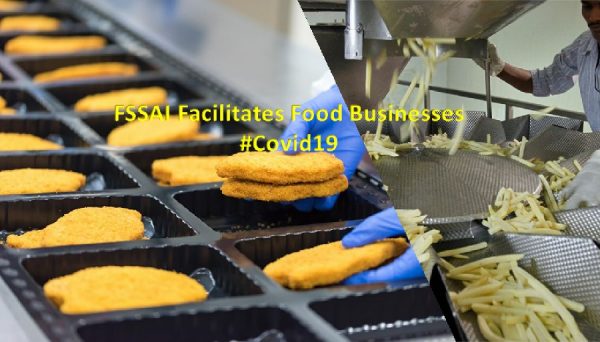
FSSAI Facilitates food businesses

FSSAI facilitates food businesses amid COVID 19 pandemic

Press release from FSSAI for Food businesses to facilitate food industry to face Covid-19 challenges- FSSAI has given guidelines regarding hygiene and food safety measures to make it easy for food industry to handle and serve food to customers. The links provided in the press release gives training guidelines for the restaurants and other food vendors. For more information click on the links provided at the end of the article – Healthy Life

In response to COVID 19 pandemic, the Food Safety & Standards Authority of India (FSSAI) is taking several steps to facilitate industry during the lockdown period. As the country moves further in its fight against COVID 19 and many restrictions are being eased across many areas, FSSAI is gearing to face emerging challenges.

FSSAI is engaged with State Food Safety Departments, communicating the emerging  priorities in food safety landscape. The priorities communicated include expediting work related to licensing on the online portal; establish licensing helpline in each State with a dedicated number and email id; create robust complaint handling mechanism; conduct only essential inspections etc. The need for facilitating food business has been strongly emphasized by FSSAI to the State food authorities.

FSSAI had issued detailed guidelines on food safety and hygiene for food businesses during the COVID 19 pandemic. The same can be accessed at:

https://fssai.gov.in/upload/uploadfiles/files/Guidance_Note_COVID_15_04_2020.pdf

Realizing the need for training food handlers, FSSAI has commenced training for food handlers under its flagship Food Safety Training & Certification (FoSTaC) programme. Besides training, there is a need to counter myths and misinformation. Several instances have been brought to the notice of the Authority where products such as frozen food, food served cold/ chilled etc. were selectively not allowed to be transported, stored or sold, ostensibly on the notion that they could promote spread of COVID-19. FSSAI has communicated to State’s/UT’s giving instructions to review any such restriction imposed in their State and rescind those not consistent with FSSAI guidance. States/UT’s have been instructed to follow a non-discriminatory approach while dealing with food businesses in the lockdown and even post  lockdown period.

The communications to States can be accessed at:

Lin1: https://www.fssai.gov.in/upload/advisories/2020/05/5eb13e07d8b40Letter_Steps_Business_COVID_05_05_2020.pdf

Link 2: https://www.fssai.gov.in/upload/advisories/2020/05/5eb3ba21c046eLetter_Clarification_Food_COVID_05_05_2020.pdf


Author: HealthyLife | Posted on: May 15, 2020
« »
« »

Recommended for you