
All posts by Sumana Rao

Don't worry about the people in your past; There's a reason they didn't make it to your future.
Health Awareness

Health Awareness Months, Weeks, and Days

National Health Observances (NHOs) are special days, weeks, or months dedicated to raising awareness about important health topics.

January

Cervical Health Awareness Month

National Birth Defects Prevention

National Glaucoma Awareness Month

Thyroid Awareness Month

National Winter Sports TBI Awareness Month

National Folic Acid Awareness Week (second week of January)

February

American Heart Month

AMD/Low Vision Awareness Month

National Children’s Dental Health Month

International Prenatal Infection Prevention Month

African Heritage & Health Week (first week of February)

Congenital Heart Defect Awareness Week (February 7-14)

Condom Week (week of Valentine’s Day)

Eating Disorders Awareness Week (last week of February)

National “Wear Red” Day (first Friday of February) 

March

National Colorectal Cancer Awareness Month

National Endometriosis Awareness Month

National Kidney Month

Multiple Sclerosis Education Month

National Nutrition Month

Save Your Vision Month

Sleep Awareness Month (promoted by the National Sleep Foundation)

Patient Safety Awareness Week (first full week of March)

National Sleep Awareness Week (the week before daylight savings switch)

Brain Awareness Week (second full week of March)

National Poison Prevention Week (third full week of March)

April

Alcohol Awareness Month

National Autism Awareness Month

National Child Abuse Prevention Month

National Donate Life Month

National Facial Protection Month

Irritable Bowel Syndrome (IBS) Month

National Minority Health Month

Occupational Therapy Month

National Sarcoidosis Awareness Month

STI Awareness Month

Sexual Assault Awareness and Prevention Month

Sports Eye Safety Awareness Month

Women’s Eye Health and Safety Month

National Public Health Week (first full week of April)

Minority Cancer Awareness Week (second full week of April)

National Infertility Awareness Week (last full week of April)

Every Kid Healthy Week (last full week of April)

World Immunization Week (last week of April)

National Infant Immunization Week (generally last week of April)

Air Quality Awareness Week (last week of April)

May

American Stroke Awareness Month (promoted by the National Stroke Association)

Arthritis Awareness Month

National Asthma and Allergy Awareness Month

Better Hearing and Speech Month

National Celiac Disease Awareness Month

Children’s Mental Health Week

Clean Air Month

Global Employee Health and Fitness Month

Healthy Vision Month

Hepatitis Awareness Month

National Mediterranean Diet Month

Melanoma/Skin Cancer Detection and Prevention Month

Mental Health Month

National High Blood Pressure Education Month

National Physical Fitness and Sports Month

National Osteoporosis Awareness and Prevention Month

Ultraviolet Awareness Month

Children’s Mental Health Awareness Week (first full week of May)

Food Allergy Awareness Week (second full week of May)

National Women’s Health Week (begins on Mother’s Day)

National Alcohol and Drug-Related Birth Defects Awareness Week (mother’s day beginning)

National Neuropathy Awareness Week (second full week of May)

National Senior Health Fitness Day (last Wednesday of May)

June

Cataract Awareness Month

Fireworks Safety Month (through July 4)

Hernia Awareness Month

Men’s Health Month

Myasthenia Gravis Awareness Month

National Aphasia Awareness Month

National Congenital Cytomegalovirus Awareness Month

National Safety Month

National Scleroderma Awareness Month

Helen Keller Deaf-Blind Awareness Week

Men’s Health Week (second week of June)

National Cancer Survivors Day (first Sunday of June)

July

Cord Blood Awareness Month

International Group B Strep Throat Awareness Month

Juvenile Arthritis Awareness Month

National Cleft & Craniofacial Awareness & Prevention Month

August

Children’s Eye Health and Safety Month

National Breastfeeding Month

National Immunization Awareness Month

Psoriasis Awareness Month

World Breastfeeding Week (first week of August)

September

National Atrial Fibrillation Awareness Month

Childhood Cancer Awareness Month

National Food Safety Education Month

Fruit and Veggies-More Matters Month

Healthy Aging Month

National ITP Awareness Month

Blood Cancer Awareness Month (promoted by the Leukemia and Lymphoma Society)

National Cholesterol Education Month

Ovarian Cancer Awareness Month

National Pediculosis Prevention Month/Head Lice Prevention Month

Prostate Cancer Awareness Month

National Recovery Month

National Sickle Cell Month

National Traumatic Brain Injury Awareness Month

National Yoga Awareness Month

Newborn Screening Awarenss Month

Whole Grains Month

World Alzheimer’s Month

Sepsis Awareness Month

National Suicide Prevention Week

World Suicide Prevention Day (10)

World Sepsis Day (13)

October

National Breast Cancer Awareness

National Down Syndrome Awareness Month

Eye Injury Prevention Month

Health Literacy Month

Healthy Lung Month

Home Eye Safety Month

National Physical Therapy Month

SIDS Awareness Month

Spina Bifida Awareness Month (promoted by the Spina Bifida Association)

Pregnancy and Infant Loss Awareness Month

Domestic Violence Awareness Month

Mental Illness Awareness Week (first full week of October)

Bone and Joint Health National Awareness Week (12-20)

National Health Education Week (third full week of October)

International Infection Prevention Week (third full week of October)

Respiratory Care Week (last full week of October)

Red Ribbon Week (last week of October)

World Mental Health Day (10)

Pregnancy and Infant Loss Awareness Day (15)

November

National Alzheimer’s disease Awareness Month

COPD Awareness Month

Diabetic Eye Disease Month

National Family Caregivers Month

National Healthy Skin Month

Lung Cancer Awareness Month

Pancreatic Cancer Awareness Month

National Stomach Cancer Awareness Month

Prematurity Awareness Month

GERD Awareness Week (Thanksgiving week)

Great American Smokeout (third Thursday of November)

World Prematurity Day (17)

December

Safe Toys and Gifts Month

National Influenza Vaccination Week (first full week of December)

World AIDS Day (1)

Source: http://healthfinder.gov/nho/

Image credit: Photo by Garrett Jackson on Unsplash (Free for commercial use)


Author: Sumana Rao | Posted on: April 3, 2023
« »
« »

Recommended for you

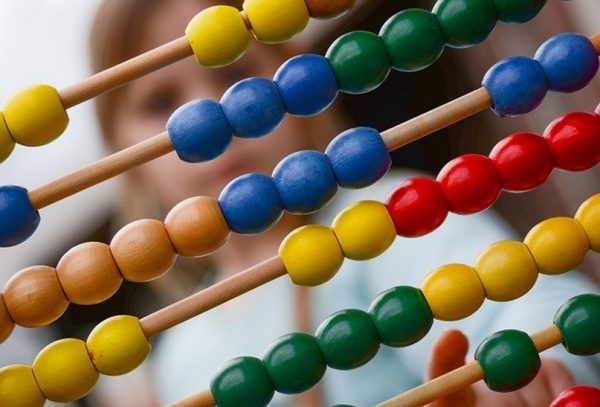
Basic hand on toys for kids

Encourage child to Play With Basic Hand on Toys

According to Aleeya Healey, MD of AAP “Toys have evolved over the years, and advertisements may leave parents with the impression that toys with a virtual  or digital based platform are more educational”.

Using electronic gadgets and digital media as replacements to basic, traditional hand on toys and games interferes in kids healthy development. Using digital media gadgets vs. toys reduces the development of imagination skills and slows their social skills. There are many reasons’ for parents to consider and encourage child to play with basic hand on toys.

Which are ideal toys for children?

Toys that help children developmental abilities and improves growth and skills are best toys to play with. Toys will help to develop problem solving skills, social interactions, physical activities, language interactions and overall motor skills. Toys should help children to play and enjoy same time. Children when interact with toys their imagination skill develops.

Whereas, electronic digital toys do not provide children the critical health environment needed for normal development. Some electronic gadgets that are specially developed for children who need special care (like autism) are useful. Regular video games, smart phones with game apps will not help children to develop social skills instead these gadgets can isolate them more.

According to American association of pediatricians parents should consider providing hand on toys that are beneficial for child’s growth. While selecting toys:

  1. Recognize one most important purpose of play with toys. For infants a toy that facilitate warm, supportive interaction is necessary. It helps them to develop relationship skills.
  2. The most educational toys is the one that fosters interaction between child and parents or caregivers that is both unconditional play and supportive.
  3. Do not choose toys that are overstimulating and creates confusion.
  4. Do not buy toys that promote race or gender-based stereotypes.
  5. Limit video and computer games by infants and young children. Reduce total screen time to less than an hour. Better to avoid use of flashing screen for infants (18-24 months old). If it is appropriate, then children between 3-5 ears should paly with video games or computer for half an hour and in parents presence.

Other points to keep in mind while considering toys:


  • For toddlers buy toys that are soft and nobly parts that will help baby’s sore gums
  • Easy to hold and easy to grip with small hands
  • Squeaky toys stimulate baby’s hearing
  • Bright colors print on the toys provide visual stimulation for babies
  • Use children books for pretend play along with suitable toy – mimicking and playing simultaneously improves child’s thinking and imagination skills.
  • Consider buying toys with natural food paint.
  • Building, construction toys, Lego bricks and gears for example will help children to visualize and imagine
  • Puzzle sets – vegetable, fruit, car, house sets improve their learning skills and will be able to recognize items.
  • Imagine how the toy will benefit child’s overall skills and growth

Not enough toys at home? Consider giving child materials that build child’s imagination and interactive skills like –

  • Hats, backpacks, children books
  • Cooking utensils, small food containers, dishes
  • Blankets, old sheets, empty boxes, cardboard blocks
  • Used plane tickets from vacation trip
  • Writing materials – pen, note book, shopping list

There is no such video or computer game or an app the replaces relationship built over toys” says Dr. Healey. Basic hand on toys give warmth, helps in physical and early mental development. Children while enjoy playing with toys cherish the memories of their favorite toy forever and it brings smiles on their face.  

References:

  • https://www.healthychildren.org
  • https://extension.psu.edu
  • https://theinspiredtreehouse.com
  • Image credit: Image by Rudy and Peter Skitterians from Pixabay (Free for commercial use)

Author: Sumana Rao | Posted on: March 31, 2023
« »
« »

Recommended for you

Stop unhygienic practice and habits today

Unhygienic and unhealthy habits

Unhygienic and unhealthy habits that can lead to diseases that could be contagious and may result in deaths like COVID-19 outbreak!

  • Habits of chewing and spitting
  • Tobacco smoking
  • Going for defecation outside
  • Eating street food
  • Not washing vegetables & fruits
  • Nail biting
  • Cooking with untied hair
  • Picking nose
  • Sharing toothbrush, razor, hairbrush etc.
  • Not flushing toilet
  • Not changing undergarments
  • Eating outside oily food
  • People eating from same plate at same time
  • Not cleaning running nose
  • Coughing and sneezing without covering (face/mouth)

According to CDC, such unhealthy habits could lead to conditions such as – Food poisoning, diarrhea, skin rash, obesity, asthma, bad breath (Halitosis), urinary infections, acne, acidity, flu and other epidemic and pandemic diseases.

Take care of your health by practicing and developing good habits starting today!

Image credit: https://commons.wikimedia.org/wiki/File:Spit_from_chewing_Areca_nut_02.JPG, Attribution: Anna Frodesiak / CC0 &

Nail biting: Photo by Rafael Serafim from Pexels (Free for commercial use)

Main article: https://healthylife.werindia.com/your-road-to-healthy-life/proven-good-old-hygiene-practices


Author: Sumana Rao | Posted on: March 30, 2023
« »
« »

Recommended for you

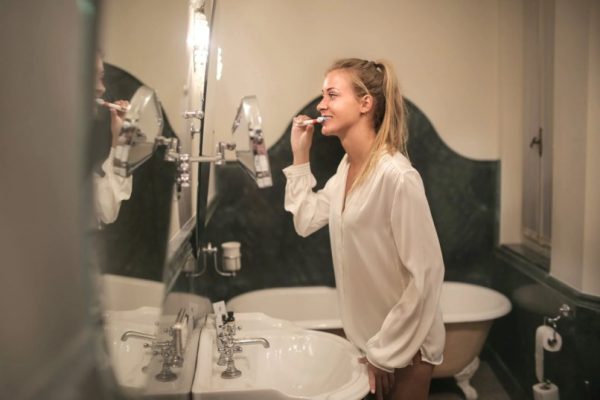
Brushing and bathing why we need to

Why to brush teeth & take bath

Brushing teeth after getting up from bed: If you are one of those people, who would like to have breakfast on bed, then you must reconsider your habit. People may say it is personal preference, but it is a good practice to brush before breakfast.

We know breakfast is important meal of the day. This is the reason we should not skip breakfast. Likewise, we should not skip brushing teeth before breakfast. This helps to reset the mouth and gets it ready for the foods of the day by removing the bacteria that grows in the mouth overnight. During our night sleep, bacteria in the mouth multiplies causing bad breath by turning sugar into acid. This acidic environment is not good for our health. If we consume food without brushing teeth or cleaning mouth, can ruin our health and cause decay of teeth. To remove bacteria that is sitting on teeth, tongue and oral cavity it is a good practice to brush teeth and then have breakfast. If you feel the smell of toothpaste interfering in your breakfast, then have half a glass of warm water after brushing your teeth.

Oral hygiene is important for health because it is linked to our total health.

Why we should take bath daily? Bathing is essential for human body for many reasons. Regular bathing helps in cleansing of body and organs. According to literature “the toxic compounds that are sitting on our skin should be expelled regularly in order to prevent the disease”.

The toxic components referred here is for microbes, sweat and other foreign particles sitting on the body. Most people shower for other reasons too, like concern about body odor, it helps to wake up, bathing reduces body pain and it is relaxing. Whatever might be the reason, bathing using warm water with skin friendly soap, helps to get rid of microbes, dirt and dead skin. Bacteria can grow on body and feed on dead skin cells eventually causing rash, irritation, inflammation. Dermatatis neglecta is a condition that  results in thick brown plaque on skin leading to secondary infections. It prevents spreading of skin diseases and keeps skin moisturized.

You don’t need to take multiple showers every day, one shower per day is enough to keep your body clean and healthy.

Image credit : Photo by Andrea Piacquadio from Pexels
(Free for commercial use)

Main article: https://healthylife.werindia.com/your-road-to-healthy-life/proven-good-old-hygiene-practices


Author: Sumana Rao | Posted on:
« »
« »

Recommended for you

Bath after hair cut & why we should trim nails

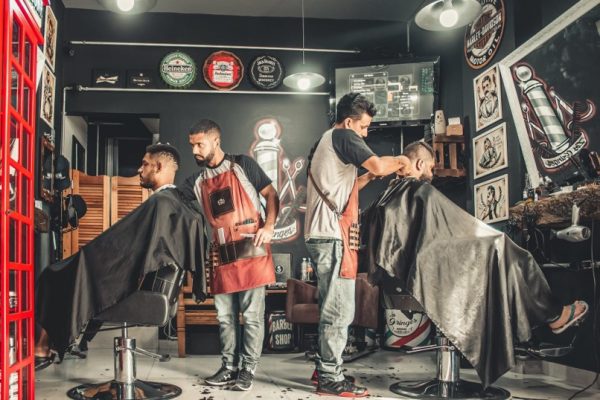
Shower after hair cut & why we need to trim nails

Mandatory to take shower after a hair cut :We often see people going out for haircut and then go for shopping or attend to other works. This is forbidden in many cultures especially in India.

Scientific explanation for this is- everyday there are many people visit barbers or hair salon for haircut, hair styling, hair coloring, shaving, for shampooing etc. There is a chance that someone might have severe dandruff or skin conditions that could be contagious. If proper precautions not taken and saloon person uses same tools (scissors, comb, brush etc) between his/her customers, it could result in transfer of germs. Contagious diseases can thus transfer from one person to another. This could also result in hair loss. After visiting a salon make sure to go back home put clothes for washing (as it might contain hair strands) and take a shower. Shampoo your hair and wash.

Cutting and cleaning fingernails and toenails: Often you may hear your mom saying cut your finger nails or toe nails. It is a good practice because of health reasons. Parents may insists to cut your nails morning after bath. Reason for this is, the nails get softer after bath and it is easy to trim soft nails. Not cutting nails is a sign of poor hygiene and it could results in:

  • Bacterial infection: When we don’t trim nails bacteria and other germs will start growing and cause infection in fingers and toes
  • Fungal infection: Like athlete’s foot happens because of hidden fungi in toenails. Accumulated dirt in nails is food for fungi and eventually they come out infect your skin
  • Injury to body: Keeping long nails is a risk not just for you, for others as well. It can cause serious injury or even may hurt the eye causing damage to eye and severe infection.
  • Results in inward growth of nail
  • Food poisoning: When we eat by hand with dirty nails, infectious microbes enter our stomach causing food poisoning. This is also one of the reasons we must wash our hands before consuming food

Image credit: Photo by Thgusstavo Santana from Pexels
(Free for commercial use)

Main article: https://healthylife.werindia.com/your-road-to-healthy-life/proven-good-old-hygiene-practices


Author: Sumana Rao | Posted on:
« »
« »

Recommended for you

Mandatory isolation after delivery or death

Mandatory isolation- why

Mandatory 10-12 days isolation: We are worried about self-quarantine, isolation and social distancing and waiting for this period to end. Do you know generally the germs (microbes) infection, contagious and spread period is between 2-15 days? Some microbes take longer period up to 21 to 25 days! Our ancestors were aware of this science and designed certain rules to protect the weak ones. People often criticize this practice without knowing the science behind the practice. Traditionally it is known as “purification ritual”.  It is purification of body as well as mind.

Isolation after birth of baby: After birth of a baby, both mother and baby are isolated and treated in separate room where no other family members except the care takers enter. After delivery, mother’s body will be weak and her mental status will be fragile due to loss of blood and hormonal changes. New born baby’s immune system will be weak and tender body has to adjust to new world. If someone sick come in contact with mother and baby, it can cause health issues for both. To prevent such unhealthy environment in many cultures both family members and others are not allowed near the newborn and the mother for 10-12 days!.

Practice of burning the deceased and mandatory isolation of family: The science behind for this ritual is, when someone dies, it might not be due to old age, it could be due to illness. If the body is burnt, then the germs that are inhabiting in the body will die due to high temperature. This way the body will not spread the disease.

After someone’s death, the entire family will keep social distancing for 10 to 12 days. This is not just to perform rituals, also to make sure effect of (if any) germs that are transmitted from sick person to diminish and healthy environment in the house to be restored. This period of grieving also gives chance to family members to recover mentally and come out from the stress. We know stress in mind makes our immune system weak and people often fall sick.

Image credit: Image by Наркологическая Клиника from Pixabay  (Free for commercial use)

Main article: https://healthylife.werindia.com/your-road-to-healthy-life/proven-good-old-hygiene-practices


Author: Sumana Rao | Posted on:
« »
« »

Recommended for you

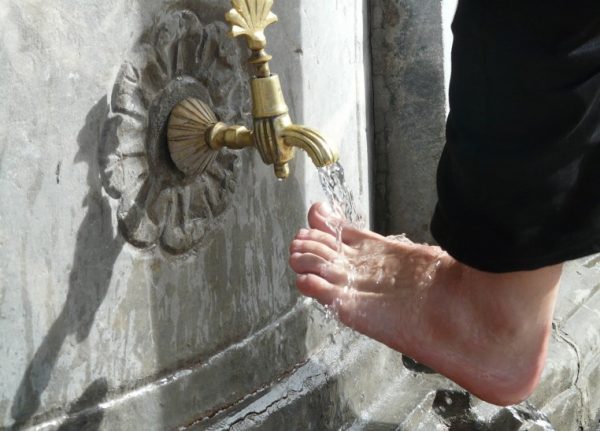
Washing legs and hands

Why should we wash legs & hands

Washing hands and legs:Our elders insist us to wash hands and legs as soon as we enter home and before we eat and drink. We may get irritated. But this is good habit for the following reasons:

Studies conducted by time to time show us why it is critical to wash hands and legs after returning home. When we step out, we come in contact with several materials that is touched by others. Following are some of the high touch areas that have microbes.

Toilet seat and cover, toilet flush, door handles and doorknobs, light switches, sinks, faucets, hand towels, handbags, recycle bags, tote bags, car steering wheel, furniture, reusable bags, appliances – door handle, Shopping carts and baskets, phones, desks and keyboards, ATM machines.

After coming in contact with so many high microbial areas, we must wash hands. If not, we will spread the germs to families and friends who come in contact with us through the materials at home that we touch. Similarly washing feet is important because we would have encounter feces, spit, blood, mucous, pets littering, rotten materials etc. Even if we wore covered shoes with socks it is best for health to wash feet after returning home to avoid sickness.  

Image credit: https://www.needpix.com/photo/49012/washing-ritual-foot-care-washing-feet-islam-water-foot-fountain-faucet (Free for commercial use)

Main article: https://healthylife.werindia.com/your-road-to-healthy-life/proven-good-old-hygiene-practices  


Author: Sumana Rao | Posted on:
« »
« »

Recommended for you

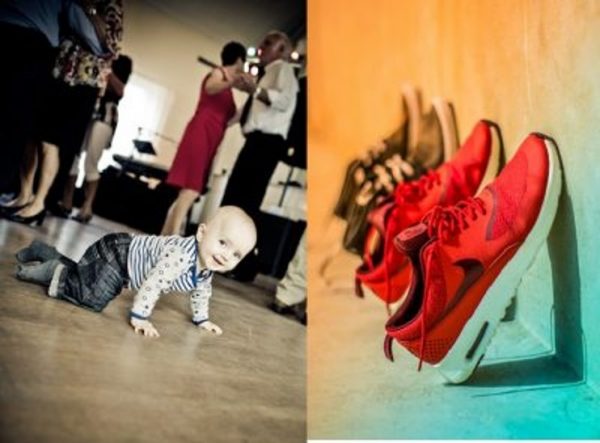
Leaving shoes outside

Why to leave shoes outside

Leaving shoes outside :Reasons to leave shoes outside the house or in designated place:

  • In houses with young infants and toddlers might pick up food from floor and end up sick. Children under age 2 are more vulnerable to microbes and germs that we carry inside the house. On an average 80 times an hour a child will put its hands in the mouth!
  • People who have weaker immune system might catch allergy easily
  • Microbes can transfer easily to food causing illness
  • Not everyone looks at the bottom of shoe or wipe it before entering the house – they may carry disgusting things under the shoe that goes on the carpet and clean floor. You will be surprised to know the list of germs you might be carrying in your shoe.
  • Scientists claim that shoes are dirtier than a toilet seat. Toilets seats carry about 1000 germs and shoes way more than that.

What changes you will see?

  • Safe places to crawl for babies and toddlers:  Removing shoes keeps floor much cleaner and germs won’t share playing, crawling space with babies.
  • Health : Families overall health will be good. There won’t be health issues such as UTI, flu, pneumonia, meningitis or diarrhea. Children might bring allergies and sickness from school. At least you know that your house floor is not causing issue!
  • Clean floors: One can notice dramatic difference in the way floor looks. There won’t be soiled marks, shoe impression, visible dirt on the floor. You don’t need to put too much effort to clean the floor.

Remove shoes as soon as you enter the door. Make it a habit.

Main article: https://healthylife.werindia.com/your-road-to-healthy-life/proven-good-old-hygiene-practices


Author: Sumana Rao | Posted on:
« »
« »

Recommended for you