Don't worry about the people in your past; There's a reason they didn't make it to your future.
Today is tomorrow’s yesterday
Human mind wonders in the present, past and future. We always think about our future and what happens tomorrow. We give our best to be safe and happy tomorrow.
While focusing on tomorrow we also have tendency to lose focus on today which is present!
Sometimes we worry what is going to happen tomorrow and sometimes we also look forward for tomorrow.
Instead of keep worrying and destroying our happiness thinking about past and tomorrow, we should learn to live in the present and make best out of it.
How you should receive tomorrow? Here are few best quotes that can inspire you!
Worrying doesn’t take away tomorrow’s problems. It will take away today’s peace – Anonymous : Instead of worrying find out solution, prepare your mind for the situation. “Hope for the best, stop worrying, start living”
Always end the day wit positive thought: It helps to clear the mind and to start fresh next morning.Make good choices today: You will not regret it. Whether it is friends, job, career and anything – chose carefully!
Always stay strong. Express your opinion wisely. You may get hurt several times, but it is what prepares you for tomorrow and you will be strong enough to face life.
Yes, don’t forget today is going to be yesterday of tomorrow’s. Focus on solution and find out ways to handle any situation that might come in your way. Be confident and be strong!
Bed wetting can be due to medical issues or developmental issues in children. It is not uncommon in young children. Human body produces urine all the time regardless of how much water or liquid we consume.
Bed wetting experience is common in childhood and involuntary nighttime wetting can be seen in young boys and girls both.
Reasons for bed wetting: Heredity, high urine production, small bladder capacity, sleep disorder, food sensitivities (like carbonated drinks), constipation and irregular bowel movement. During young age bladder develops gradually.
Between the age 1 and 2 bladder slowly, gradually enlarges and bladder capacity is still small
Between 3 & 4 children learn to void, or inhibit voiding voluntarily
At age 5 majority children will have adult pattern urinary control
Before visiting pediatrician or physician understand child’s bed wetting problem
When the problem started?
How bad it is and how frequent?
Any medical condition?
Any protective undergarments?
Does child is scared or tend to be a heavy sleeper?
Parents discussion and talking to children can overcome the problem of bed wetting. Parents should follow some do’s and don’t while approaching the situation.
Do set goals with child about reducing bedwetting and practice alarm use
Focus on child success and downplay any bedwetting incidents
Do pay attention to child’s progress and the treatment.
Further parents should note that:
Restricting fluids: It is not that effective because, fluid consumption is not usually the cause of bed wetting problem. This may risk child’s health and child may suffer from dehydration.
Punishment: Punishing child will lead to poor self esteem, increased anxiety and disturbs social skills
Drug therapy: Some may be temporarily effective. Most children begin wetting once they stop medication.
How to help children?
One recommendation is to use bed wetting or moisture alarms as these devices train child to understand and recognize full bladder. The alarms success rate is higher and relapse is lower. Parents can select different types of bed wetting alarms.
Encourage children for bathroom trip before going to bed.
Create a positive incentive that act subconsciously and helps child to end bed wetting. Give a sticker on a grid chart every time child stays dry at night.
Constipation is a common causeof bladder problem. Pressure on bladder due to hard poop can lead to instability in the bladder and results in nighttime accident. Address constipation issue in child.
Help child remove any soiled protective bedding and replace with new, clean protection after incident. Encourage child to replace new ones in future. Keep towels and underpads near the bed.
Do not complain, scold and punish child for bed wetting. This will bring their self esteem low and will hurt their creativity and social and school days.
Talk to child and understand what is bothering her/him. Encouraging and discussing about certain issues will help them to overcome bed wetting.
We may be carrying our ancestors’ genetic memories
Do we remember what our ancestors’ activities were like and what they experienced? There are many movies where we see generations experiencing and recalling memories of our long dead generations. What imaginations director and writer penned for films might be a reality – that is what recent studies are showing. We may be carrying our ancestors’ genetic memories !
We can relate or identify our behaviors with our parents, grandparents and great grandparents. We can reason our behavior and attribute it to our few earlier generations. It appears that the experiences which our ancestors lived 14 generations back are having an impact/effect on us now. A team of scientists lead by Barcelona’s center for Genomic Regulationand the Joseph Carreras Leukemia Research Institute say that based on their studies on nematode worms there is possibility that the genes of our ancestors have passed through several generations to give those memories back!
This observation is not made with humans. The theory and assumption is based on nematode research and the fact that the difference between humans and nematode worms’ genetic makeup is not much. Thus, there is a chance that an ancestor who was born few centuries ago might be still playing in our life with his/her memories. This is assuming that if human genetic makeup acts in similar manner as compared to genetic makeup of nematodes!
The basic genetics is that genes are inherited from parents and their parents to them. Changes to genome expression can be due to chemicals, environment, internal factors,psychological issues, chemicals, activities etc. In case, our ancestors experienced severe stress then gene expression – would have changed. This information was stored in (DNA). This will be carried to next generation (epigenetic change) without altering gene sequence. Some researchers give example where ancestors who went through Dutch famine transferred the memories to future generation in the form of genes. Those descendants developed increased glucose intolerance in adulthood! Another example is descendants of Holocaust survivors who have lower levels of cortisol and can bounce back from a trauma.
The studies on nematode helps us to understand epigenetic inheritance because it demonstrates of long the epigenetic inheritance or inter-generational effects carry through in generations.
Studies on nematode and earlier in mice show that memories can be passed down to generations through these genetic changes and offspring inherit the memories and experience of their ancestors. This study also may explain why some people suffer from irrational phobias, psychological conditions, undergo stress for small reasons – well, it might be based on inherited experiences and memories from their ancestors!!
During month of April, markets will start filling with fresh and different varieties of citrus fruits. There are many varieties of citrus one can see that have similar and different health benefits.
Most citrus fruits are used for their vitamin C contents. Some have more bitter taste than others.
Morning breakfast without orange juice is not a complete breakfast for many. Drinking orange juice morning hours boosts energy and helps to go through a day.
Citrus fruits known to enhance metabolism, boosts immune system, fights common cold.
Citrus fruits had culinary values too – zest of lemon and orange peel are added in dessert and dishes.
Next few slides explain how citrus fruit varieties are different from each other and what benefits they offer for humans.
Featured image collage: From Hirt’s garden, www.forgottenpickles.com, pixabay.com, www.halegroves.com, Agrifarming.in, Producemarke
Finger lime:As the name suggests, finger limes are elongated Australian limes. It tastes like a lemon or lime.
It produces pungent oil in skin when squeezed. It tastes unique with grapefruit note. It is famous because of its unique look.
The juicy vesicles used for garnishing dishes looks like caviar and is called lime caviar. Fruits are slender about 3 inches long with thin skin.
Outer skin is purplish, greenish black to light green or rusty red. Fruit skin is dried and used as spice. The tangy flavor makes it perfect for pickles and marmalade.
Buddha’s hand:Have you ever seen branched lemon fruit? It is a wild look of lemon or you can say lemon gone wild!
Buddha’s hand is a unique fruit of citrus variety with sweet and lemon blossom aroma. It does not have juice or pulp. The pith inside is not bitter.
The main use of using this fruit is as lemon zest or used as whole. It is used in candy, zest with sugar and salt, alcohol drinks , raw used while steaming tofu and used as ornamental.
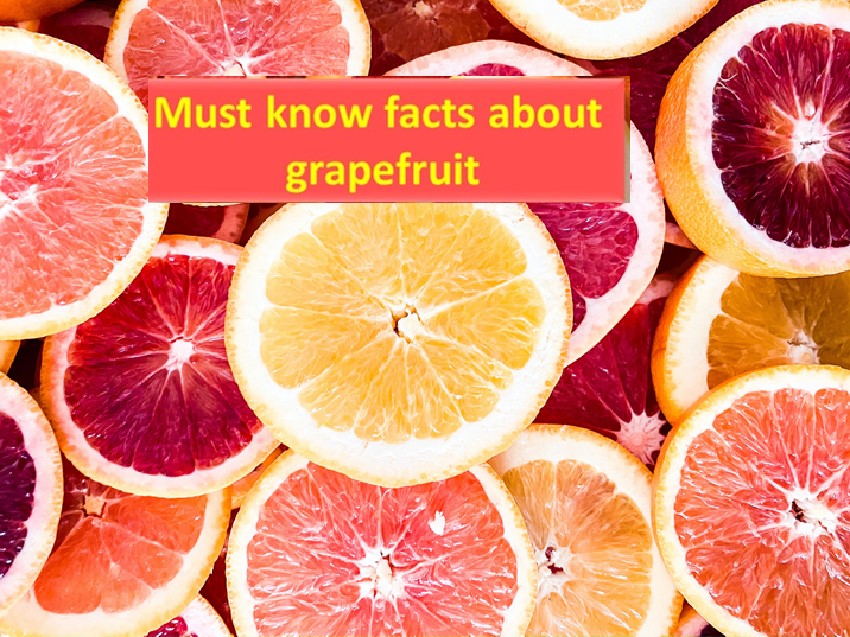
Grapefruit:Grapefruits supply lot of fiber and low calories. It has bioflavonoid that protects us from cancer, heart condition and prevents tumor development. It increases metabolic rate, reduces insulin levels and a good source of weight loss.
It also assists us during indigestion, urinary problems, excess acidity. It works as an excellent appetite suppressant when compared to many other foods.
Research says that that the smell of grapefruit itself reduces hunger. The color inside is pinkish, white or mix of colors depending on variety. and the name it gets from the way it appears on tree – like grape fruits bunches.
Meyer Lemon:It is a hybrid lime fruit from China. It is named of American agricultural explorer F. N. Meyer.
He bought it from China to US. It is a hybrid cross between lemon and mandarin orange. Tree looks like ornamental tree.
But fruits are very useful as they can replace traditional lime fruits. It has same medicinal property as lime and is used in cooking and preparation of desserts too. Fruit is yellow color and larger than mandarin orange.