All posts by HealthyLife

HealthyLife is a part of www.WeRIndia.com, an all India – centric website (https://healthylife.werindia.com) and is solely owned and operated by WeRIndia.com. It is a Indian nutritional portal providing educational articles.This nutritional port was launched on February 5th, 2015.
What Can I Do To Lower My Risk Of Heart Disease?

What Can I Do To Lower My Risk Of Heart Disease?

Apart from following Healthy lifestyle, once a year get one of the tests that are described in the slides. Talk to your doctor about the tests. It helps to prevent and take action to keep your heart healthy.

Control blood pressure: Lifestyle changes, exercise and diet are helping to control high blood pressure

Drink water: Keep your body hydrated. Dehydration thickens blood and causes hypertension. Overtime it could cause plaque in arteries.   If you are an athlete, hydrate 2-3 hours before your activity, drink water during activity, eat well, consume fresh and nutritious food.

Cholesterol and triglyceride level control: To avoid having clogged arteries and heart attack, reduce fat intake, consume fats that are heart friendly. Healthy eating habits and exercises help to reduce high level cholesterol.

Regular exercise: Heart friendly yoga, Pilates, and other form exercises improve blood circulation to heart and other body parts. Reduce weight and keep healthy weight that is appropriate for your age group. Controlling weight gain helps heart. 

Do not smoke: Smoking is injurious to health, don’t smoke. If you are not smoking, keep your lifestyle that way. Smoking increases blood pressure and is one of the leading causes of stroke and heart attack.

Alcohol consumption: Let your alcohol consumption be moderate. Too much alcohol increases blood pressure, adds extra calories and one can gain weight. What is moderate alcohol consumption? Learn here.

Healthy diet: Reduce sodium, sugar, and fats. Add vegetables, fruits, cereals, and whole grain in your food. Reduce fat and stick to DASH diet that helps to keep blood pressure low.

Getting good sleep: Risk of having high blood pressure, diabetes is high if you don’t get enough sleep and rest. People who do not get enough rest and sleep after heavy exercise or hard work are more often tend to get heart attack. If you have any sleep related problems including sleep apnea, insomnia, snoring – talk to your doctor for solution.

Stress management: Stress can only cause harm to your body. Stress can trigger heart attack. People who cannot manage stress properly often end up consuming more calories by overeating, drinking, and smoking. Learn to manage stress by meditating, by adopting to activities that brings peace to your mind.

Blood sugar: High blood sugar or diabetes can damage blood vessels and body nerves that control heart and blood vessels. Learn to manage diabetes with foods and lifestyle.   

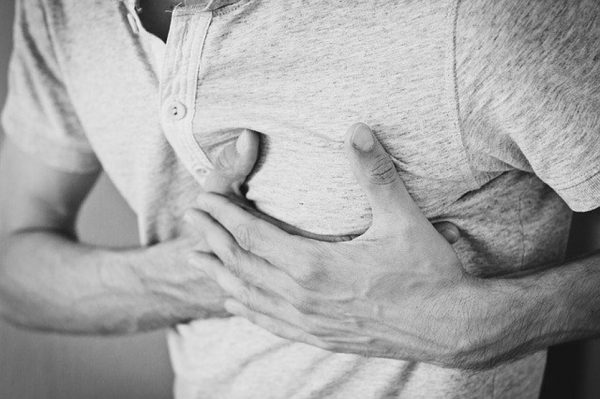
Image credit: https://www.maxpixel.net/Emotion-Despair-Pleasure-Pain-Mourning-Man-2734073 (cc by 0)


Author: HealthyLife | Posted on: November 2, 2021
« »
« »

Recommended for you

What are the tests that help us to determine our heart health?

What are the tests that help us to determine our heart health?

Echocardiogram And Transesophageal Echocardiography For Heart

1. Echocardiogram: ECHO -Uses sound waves to produce images of your heart. This common test allows your physician to see how your heart is beating and how blood is moving through your heart. Images from an echocardiogram are used to identify various abnormalities in the heart muscle and valves. This test can be done while you’re at rest or with exercise to elevate your heart rate.

Reasons for the test:

  • Determine the cause of a heart murmur
  • Check the function of heart valves
  • Assess the overall function of the heart

2. Transesophageal echocardiography (TEE): Uses high-frequency sound waves (ultrasound) to make detailed pictures of your heart and the arteries that lead to and from it. The echo transducer that produces the sound waves for TEE is attached to a thin tube that passes through  mouth, down throat and into your esophagus, which is very close to the upper chambers of the heart.

Reasons for the test:

  • Assess the function of heart valves
  • Follow heart valve disease
  • Look for blood clots inside the heart

Reference: https://healthblog.uofmhealth.org/

Image credit:

  • https://commons.wikimedia.org/wiki/File:Heart_lpla_echocardiography_diagram.jpg :Patrick J. Lynch, medical illustrator, CC BY 2.5 , via Wikimedia Commons
  • • https://commons.wikimedia.org/wiki/File:Heart_tee_four_chamber_view.jpg: Patrick J. Lynch, medical illustrator, CC BY 2.5 , via Wikimedia Commons

Author: HealthyLife | Posted on:
« »
« »

Recommended for you

Electrocardiogram And Magnetic Resonance Imaging For Heart

Electrocardiogram And Magnetic Resonance Imaging For Heart

3. Electrocardiogram (ECG or EKG): Measures the electrical activity of the heartbeat to provide two kinds of information. First, by measuring time intervals on the ECG, a doctor can determine how long the electrical wave takes to pass through your heart. Finding out how long a wave takes to travel from one part of the heart to the next shows if the electrical activity is normal, slow, fast or irregular.

Second, by measuring the amount of electrical activity passing through heart muscle, a cardiologist may be able to find out if parts of the heart are too large or overworked.

Reasons for the test:

  • Monitor changes in heart rhythm
  • Determine whether a heart attack has occurred
  • Help predict if a heart attack is developing

4. Magnetic resonance imaging (MRI): Uses a magnetic field and radiofrequency waves to create detailed pictures of organs and structures inside your body. It can be used to examine your heart and blood vessels and to identify areas of the brain affected by stroke.

Reasons for the test:

  • Assess heart structure
  • Look for scar tissue within the heart muscle
  • Assess the function of heart valves

Reference: https://healthblog.uofmhealth.org/

Image credit:

  • https://www.maxpixel.net/Electrocardiogram-Ecg-Heartbeat-Pulse-Heart-1892826
  • https://commons.wikimedia.org/wiki/File:190603_Functional_magnetic_resonance_imaging_at_the_Imperial_Centre_for_Psychedelic_Research.jpg : Thomas Angus, Imperial College London, CC BY-SA 4.0 , via Wikimedia Commons

Author: HealthyLife | Posted on:
« »
« »

Recommended for you

CT Scan And Exercise Cardiac Stress Test For Heart

CT Scan And Exercise Cardiac Stress Test For Heart

5. CT scan: An X-ray imaging technique that uses a computer to produce cross-sectional images of your heart. Also referred to as cardiac computed tomography, computerized axial tomography, or CAT scan, it can be used to examine heart and blood vessels for problems. It’s also used to identify whether blood vessels in the brain have been affected by stroke.

Reasons for the test:

Asess the structure of the heart

  • Determine if blockages are present in the coronary arteries

6. Exercise cardiac stress test: Also called an exercise tolerance test (ETT), this test shows whether your heart’s blood supply is sufficient and if your heart rhythm is normal during exercise on a treadmill or stationary bicycle. The test monitors your level of tiredness, heart rate, breathing, blood pressure and heart activity while exercising. This test may be done in combination with nuclear imaging or echocardiography.

Reasons for the test:

  • Determine the cause of chest pain, shortness of breath and weakness
  • Assess the health of the heart
  • Assess safety of exercise
  • Identify heart rhythm changes with activity
  • Find evidence of inadequate blood flow to the heart muscle during exercise

Reference: https://healthblog.uofmhealth.org/

Image credit:

  • https://medlineplus.gov/
  • https://commons.wikimedia.org/wiki/File:Ergospirometry_laboratory.jpg : Cosmed, CC BY-SA3.0 , via Wikimedia Commons 

Author: HealthyLife | Posted on:
« »
« »

Recommended for you

Pharmacologic Stress Test And Tilt Test

Pharmacologic Stress Test And Tilt Test

7. Pharmacologic stress test: Medication is given through an IV line in your arm to dilate the arteries, which increases your heart rate and blood flow, like the effects of exercise. This test may be done in combination with nuclear imaging, echocardiography, or MRI.

Reasons for the test:

  • Determine the cause of chest pain, shortness of breath and weakness
  • Find evidence of inadequate blood flow to the heart muscle during exercise
  • Monitor or diagnose blockages in the coronary arteries
  • Assess risks for a heart attack

8. Tilt test: Often used to determine why you feel faint or lightheaded. During the test, you lie on a table that is slowly tilted upward. The test measures how your blood pressure and heart rate respond to the force of gravity. A nurse or technician keeps track of blood pressure and heart rate (pulse) to see how they change during the test.

Reasons for the test:

  • Assess dizziness or fainting spells
  • Identify heart rhythm changes

Reference: https://healthblog.uofmhealth.org/

Image credit:

  • https://myheart.net/articles/nuclear-stress-test/
  • https://centralgaheart.com/tilt-table-test-necessary/

Author: HealthyLife | Posted on:
« »
« »

Recommended for you

Ambulatory Rhythm Monitoring Tests And Coronary Angiogram

Ambulatory Rhythm Monitoring Tests And Coronary Angiogram

9. Ambulatory rhythm monitoring tests: Holter monitoring, event recorders and mobile cardiac telemetry (MCT) are ambulatory monitoring tests done to study your heart rhythm for a prolonged period on an outpatient basis.
Reason for the tests:
• Look for evidence of heart rhythm problems that come and go and that are not apparent with a standard ECG


10. Coronary angiogram: A type of X-ray used to examine the coronary arteries supplying blood to your heart. A catheter is inserted into a blood vessel in your arm or groin and fed up with your heart and coronary arteries. Special dye is then injected through the catheter and images are taken.
Reasons for the tests:
• Identify narrowing or blockages in the coronary arteries
• Evaluate pressures inside the heart


Reference: https://healthblog.uofmhealth.org/
Image credit:
• https://commons.wikimedia.org/wiki/File:Alex_CM4000.jpg : Misscurry, CC BY-SA 3.0 , via Wikimedia Commons
• https://commons.wikimedia.org/wiki/File:Heart_coronary_territories.jpg : Patrick J. Lynch, medical illustrator, CC BY 2.5 , via Wikimedia Commons


Author: HealthyLife | Posted on:
« »
« »

Recommended for you

India's new crop varieties

India’s PM Modi dedicates to the Nation 35 crop varieties with special traits

“When science, government and society work together, results are better. Such an alliance of farmers and scientists will strengthen the country in dealing with new challenges” -Narendra Modi

“Efforts are being made to take the farmers out of the crop-based income system and encourage them for value-addition and other farming options”

The Prime Minister, Shri Narendra Modi dedicated to the Nation 35 crop varieties with special traits through video conference. The Prime Minister also dedicated to the nation the newly constructed campus of the National Institute of Biotic Stress Management Raipur. On this occasion, the Prime Minister also distributed the Green Campus Award to Agricultural Universities. He interacted with farmers who use innovative methods and addressed the gathering.

Talking to Smt. Zaitoon Begum of Ganderbal, Jammu and Kashmir, The Prime Minister talked about her journey of learning innovative agricultural practices and how she trained other farmers and how she is working for the education of girls in the valley. The Prime Minister mentioned that even in sports, girls from J&K are doing well. He also said that the needs of farmers with small holdings are the government’s priority and they get all the benefits directly.

While interacting with Shri Kulwant Singh, a farmer and seed producer of Bulandshahr, Uttar Pradesh, the Prime Minister enquired how he was able to produce a diverse variety of seeds. The Prime Minister asked how he benefits from his interaction with scientists at the agricultural institute at Pusa and what is the trend among the farmers about getting in touch with such institutions. The Prime Minister praised the farmer for processing his crops and doing value-additions. The Prime Minister said that the government is making efforts to get good prices for farmers with many initiatives like access to the market, good quality seeds, soil health cards etc.

Prime Minister enquired Smt Darshana Pedenkar, from Bardez, Goa, how she is cultivating diverse crops and rearing various livestock. He asked about the value-addition of coconut done by the farmer. He expressed happiness that how a woman farmer is flourishing as an entrepreneur.

Interacting with Shri Thoiba Singh from Manipur, the Prime Minister complimented him for taking up farming after a life in the armed forces. The farmer’s diversified activities such as agriculture, fishery and other allied activities drew the Prime Minister’s interest. The Prime Minister praised him as an example of Jai Jawan-Jai Kisan-Jai Vigyaan.

The Prime Minister enquired from Shri Suresh Rana, Udham Singh Nagar, Uttarakhand about how he started corn cultivation. The Prime Minister complimented the farmers of Uttarakhand for using FPOs efficiently and said that when farmers work collectively they benefit a great deal. The Government is trying to make every resource and infrastructure available to the farmers.

Addressing the occasion, the Prime Minister said in the last 6-7 years, science and technology are being used on a priority basis to solve the challenges related to agriculture. ”Our focus is very high on more nutritious seeds, adapted to new conditions, especially in changing climates,” said the Prime Minister.

The Prime Minister recalled the massive locust attack in various states last year, in the midst of the Corona pandemic. India had tackled this attack by making a lot of efforts, saving farmers from incurring too much damage, he said.

The Prime Minister stressed that whenever farmers and agriculture get a safety net, their growth becomes rapid. He informed that 11 crores Soil Health Cards were issued for the protection of the land. The Prime Minister listed the farmer-friendly initiatives of the Government such as campaigns to complete about 100 pending irrigation projects for providing water security to the farmers, providing new varieties of seeds to farmers to protect crops from diseases thus getting a higher yield. He added that along with increasing the MSP, the procurement process was also improved so that more and more farmers can get the benefit. More than 430 lakh metric tonnes of wheat has been procured in the Rabi season and farmers have been paid more than 85 thousand crore rupees. Wheat procurement centres were increased more than three times during the pandemic.

The Prime Minister said by connecting farmers with technology, we have made it easier for them to get help from banks. Today farmers are getting weather information in a better way. Recently, more than 2 crore farmers have been given Kisan Credit Cards.

The Prime Minister remarked that due to climate change, new types of pests, new diseases, epidemics are emerging, because of this, there is a big threat to the health of humans and livestock and crops are also being affected. Intensive continued research on these aspects is necessary. He remarked that when science, government and society work together, results will be better. Such an alliance of farmers and scientists will strengthen the country in dealing with new challenges.

The Prime Minister said efforts are being made to take the farmer out of the crop-based income system and encourage them for value-addition and other farming options. He stressed the need to further develop millets and other grains with solutions from science and research. He said that the purpose is that they can be grown in different parts of the country according to the local needs. He asked people to be prepared to use the opportunities provided by the UN declaring the coming year as the Year of the Millet.

The Prime Minister said along with our ancient farming traditions, marching towards the future is equally important. He said modern technology and new farming tools are at the core of future farming. “Efforts to promote modern agricultural machines and equipment are showing results today,” he added.

           Speaking on the occasion Union Agriculture Minister said that the Prime Minister makes constant efforts for the wellbeing of the small farmer. He is the Pradhan Sevak of the small farmer. Recalling what Prime Minister had done in the state of Gujarat in the field of Agriculture the Minister said that PM was instrumental in providing electricity and water for agricultural use in the state of Gujarat. The district of Kutch in Gujarat was transformed by progressive farming, cows were operated for cataract and agricultural growth rate in Gujarat went up to 9%.

              Shri Tomar talked about the various initiatives taken by the union government for the farmers. The Pradhan Mantri Fasal BimaYojna which brings farmers under the protective cover; The PM Kisan Samman Nidhi  which makes the farmers financially empowered; The goal of formation of 10000 Farmer Producer Organisations for which the government is spending 6865 crore; The Agriculture Infrastructure Fund for creating post harvest management infrastructure and community farm assests in villages; Provision of MSP which is atleast 50% over the cost of production; Provision of Kisan Rail and eNAM for marketing. The Minister said that the farm laws will usher in a new revolution from seed to market and will help in doubling farmers income.     

Public press release: https://www.pib.gov.in/PressReleasePage.aspx?PRID=1758974

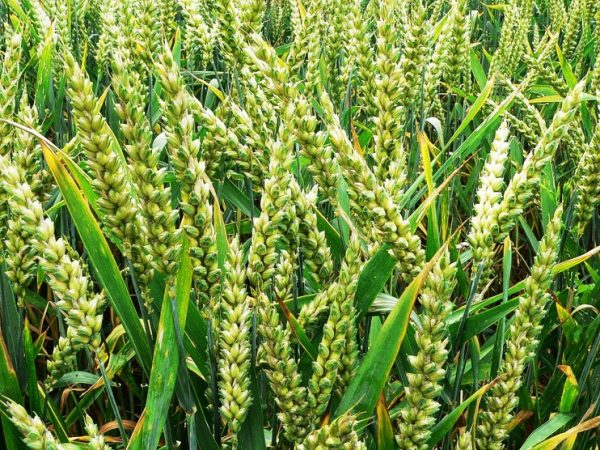
Image source: https://commons.wikimedia.org/wiki/File:Wheat_P1210892.jpg, Attribution: Copyright © 2007 David Monniaux, CC BY-SA 3.0 http://creativecommons.org/licenses/by-sa/3.0/, via Wikimedia Commons


Author: HealthyLife | Posted on: September 29, 2021
« »
« »

Recommended for you

What Happens To Our Body After Drinking Coca Cola?

What Happens To Our Body After Drinking Coca Cola?

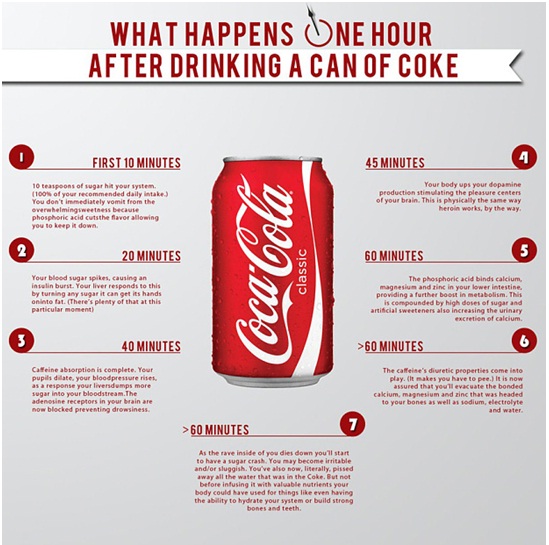
We all know fizzy drinks like Coca Cola are loaded with sugar, but do you really know what happens to your body when you glug a can of the sweet stuff? Few days back following information went viral. Please do read this article to educate yourself about Coca Cola.

After 10 minutes

Ten tea spoons of sugar contained in a glass of Cola, cause devastating “strike” on the organism and the only cause, by reason of not vomiting, is the phosphoric acid which inhibits the action of sugar.

After 20 minutes

A leap of insulin levels in bloodstream occurs. The liver converts all the sugar into fat.

After 40 minutes

Ingestion of caffeine is finally completed. The eye pupils are expanding. Blood pressure rises, because the liver disposes more sugar into bloodstream. The adenosine receptors get blocked, thereby preventing drowsiness.

After 45 minutes

Body raises production of dopamine hormone, which stimulates the brain pleasure center. Heroin has the same principle of operation.

 After 1 hour

Phosphoric acid binds calcium, magnesium and zinc in the gastrointestinal tract, which supercharges metabolism. Releasing of calcium through urine also rises.

 After more than 1 hour

Diuretic effect of the drink enters in “the game”. The calcium, magnesium and zinc are removed out of the organism, which are a part of our bones, as well as sodium. At this time we have already become irritable or subdued. The whole quantity of water, contained in a coca cola, is removed by the urine.

Actually, when having a cold bottle of Coke and enjoying its undeniable freshness, do we know what chemical “cocktail” we pour into our throats?

The active ingredient of Coca-Cola is orthophosphoric acid. Due to its high acidity, cisterns used for transporting of the concentrate have to be equipped with special reservoirs designed for highly corrosive materials.

Let’s have a look at “the anatomy” of one of the most advertised products of “Coca-Cola Co.” – Coca-Cola Light without caffeine. This drink contains Aqua Carbonated, E150D, E952, E951, E338, E330, Aromas, E211.

Aqua Carbonated – this is sparkling water. It stirs gastric secretion, increases the acidity of the gastric juice and provokes flatulency – plenty evolution of gases. Furthermore, spring water is not used, but is used regular filtered water.

E150D – food coloring, obtained through the processing of sugar at specified temperatures, with or without addition of chemical reagents. In the case with coca-cola, ammonium sulfate is added.

E952 – Sodium Cyclamate is a sugar substitute. Cyclamate is a synthetic chemical, has sweet taste, which is 200 times sweeter than sugar, and is used as an artificial sweetener. In 1969 it was banned by FDA, since it as well as saccharin and aspartame, caused cancer in rats’ urinary bladder. In 1975, prohibition seized also Japan, South Korea and Singapore. In 1979, WHO (World Health Organization), “who knows why?” rehabilitated cyclamates and recognizing them as safe.

E950 – Acesulfame Potassium. 200 times sweeter than sugar, containing methyl ether, where it aggravates the operation of the cardiovascular system. Likewise, it contains asparaginic acid which can also cause excitant effect on our nervous system and in time it can lead to addiction. Acesulfame is badly dissolved and is not recommended for use by children and pregnant women.

E951 – Aspartame. A sugar substitute for diabetics and is chemically unstable: at elevated temperature it breaks down into methanol and phenylalanine. Methanol is very dangerous: 5-10ml can cause destruction of the optic nerve and irreversible blindness. In warm soft drinks, aspartame transforms into formaldehyde which is very strong carcinogen. Some number of cases with aspartame poisoning include: unconsciousness, headaches, fatigue, dizziness, nausea, palpitation, weight gain, irritability, anxiety, memory loss, blurry vision, fainting, joint pains, depression, fertility, hearing loss and etc. Aspartame can also provoke the following diseases: brain tumors, MS (Multiple Sclerosis), epilepsy, Graves’ disease, chronic fatigue, Alzheimer’s, diabetes, mental deficiency and tuberculosis.

E338 – Orthophosphoric Acid. This can cause irritation of skin and eyes. It is used for production of phosphoric acid salts of ammonia, sodium, calcium, aluminum and also in organic synthesis for production of charcoal and film tapes, for production of refractory materials, ceramics, glass, fertilizers, synthetic detergents, medicine, metalworking, and textile and oil industries. Food orthophosphoric acid is used in the production of carbonated water and for preparation of ingredients in pastry. It is known that orthophosphoric acid interfere with the absorption of calcium and iron from the body, which can cause weakening of bones and osteoporosis. Other side effects are thirst and skin rashes.

E330 – Citric Acid. It is widely spread in nature and is used in pharmaceutical and food industries. Salts of citric acid (citrates) are used in food industry as acids, preservatives, stabilizers, and in medical fields – for preserving blood.

Aromas – unknown aromatic additives

E211 – Sodium Benzoate. It is used in production of some food products, as an anti-bacterial and anti-fungal agent. These products refer to jams, fruit juices and fruit yoghurts. It’s not recommended for use by asthmatics and people who are sensitive to aspirin. A study conducted by Peter Piper at the Sheffield University in Britain, found that this compound causes significant damage to DNA. According to his words, sodium benzoate which is an active component in preservatives doesn’t destroy DNA, but deactivating it. This can lead to cirrhosis and degenerative diseases like Parkinson’s disease.

So, what turns out? Well, it turns out that “the secret recipe” of coca-cola is just one advertising play. What kind of secret may be there, when it’s well known to us that this is a weak solution of cocaine with preservatives, colorants, stabilizers and etc. I.e., this is legalized cocaine addiction plus pure poison. Diet Coke is even worse, because the aspartame in it, replaces sugar, becoming pure neurotoxic poison

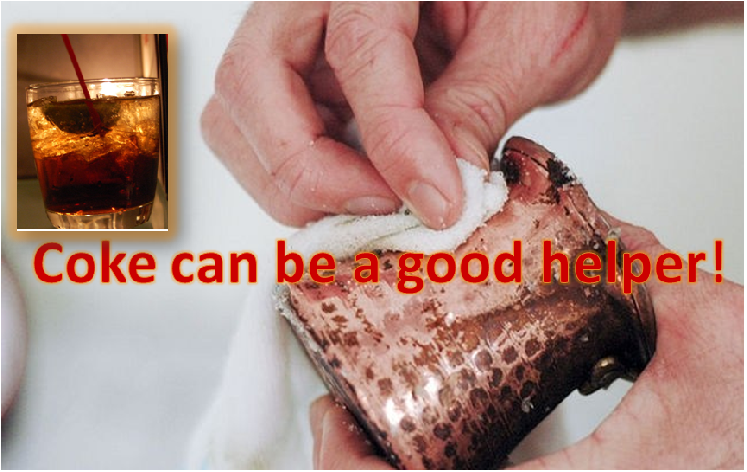
So, if you can’t imagine a life without coca-cola, take advantage of the following recommendations

  • Many distributors of coca-cola in U.S use this drink for cleaning their truck engines.
  • -Many police officers in U.S have bottles of coca-cola in their cars and when a car accident happens, they wash the blood out of the road with it.
  • Coca-Cola is a great tool for removing rusty stains on chrome surfaces of cars. To remove corrosion from car battery, pour it with Coke and the corrosion will disappear.
  • To unscrew a rusty screw, dip a cloth in coca-cola and wrap around it for several minutes.
  • To clean stains from clothes – pour coca-cola on dirty clothes, add washing powder and run the washing machine as usual. You will be surprised of the results.
  • In India, some farmers use coca-cola instead of pesticides for pest extermination, because it’s cheaper and the effect is completely satisfying.So, coca-cola undeniably is a very useful product. The key is to be used for intended purposes, but not for drinking.

Read More: http://www.trueactivist.com/what-happens-to-our-body-after-drinking-coca-cola/

Image courtesy: http://i.telegraph.co.uk/multimedia/archive


Author: HealthyLife | Posted on: September 23, 2021
« »
« »

Recommended for you