Importance Of VO2 Max For Cardiovascular Health And How To Improve It?
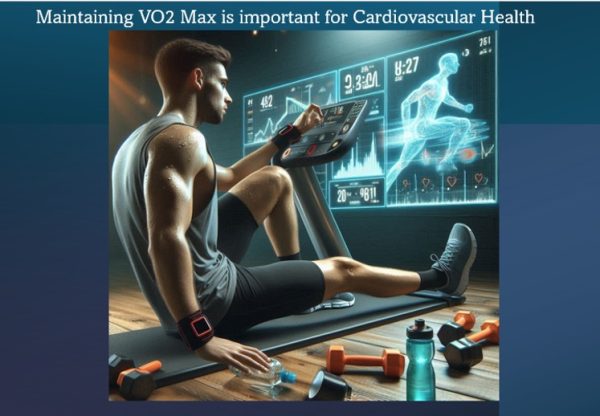
VO₂ max, maximal oxygen consumption is the maximum rate at which your body can utilize oxygen during intense exercise. It is a measure of aerobic fitness and represents the efficiency of the cardiovascular and respiratory systems in supplying oxygen to the muscles during physical activity. It is one of the best indicators of aerobic endurance and cardiovascular fitness.
What is VO₂ Max? V=Volume, O2 = Oxygen: maximum oxygen consumption
- Definition: VO₂ max measures the amount of oxygen your body can consume per minute per kilogram of body weight, typically expressed in milliliters of oxygen per kilogram per minute (ml/kg/min). V=Volume, O2 = Oxygen
- Role in exercise: The higher your VO₂ max, the more oxygen your body can utilize, allowing you to exercise at higher intensities for longer periods.
How is VO₂ Max Measured? Milliliters of oxygen per kilogram of body weight per minute (ml/kg/min): This unit expresses how much oxygen your body uses per minute for each kilogram of body weight.
VO₂ max can be evaluated in a lab, often using a treadmill or cycle ergometer. You wear a mask that measures oxygen intake and carbon dioxide output as you exercise progressively harder until you reach exhaustion. The equipment calculates your maximum oxygen uptake. There are also fitness wearables (such as certain smartwatches) that estimate VO₂ max based on heart rate data and activity, although these are less accurate than lab tests.
Typical VO₂ Max Ranges:
- Untrained Individuals: Typically range from 30-40 ml/kg/min for men and 25-35 ml/kg/min for women.
- Endurance Athletes: Can range from 60-80 ml/kg/min or higher.
- Elite Athletes: VO₂ max levels of 80+ ml/kg/min have been recorded in some elite endurance athletes.
VO₂ Max and Age: VO₂ max naturally decreases with age, typically by about 1% per year after the age of 30. However, regular exercise can slow this decline and help maintain higher levels of aerobic fitness as you age. Improving your VO₂ max through consistent training, especially with high-intensity exercises, can significantly benefit your overall health, endurance, and athletic performance.
Importance of VO₂ Max:
- Indicator of cardiovascular health: VO₂ max reflects the heart, lungs, and muscles’ efficiency in working together, making it a key measure of overall cardiovascular fitness.
- Exercise Performance: Higher VO₂ max allows athletes to perform at higher intensities for longer durations, making it crucial in endurance sports like running, cycling, and swimming.
- Predictor of longevity: Studies show a strong correlation between a high VO₂ max and increased life expectancy. It is considered a more accurate predictor of longevity than other measures, such as cholesterol levels.
- Monitoring training progress: Athletes use VO₂ max as a benchmark to monitor improvements in their fitness level. Increasing VO₂ max can lead to better endurance and performance.
- Recovery & fatigue resistance: A higher VO₂ max improves the body’s ability to recover quickly and resist fatigue during prolonged physical activity.
- Health benefits: Improving VO₂ max can help reduce the risk of conditions like heart disease, high blood pressure, and diabetes, by promoting cardiovascular and metabolic health.
Improving VO₂ max requires a combination of specific training strategies that challenge your cardiovascular system and gradually increase your body’s capacity to use oxygen more efficiently. Here are some effective ways to enhance VO₂ max:
1. High-Intensity Interval Training (HIIT)–
- What it is: Alternating short bursts of intense exercise with periods of lower intensity or rest.
- Why it works: HIIT pushes your heart rate close to its maximum, forcing your body to adapt and become more efficient at delivering and using oxygen.
- Example: Sprinting for 30 seconds, followed by 1-2 minutes of walking or slow jogging, repeated for 20-30 minutes.
2. Continuous endurance training–
- What it is: Long-duration, steady-state exercise performed at moderate intensity.
- Why it works: Sustained aerobic activity strengthens your heart and lungs, gradually improving your oxygen delivery and utilization.
- Example: Running, cycling, or swimming at a steady pace for 30-60 minutes.
3. Tempo training–
- What it is: Exercising at a pace that is slightly below your race or maximum effort for an extended period (also known as “lactate threshold” training).
- Why it works: Tempo training helps improve your body’s ability to sustain higher intensity work without fatiguing, raising your VO₂ max by training your cardiovascular system at near-maximal effort.
- Example: Running or cycling at a pace you can maintain for 20-30 minutes without burning out.
4. Strength training–
- What it is: Lifting weights or doing bodyweight exercises to build muscle strength.
- Why it works: Stronger muscles require less oxygen to perform the same workload, which indirectly improves VO₂ max. Strengthening large muscle groups, like legs and core, aids endurance.
- Example: Squats, lunges, deadlifts, and other compound movements with weights.
5. Altitude training–
- What it is: Training at higher altitudes where oxygen levels are lower.
- Why it works: The body compensates for the lower oxygen levels by producing more red blood cells, which enhances oxygen-carrying capacity when returning to lower altitudes.
- Alternative: If you cannot train at high altitude, using a high-altitude simulation mask can also help (though with less pronounced results).
6. Increase training volume gradually–
- What it is: Increasing the frequency, intensity, and duration of your workouts over time.
- Why it works: Consistently pushing your body slightly beyond its current capabilities forces adaptation, improving endurance and oxygen utilization.
- How: Add extra 10% to your workout volume each week, focusing on intensity and time spent exercising.
7. Plyometrics and explosive movements–
- What it is: Exercises involving rapid, powerful movements that activate fast-twitch muscle fibers.
- Why it works: These movements improve your anaerobic threshold and cardiovascular conditioning, indirectly boosting VO₂ max.
- Example: Jump squats, box jumps, and sprinting.
8. Cross-training–
- What it is: Incorporating distinct types of aerobic exercise to avoid overuse injuries and maintain enthusiasm.
- Why it works: Engaging in multiple forms of exercise (running, swimming, cycling, rowing) challenges your body in new ways and helps improve overall fitness and VO₂ max.
9. Adequate recovery–
- What it is: Allowing your body time to rest and repair between intense training sessions.
- Why it works: Overtraining can hinder VO₂ max improvement. Rest is essential for muscle recovery and cardiovascular system adaptation.
- How: Incorporate rest days or low-intensity recovery days into your routine.
10. Proper nutrition and hydration–
- What it is: Ensuring your body has enough fuel for intense training and recovery.
- Why it works: Proper nutrition provides the energy and nutrients needed to sustain high-level training and build endurance.
- Key Focus: Carbohydrates for energy, protein for recovery, and hydration to maintain performance during intense exercise.
11. Breathing exercises–
- What it is: Practicing deep breathing techniques to improve lung capacity and oxygen efficiency.
- Why it works: Strengthening the respiratory muscles can improve your ability to take in oxygen, enhancing aerobic performance.
- Example: Diaphragmatic breathing, yoga-based breathing practices, or using a respiratory training device.
12. Consistency is key– VO₂ max improvements take time and persistence. Regular, consistent training with the methods above will yield the best long-term results.
VO₂ max is a critical marker for athletic performance, cardiovascular health, and overall fitness. You can gradually increase your VO₂ max, enhancing both your athletic performance and overall cardiovascular health.
Content credentials: Generated with AI ∙ September 25, 2024, at 6:57 PM
Author: Sumana Rao | Posted on: September 27, 2024
« Travel Alert – Oropouche Virus Outbreak in Americas And Precautions For Public And Pregnant Women Understanding Impact Of Weight Loss Drugs »