All posts by Sumana Rao

Don't worry about the people in your past; There's a reason they didn't make it to your future.
Raw Oysters

Raw Oysters

Oysters are another risky food because people want to eat them raw. Most oyster outbreaks are traced to restaurants. Two microbes, known as norovirus and vibrio, cause most of the food borne illnesses from oysters. The vibrio organism is the more dangerous. It is closely related to the bacterium that causes cholera, an acute intestinal infection. Oysters can be contaminated from the water they grown in or by improper handling. More than 100,000 oyster-related illnesses occur annually with no known deaths. To prevent contamination, avoid raw or undercooked shellfish and keep cooking   environments clean.

Image credit: Photo by Ben Stern on Unsplash (Free for commercial use)


Author: Sumana Rao | Posted on: September 1, 2015
« »
« »

Recommended for you

Toxins in Tuna

Toxins in Tuna

The big problem with tuna is not mercury, but a naturally occurring toxin called scombrotoxin. This toxin can build up in tuna flesh if it is not kept cold enough after the fish has been caught and, unfortunately, you can’t get rid of it even by cooking. Symptoms include headache, nausea, and palpitations.

Image credit; Needpix.com/contaminatedtuna (Free for commercial use)


Author: Sumana Rao | Posted on:
« »
« »

Recommended for you

Eggs and Salmonella

Eggs and Salmonella

Next on the list of risky foods are eggs, which have been linked to 352 outbreaks of food borne illness. Contamination in eggs is almost always because of the bacteria salmonella. The U.S. Centers for Disease Control and Prevention (CDC) estimates that for every reported case of salmonella, 38 cases go unreported. You might be wondering how those bacteria get inside an egg. The most prevalent type of salmonella infects the ovaries of hens that lay the eggs. “The best way to protect yourself is to cook your eggs so they are not soft or runny.”

Image credit: Foodsafetynews.com


Author: Sumana Rao | Posted on:
« »
« »

Recommended for you

Spinach and Other Greens

Spinach and Other Greens

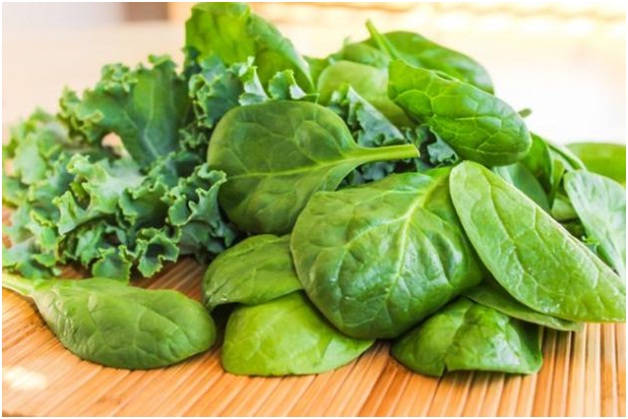
The FDA found spinach to be the vegetable most frequently contaminated with the most potent pesticides used on food. Eighty-three percent of the conventionally grown spinach tested was found to be contaminated with dangerous levels of at least some of the 36 chemical pesticides commonly used to grow it. The two micro-organisms that contaminate spinach and other greens are E. coli and Salmonella.Many times these produces will be recalled for contamination.Check the website of the stores for recall of produces that you buy.

Image credit: CREDIT DANIELLA SEGURA / CREATIVE COMMONS


Author: Sumana Rao | Posted on:
« »
« »

Recommended for you

Potatoes

Potatoes

Potatoes are one of the most popular vegetables, but they also rank among the most contaminated with pesticides and fungicides. Twenty-nine pesticides are commonly used, and 79% of potatoes tested exceed safe levels of multiple pesticides. When it comes to micro-organisms –Salmonella is the main problem in potato. More than 40 percent of potato outbreaks can be traced back to restaurants and delis where cross contamination has occurred. Each person reacts to exposure differently — most cases do not require medical treatment, but some patients can benefit from antibiotics.


Author: Sumana Rao | Posted on:
« »
« »

Recommended for you

Peaches and Nectarines

Peaches and Nectarines

 Forty-five different pesticides are regularly applied to succulent, delicious peaches and nectarines in conventional orchards. The thin skin does not protect the fruit from the dangers of these poisons. Ninety-seven percent of nectarines and 95% of peaches tested for pesticide residue show contamination from multiple chemicals. Apart from pesticides the common bacteria that contaminates these two fruit types is Listeria.  These produce may be contaminated with Listeria monocytogenes, a bacterium that can cause fatal infections in young children, seniors and those with weak immune systems. The bacterium can also cause miscarriages and stillbirths in pregnant women.

Image curtsy: Needpix.com


Author: Sumana Rao | Posted on:
« »
« »

Recommended for you

Antibiotic-Laced Meat

Antibiotic-Laced Meat

An FDA report released in February found that 81 percent of the raw ground turkey tested was contaminated with antibiotic-resistant bacteria. Antibiotic-resistant bacteria was also found in 69 percent of pork chops, 55 percent of ground beef, and 39 percent of chicken. If someone gets sick eating this and antibiotics are the prescription then recovery process is prolonged for that person because of antibiotic -resistant bacteria !

Image credit: Organicauthority.com


Author: Sumana Rao | Posted on:
« »
« »

Recommended for you

CHRONIC PAIN AND RELIEF

Chronic Pain and Relief

There are few things more frustrating to a person with chronic pain than hearing someone say, “Your pain is all in your mind.” Chronic pain is in the mind—but this does not mean what you think it means. The experience of pain is real. Pain has a biological basis. Many aches and pains are rooted in brain processes that can be affected by your mental attitude and emotions. The mind, emotions and attention play an important role in the experience of pain. Chronic pain is not the same as the pain you feel from an injury. That is acute pain—the sensing of tissue damage by nerves.  In people with chronic pain, stress, fear and depression can amplify the perception of pain.

Our brain, and consequently your thoughts and emotions, do play a role in your experience of physical pain. For instance, meditation appears to work for pain relief because it reduces brain activity in your primary somatosensory cortex, an area that helps create the feeling of where and how intense a painful stimulus is. Laughter is also known to relieve pain because it releases endorphins that activate brain receptors that produce pain-killing and euphoria-producing effects.  Following  natural treatments can help people to get relief from chronic pain.

Acupuncture

One of the main uses of acupuncture is for pain relief. Acupuncture is also thought to decrease pain by increasing the release of chemicals that block pain, called endorphins. Acupuncture may be useful as an accompanying treatment for many pain-related conditions, including headache, low back pain, menstrual cramps, carpal tunnel syndrome, tennis elbow, fibromyalgia, osteoarthritis and myofascial pain.

Chiropratic treatment

Chiropractic treatment is the most common non-surgical treatment for back pain. Improvements in people undergoing chiropractic manipulations were noted in some trials. Research also suggests that chiropractic treatments may be helpful for headaches, neck pain, certain arm and leg conditions, and whiplash.

Massage:

People suffering from pain, mostly to manage chronic back and neck problems, are increasingly using massage. Massage can reduce stress and relieve tension by enhancing blood flow. This treatment also can reduce the presence of substances that may generate and sustain pain.

Dietary Approaches for treating Pain

Some people believe that changing dietary fat intake or consuming plant foods that contain anti-inflammatory agents can help ease pain by limiting inflammation. A mostly raw vegetarian diet was found helpful for some people with fibromyalgia. In fact, satvik food which does not have too much spice, no meat can help people to get rid of those pains. Increasing consumption of fruits also helpful. One study of women with premenstrual symptoms suggested that a low-fat vegetarian diet was associated with decreased pain intensity and duration. Weight loss achieved by a combination of dietary changes and increased physical activity has been shown to be helpful for people suffering from osteoarthritis.

Meditation:

Research has shown that chronic pain is associated with distress and that meditation has stress relieving benefits. MIT and Harvard neuroscientists found that people trained to meditate are better able to control “alpha rhythms” brain waves, thought to be responsible for minimizing distractions. After learning how to meditate, research participants’ alpha waves were significantly amplified when focusing on specific body parts.  The findings suggest that those who suffer chronic pain—including stress—may benefit from meditation because of an increased ability to “turn down the volume on pain signals.” If you have chronic pain or stress, mindfulness-based stress reduction or meditation may help you ease that pain. It has also been suggested that meditation can actually exercise  brain’s “muscles” to increase focus, and has been shown to lower stress and increase forgiveness which means bringing stress level way down.

Herbal Remedies

Though research on herbal remedies is still in its early phases, many herbs are thought to provide pain management and decrease inflammation. However, it is important to exercise caution.

Here are some common herbal remedies used for natural pain relief:

Capsaicin: Derived from hot chile peppers, topical capsaicin may be useful for some people in relieving pain. Capsaicin works by depleting substance P, a compound that conveys the pain sensation from the peripheral to the central nervous system. It takes a couple of days for this to occur.

Pepper: Raw pepper is helpful in controlling headaches. Paste of raw black pepper can be applied on both sides of forehead to reduce stress pain.

Ginger: Ginger extract may help with joint and muscle pain because it contains phytochemicals, which help stop inflammation. Few side effects have been linked to ginger when taken in small doses. Ginger reduces inflammation of stomach and releases pain.

Turmeric :This Indian spice has been used to relieve arthritis pain and heartburn, and to reduce inflammation. Its activity is  due to a chemical called curcumin, which has anti-inflammatory properties. Turmeric is usually safe to use, but high doses or long-term use may cause indigestion. Little turmeric, black pepper powder and honey can do wonders on pain relief.

Khashaya: Crushed cumin and coriander seeds, ginger and black pepper boiled in hot water is called Khashayam. One can have the dicoction with milk and sugar. This also relieves body pain.

Ginseng tea:  The health benefits of ginseng tea include a number of curative and healing properties. The tea is derived from a perennial plant root. Ginseng tea reduces physical and mental distress, and has a relaxing and soothing effect on the body.

Disclaimer: This article is for educational purpose. If you have any chronic pain please contact your physician before beginning any such therapy.

References:

Image credit:https://commons.wikimedia.org/wiki/File:Chronic_Disease_Pathways.svg, Attribution Akiyao from the University of Michigan Medical School / CC BY-SA (https://creativecommons.org/licenses/by-sa/3.0)


Author: Sumana Rao | Posted on: August 31, 2015
« »
« »

Recommended for you