All posts by Sumana Rao

Don't worry about the people in your past; There's a reason they didn't make it to your future.
Bone health at Age 20s

Bone Health at Age 20s

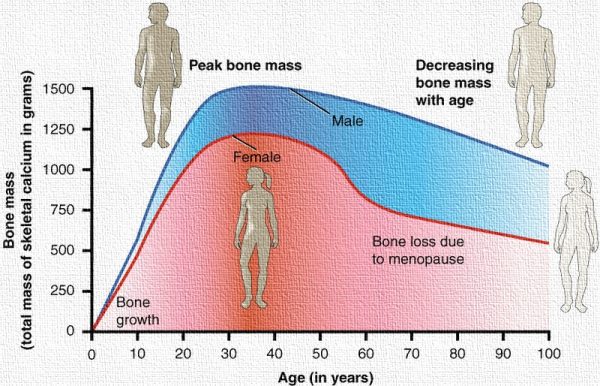
At 20, you have developed 90% of your skeleton, but you still have some time left to build.

Give it your best effort now to get strong bones that will support you through a long and healthy life.

To live a bone healthy life:

  • Eat 2-3 servings of foods that are rich in calcium.
  • Get at least 30 minutes of fun activities with high impact, like running, tennis, or aerobics.
  • Consider a vitamin D supplement.
  • Use good posture, especially when driving and on mobile devices.
  • Do not smoke or vape.
  • Use moderation in alcohol use.
  • Cut back on sugary drinks.
  • (For women) If you did not get your period by age 15, talk with your doctor.

Author: Sumana Rao | Posted on: April 22, 2022
« »
« »

Recommended for you

Bone health in your 40s

Bone Health in your 40s

At 40, you have maximized your skeleton.

Now you must maintain it with good bone health habits to keep strong bones that will support you all of your life.

To live a bone healthy life:

  • Eat 2-3 servings of foods that are rich in calcium.
  • Calculate your risk of breaking a bone, if you are over 45 years old.
  • Consider a vitamin D supplement.
  • Pay attention to body mechanics to protect your bones from breaking.
  • Get at least 30 minutes of high impact activities, like running, tennis, or aerobics.
  • Use good posture when working or using mobile devices.
  • Do not smoke or vape.
  • Use alcohol moderately.
  • Talk with your doctor if you develop any medical condition, to see how it might affect your bone health.
  • Ask your doctor if you take a medication about how it might affect your bone health.
  • (For women) Speak with your doctor if I lose estrogen because of premature menopause.
  • Image credit: https://pixabay.com/users/pexels-2286921/ (CC by 0)

Author: Sumana Rao | Posted on:
« »
« »

Recommended for you

Bone health in your 50s

Bone Health in your 50s

At this age you have done all that you can to optimize your skeleton.

Now you must step it up, especially if you are a women entering menopause, a time when estrogen levels drop and bone loss begins.

The 50s is when we see an increase in wrist fractures and spine fractures. Pay attention to falls and protecting your spine bones.

As a woman, to live a bone healthy life:

  • Get a bone density test if you have broken a bone or have a risk for breaking a bone.
  • Eat 3-4 servings of foods that are rich in calcium.
  • Consider a vitamin D supplement.
  • Pay attention to body mechanics to protect your bones from breaking.
  • Get at least 30 minutes of physical activity that involves weight, like running, tennis, or weight training.
  • Modify exercise programs like yoga and Pilates to avoid loaded flexion and twisting movements.
  • Improve your balance and posture in all of your daily activities.
  • Stop multitasking when you walk.
  • Do not smoke or vape.
  • Moderate your alcohol use.
  • Talk with your doctor if you develop any medical condition, to see how it might affect your bone health.
  • Ask your doctor if you take a medication about how it might affect your bone health.

Image credit: https://pixabay.com/users/stocksnap-894430/ (cc by 0)


Author: Sumana Rao | Posted on:
« »
« »

Recommended for you

Men at age of 50

As a man at the age of 50 – To live a bone healthy life

  • Get a bone density test if you have broken a bone or have a risk for breaking a bone.
  • Eat 2-3 servings of foods that are rich in calcium.
  • Consider a vitamin D supplement.
  • Pay attention to body mechanics to protect your bones from breaking.
  • Get at least 30 minutes of physical activity that involves weight, like running, tennis, or weight training.
  • Modify exercise programs like yoga and Pilates to avoid loaded flexion and twisting movements.
  • Improve your balance and posture in all daily activities.
  • Stop multitasking when you walk.
  • Do not smoke or vape.
  • Moderate your alcohol use.
  • Talk with your doctor if you develop any medical condition, to see how it might affect your bone health.
  • Ask your doctor if you take a medication about how it might affect your bone health.

Image credit; https://pixabay.com/users/ryanmcguire-123690/ (CC by 0)


Author: Sumana Rao | Posted on:
« »
« »

Recommended for you

Avoid Bone Sucking Food and Get Proper Nutrition

Avoid Bone Sucking Food and Get Proper Nutrition

In summary foods like chips, fast food, salty snacks, soda and alcohol can actually steal calcium from your bones, so try to scale them back as much as possible.

Pay attention to your calcium and Vitamin D intake for stronger and healthy bone.

Include plenty of physical activities like – jogging, walking, body works, yoga, running, climbing staircase etc- these exercises will help you to build stronger bones.

Seek your doctor’s help:

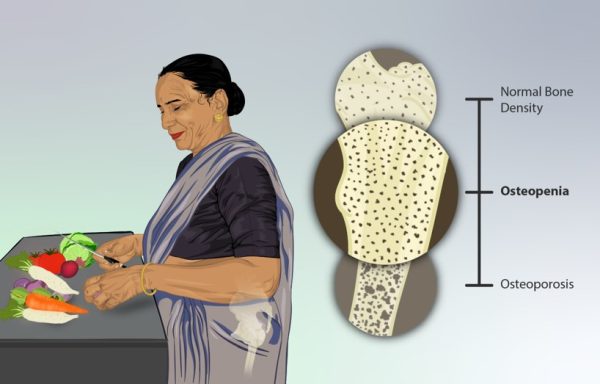
In case your are worried and concerned about your bone health or your family has risk for osteoporosis talk to your doctor.

A bone density test will help you. This test result will help doctor to gauge at your rate of bone loss. They may recommend proper prescription or guide you for better activities.

Image credit: https://commons.wikimedia.org/wiki/File:Depiction_of_a_woman_suffering_from_Osteopenia.png :https://www.myupchar.com/en, CC BY-SA 4.0 <https://creativecommons.org/licenses/by-sa/4.0>, via Wikimedia Commons


Author: Sumana Rao | Posted on:
« »
« »

Recommended for you

Beat heat with two juices

Beat Summer Heat With Two Healthy Juices

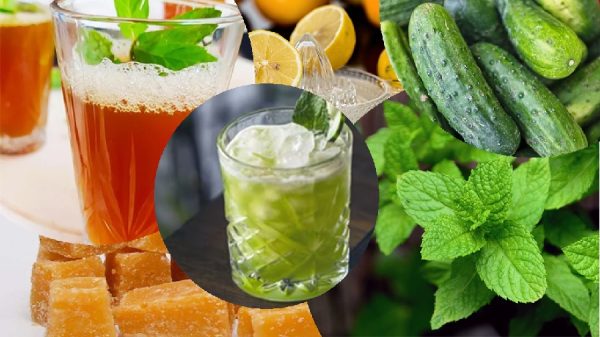
Soon we are into summer season and exposure to severe heat can lead to dehydration of the body. One way to avoid dehydration is drink to water which is natural and good for health. Sometimes we all need change in taste and our system wants more than water. Instead of surrendering to soda or any other carbonated drinks go for mint-lemon-jaggery drink. Add a pinch of salt into this drink, you will get your energy back.

Cucumber is  no calorie vegetable and will available fresh in farmers market. Use cucumber to get rid of heat from the body. Cucumber juice with mint, lemon and jaggery tastes good and keeps you cool and calm.

Mint-Lemon-Jaggery juice (sharabat)

Ingredients:

  1. Mint – few fresh leaves
  2. Jaggery – ¼ cup
  3. Lemon juice – 3 Tbsp
  4. Cardamom powder – pinch
  5. Salt – very little ( couple of pinches)
  6. Water – 4 cups

Preparation:

  1. Wash fresh mint leaves and coarse grind the leaves. Using fresh mint leaves enhances the flavor.
  2. Dissolve jaggery in one cup water
  3. Squeeze lemon to get juice
  4. In a vessel transfer crushed mint leaves, add jaggery water and lemon juice. Mix well. Add remining water.
  5. Add cardamom powder and little salt mix well.
  6. Store the juice in fridge for 5 minutes.
  7. Serve mint lemon jaggery juice. Adjust sweetness according to your needs.

Cucumber-lemon-mint – jaggery juice

Ingredients

  1. Cucumber – 1 Medium size
  2. Mint – crushed few leaves
  3. Lemon juice – 2 Tbsp
  4. Cardamom powder – a pinch
  5. Jaggery – 1/2 cup
  6. Salt – little

Preparation:

  1. Peel outer skin of cucumber, cut into small pieces and grind with little water – before grinding taste a piece of cucumber to make sure it is not bitter.
  2. Mix cucumber juice, crushed mint leaves, lemon juice, jaggery powder and salt in a vessel.
  3. Store in refrigerator for about 5 minutes and serve the cucumber-lemon-mint juice.

Image credit:

https://unsplash.com/photos/CXEMXpoJVD0

https://pixabay.com/photos/sugarcane-sugarcane-juice-natural-5388628/

https://pixabay.com/photos/mint-peppermint-herbs-5274718/

https://pixabay.com/photos/mint-daiquiri-martini-hard-rock-cafe-243214/


Author: Sumana Rao | Posted on: April 21, 2022
« »
« »

Recommended for you

Gallstone prevention tips

How To Prevent Gallstones Formation

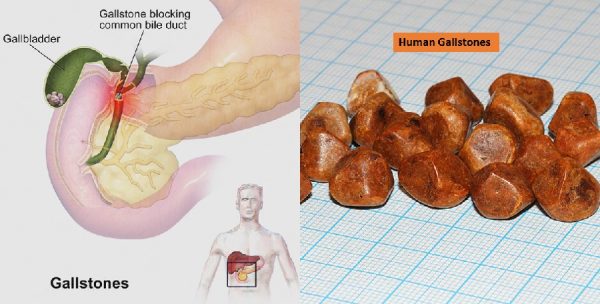
More than a million people suffer from gall bladder stone for various reasons. Sometimes the pain due to these gall bladder stones can be unbearable. Gall bladder is a small pouch which appears like deflated balloon after a meal stomach and after meal it deflates. It is present beneath liver.

Gallbladder stones, cholecystitis and gallbladder cancer are three different conditions. Cholecystitis is infection of gallbladder; gallbladder cancer is rare and difficult to diagnose. Gall bladder stone is a common condition where bile present in gall bladder crystallizes forming gallstones. Generally, these stones are harmless but can cause severe pain, inflammation and vomiting if not treated.

Symptoms of gallstones:

Some of the common symptoms one can experience with gallstones are:

  • Sudden pain in the back, right shoulder and, mid and upper right abdomen
  • Jaundice symptoms
  • Fever
  • Vomiting and nausea
  • Sweating severely
  • Stomach bloating
  • Flatulence
  • Motion will be clay colored
  • Chest pain
  • Recurrence of symptoms

Amongst all the above symptoms, pain is the main symptom that people experience with gallstones. Pain can be steady and remain for short time to several hours. When not attended, it can lead to infection and cholecystitis. Infection requires treatment with antibiotics and sometimes surgery. Gall stones can pass out into common bile duct causing blockage of the duct. This results in jaundice and pancreatitis. In this condition a person might feel pain in upper and right part of abdomen, between shoulder blades and right shoulder.

What is gallstone made of?

Gallstone made of either cholesterol which is the most common type or made by bilirubin, a substance made by breaking of RBC (red blood cells). This substance can release to blood stream causing jaundice.

Reasons for gallstones formation:

  1. Presence of cholesterol and bilirubin in bile
  2. Underactive gallbladder that does not empty bile
  3. During pregnancy
  4. Cirrhosis of liver
  5. Blood disorders
  6. Rapid loss of weight – heavy fasting, crash diet

Who gets gallstones?

  • Women, pregnant women, and people aged over 40
  • It could be due to hereditary
  • Overweight and obesity
  • Going through rapid weight loss program through crash diet program
  • Crohn’s disease
  • Diet with high fat and cholesterol
  • Suffering from blood disorders
  • Many Asians and Latins get gallstones more than others.

How are gallstones treated?

For some gallstones does not require treatment as they don’t experience any symptoms and problem. For others, following treatments can be suggested based on the severity

  1. Change in the diet- Control of fatty food is highly recommended. Eating plenty of fruits, vegetables and fiber rich food is helpful. Drinking fluids and losing weight if the person is overweight is helpful
  2. Weight loss program- Do not try to lose weight with fade diet program. Control portion and lose weight through proper exercise and gradually. An active lifestyle helps to reduce chances of developing gallstones.
  3. Surgery: Cholecystectomy is removal of entire gallbladder. Surgeons may remove the gall bladder or might remove stones from bile ducts. Surgery may involve laparoscopic type or open type based on the severity of gallstone symptoms. Recovery in case of keyhole surgery is faster than the open surgery.

For a good diet program consult a nutritionist. Include following food types in your daily diet to prevent development of gallstones.

  • Eat more foods that are high in fiber, such as ; fruits, vegetables, beans, peas, spinach, fenugreek
  • whole grains, brown rice, oats, whole wheat bread.
  • Control refined carbohydrates , salt and sugar.
  • Eat healthy fats that supplies omega 3 and omega 6 fatty acids. This will help your gallbladder contract and empty on a regular basis.
  • Avoid and go slow on unhealthy fats – fried foods, artificial sweetener, sweats and desserts

References:

https://www.niddk.nih.gov/

https://www.healthdirect.gov.au/

https://my.clevelandclinic.org/

Www. Werindia.com

Image credit: BruceBlaus, CC BY-SA 4.0 , via Wikimedia Commons

George Chernilevsky, CC BY-SA 4.0 , via Wikimedia Commons


Author: Sumana Rao | Posted on: April 19, 2022
« »
« »

Recommended for you

Care cesarean surgery

Care after cesarean section

Even though common, cesarean section is major surgery and comes with many risks. Cesarean is done when there is a difficulty or mother faces challenge during baby’s birth. After any delivery mother needs to give rest to the body and both internal and outer wounds must be healed without any complications. Ideally this would be no or little house work and little movement. Special consideration must be given to take care of mother.

With nuclear family and little help available it is hard for new mom to give attention to her body. If the mother undergone cesarean to deliver the baby, then she must consider taking care of her body and mental health in a proper way. If not, the consequence of not taking caring oneself can lead to several health issues in future. Parents of new born must try to organize the life. Get support from family, community, new mother group or a helper. Support system will help body to recover fast.

Care at hospital:

  • After cesarean surgery in hospital itself nurses will encourage you to use bathroom and this itself is a starting process that helps you to stand on your feet. If they have used staples, generally it will be removed from incision before leaving for home.
  • Talk to your doctor about how to deal with pain. If needed get prescription and information about side effects for both baby and you.
  • Walk slowly and hold onto something if you feel light headed.

Care at home:

  • Uterus will start shrinking (involution) and sometimes it might cause heavy bleeding. Keep extra menstrual pads with you. Do not use any type of tampons during this time.
  • Do not lift heavy items and reduce activities. Do not lift anything heavier than your baby.
  • Keep feeding supplies and changing station for both baby and yourself close to you.
  • Drink plenty of warm water to avoid constipation.
  • Practice walking inside home. Walking slowly for few minutes helps to heal the wound.
  • If cold, wear warm clothing to avoid any type of infection, fever and allergy.
  • While taking shower, cover cesarean wound for about a week. Do not swim or use bathtub. In case there is bleeding in incision do not have bath.
  • Avoid driving at least two to three months. Before going on drive talk to your gynecologist and get checked for wound healing.
  • Do not have intercourse for three months or until your doctor says it is safe
  • Do not use stairs often
  • Get good sleep, eat nutritious food, avoid junk food.

Emotional health care:

  • After cesarean body feels worn out and mentally mother might feel drained. Getting good sleep everyday for 8-10 hours helps. Sleep when baby is sleeping. That is the best solution for your sleep after delivery.
  • Bond with baby, talk to baby and play with her.
  • Talk to new mothers – discuss about birth experience. It will help to deal with negative feelings that you might have about your surgery.
  • If you have anxiety, practice meditation for few minutes a day.
  • Ask for help, any help that you get takes away the overwhelmed feeling, loneliness and emotional burden.

Call your doctor or seek doctor’s advice immediately if you have

  • Temperature above 100 F
  • Severe headache
  • Severe abdominal pain, burning sensation
  • Foul odor in vaginal discharge
  • Pain in incision area and pus discharge
  • Swollen red area in the leg and rash or hives
  • Blood or burning urination
  • Extremely heavy bleeding within an hour and passing large clots.
  • Sore, painful breasts with flu like symptom
  • Feeling high anxiety, panic or depression

Whether it is cesarean or normal delivery – mother has to comeback to normalcy after proper and organized recovery process. If not, the consequences are many.  If the recovery process is not taken care the way it should be, it can lead to other health issues in the future – back pain, hernia, depression, anemia, fatigue etc. To avoid such health issues, mother must be taken care well after delivery. Cesarean wound healing is a long process – it might take up to six months. Do not rush and push body heal. Take body through proper healing process to get back lost strength.

Image credit: Image by Charlotte Paltrinieri from Pixabay  (Free for commercial use)


Author: Sumana Rao | Posted on:
« »
« »

Recommended for you