Don't worry about the people in your past; There's a reason they didn't make it to your future.
Practical Tips For Resistant Starch
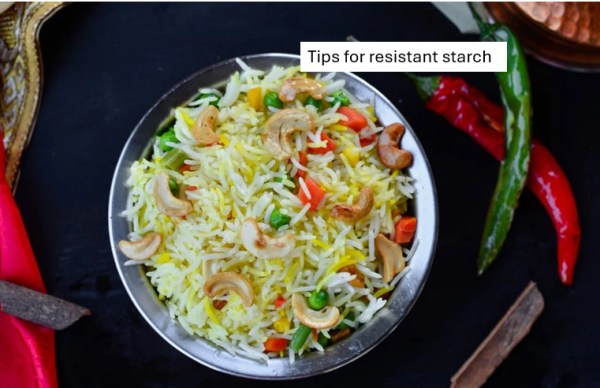
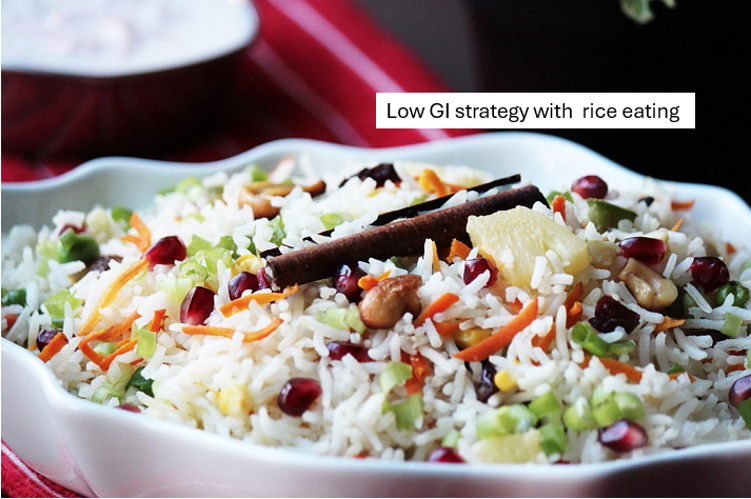
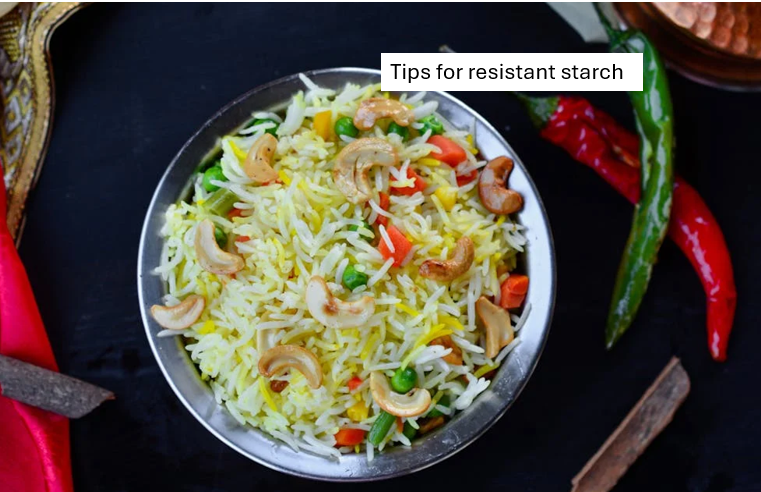
Cook extra portions of rice, refrigerate, and use it for stir-fries, salads, or soups the next day. Consume rice with unripe banana curry, legumes, and sweet potato curry. These vegetables contain more resistant starch.
Avoid spoiling of rice overly long refrigeration (over 3-4 days) to maintain food safety.
Potential risks of refrigerated rice
1. Food safety concerns:
Cooked rice can harbor Bacillus cereus, a bacterium that thrives when rice is improperly cooled or left at room temperature. This can cause food poisoning.
To avoid this –
Cool rice quickly after cooking (within 1–2 hours).
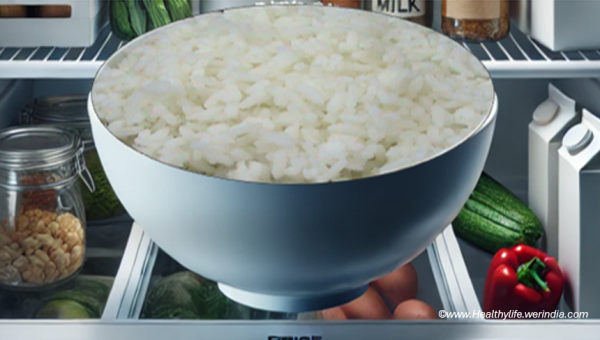
Store in the refrigerator at ≤4°C (≤40°F).
Eat refrigerated rice within 3–4 days.
Reheat thoroughly to kill bacteria (to at least 165°F/74°C).
2. Lower nutritional content: While resistant starch is beneficial, cooling rice does not increase vitamins, minerals, or fiber. It only reduces GI. Pair it with nutrient-rich foods for a balanced diet.
The Glycemic Index of Cooked And Refrigerated Rice
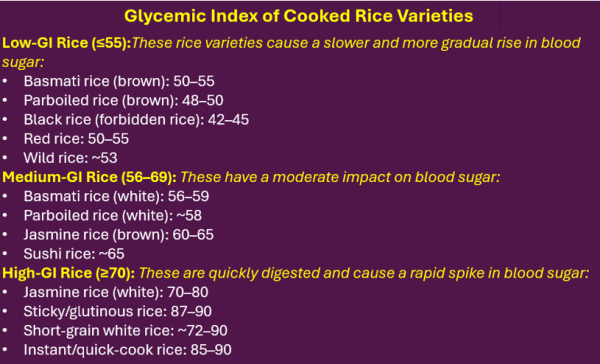
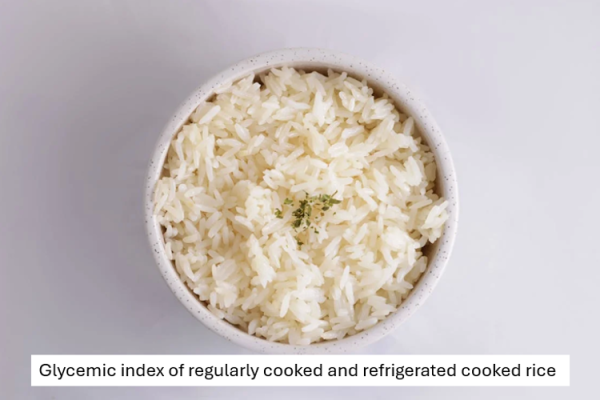
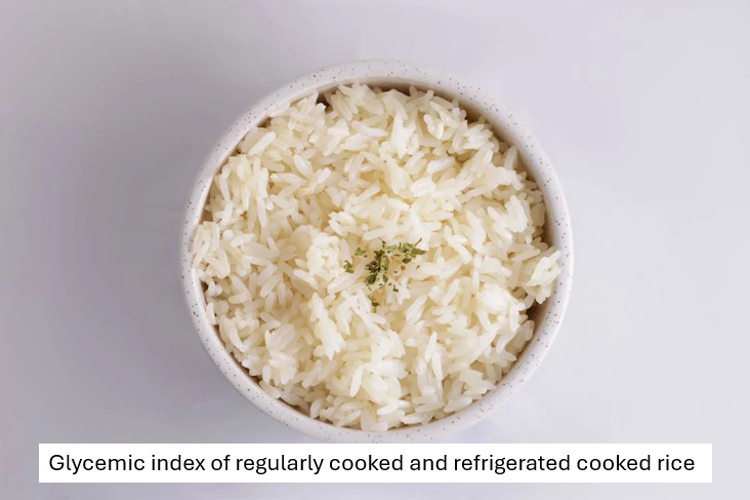
The glycemic index (GI) of rice depends on the variety and preparation method – here are general comparisons for regular freshly cooked rice versus refrigerated rice:
1. Regular cooked white rice
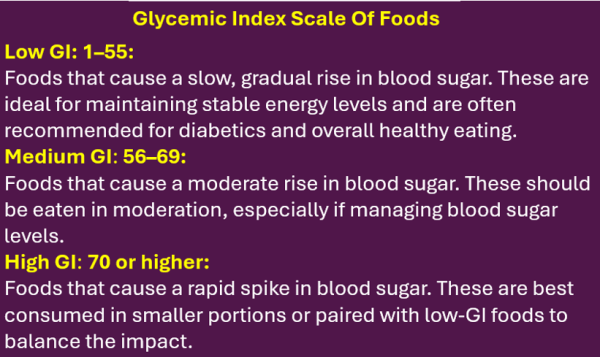
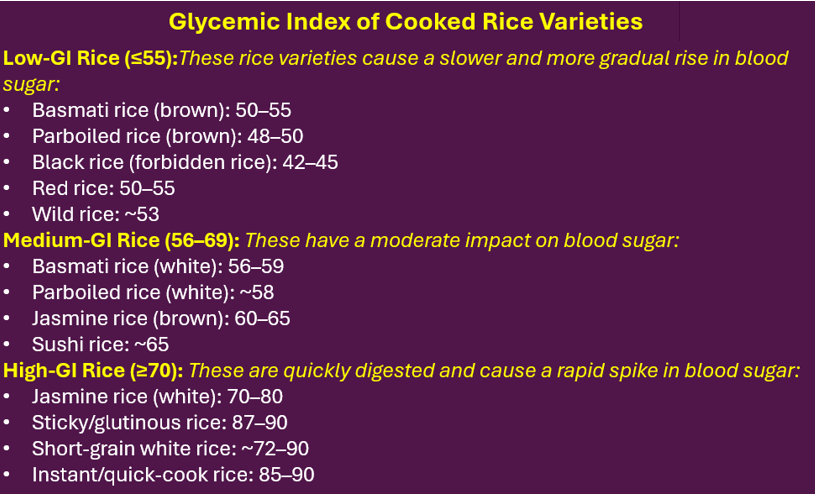
GI: 70–90 (depending on the variety and level of processing)
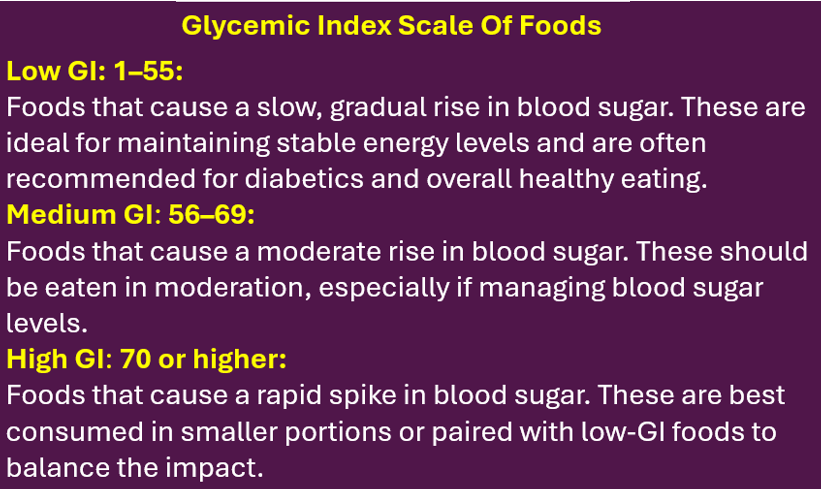
High-GI foods cause rapid spikes in blood sugar because the starches in freshly cooked rice are easily digestible.
2. Refrigerated and reheated rice
GI: 50–65 (approximately)
Cooling and refrigerating cooked rice for 12–24 hours lower its GI due to the formation of resistant starch. Reheating it does not reverse this effect, so it retains its lower GI.
Image credit: Photo by Robert Moutongoh: https://www.pexels.com/photo/a-bowl-of-cooked-rice-8923092/ (Free to use)
To maximize resistant starch, cook the rice, cool it completely (in the refrigerator), and optionally reheat it before eating. Avoid leaving rice at room temperature for extended periods to prevent bacterial growth.
Cooking: When rice is cooked, its starch molecules are in a gelatinized state, making them easily digestible.
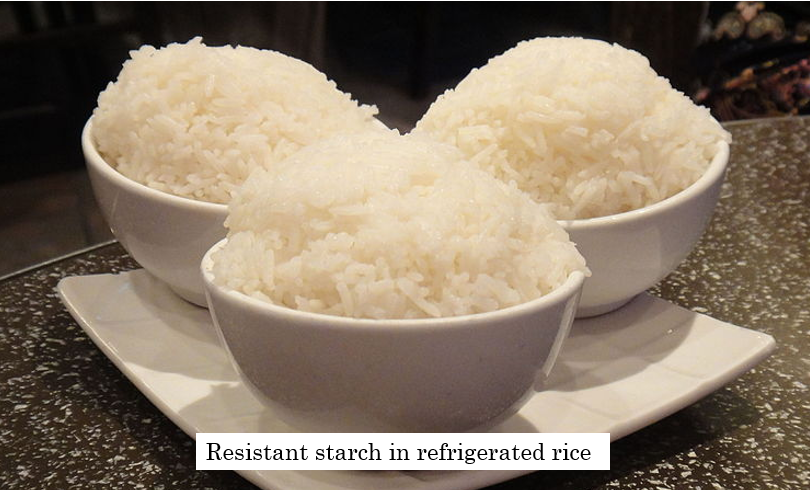
Cooling: Refrigeration (for at least 12-24 hours) allows these starch molecules to recrystallize into resistant starch.
Reheating: Even when reheated, the resistant starch remains intact.
Safety Considerations:
When preparing and storing rice, it is essential to follow proper food safety practices to prevent bacterial growth:
Prompt refrigeration: After cooking, cool the rice quickly and refrigerate it within two hours.
Storage duration: Keep the rice refrigerated at 4°C (39.2°F) and consume it within 3-4 days.
Reheating: When reheating, ensure the rice reaches an internal temperature of at least 74°C (165°F) to eliminate potential bacteria.
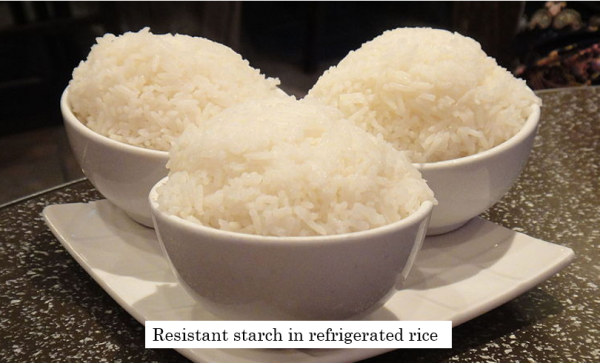
Resistant starch is a type of carbohydrate that “resists” digest in the small intestine and instead ferments in the large intestine. The cooling process causes a change in the starch structure:
Amylose: The linear starch chains crystallize during cooling, forming resistant starch.
Amylopectin: This branched starch partially retrogrades, contributing to lower digestibility.
When rice is reheated, these resistant starches remain intact, leading to a reduced glycemic impact.
Slower glucose absorption: Resistant starch takes longer to break down than regular starch. This means glucose enters the bloodstream gradually, preventing sharp blood sugar spikes.
Gut health Benefits: Resistant starch serves as a prebiotic, feeding the beneficial gut bacteria. These bacteria ferment starch to produce short-chain fatty acids (like butyrate), which improve colon health, reduce inflammation, and enhance overall digestion.
Increased satiety: Foods with resistant starch help you feel full for longer because they slow digestion and stabilize blood sugar levels. This can reduce hunger and aid weight management.
Image credit: Calgary Reviews from Calgary, Canada, CC BY 2.0 <https://creativecommons.org/licenses/by/2.0>, via Wikimedia Commons
All You Need To Know About Refrigerated Cooked Rice And How It Benefits Health
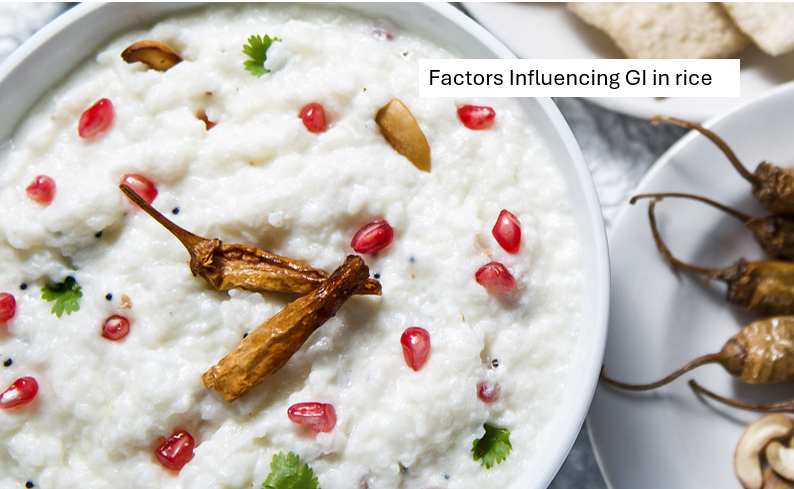
It is still practice today that eating the previous day’s cooked rice is next day’s breakfast item. In Asian countries, rice is a staple food and rice that is left over from previous day will be used to make different items like lemon rice, porridge, curd rice etc. It is also a belief that eating the previous day’s rice gives strength! Do you know? Recent research also supports this concept. Studies show that refrigerated cooked rice from the previous day typically has a lower glycemic index (GI) compared to freshly cooked rice. This is due to the formation of Resistant Starch during the cooling process.
Formation of resistant starch: When rice is cooked and then cooled, some of the starches retrograde into a form that resists digestion. Resistant starch slows down the absorption of glucose into the bloodstream, leading to a lower glycemic response.
Reheating does not reverse It: Even if you reheat the cooled rice, the resistant starch remains intact, meaning the GI stays lower than freshly cooked rice.
This method of cooking, cooling, and consuming rice is often recommended for managing blood sugar levels or weight, as the resistant starch acts like dietary fiber, aiding digestion and improving satiety.
Several studies have investigated the impact of cooling cooked rice on its glycemic index (GI). The process of cooling cooked rice increases its resistant starch content, which in turn lowers its GI. This means that consuming cooled or cooled-and-reheated rice results in a slower rise in blood sugar levels compared to freshly cooked rice.
References:
Higgins, J. A. (2004). Resistant starch and energy balance: impact on weight loss and maintenance. Critical Reviews in Food Science and Nutrition.
Ranawana, V., et al. (2009). Post-cooling of rice reduces the glycaemic response in healthy adults. Nutrition Bulletin.
Sajilata, M. G., et al. (2006). Resistant starch–a review. Comprehensive Reviews in Food Science and Food Safety.