All posts by Sumana Rao

Don't worry about the people in your past; There's a reason they didn't make it to your future.
Yoga for Heart

Yoga For Heart Health

To prevent heart conditions practice yoga, take yoga’s help. It lowers blood pressure, increases lungs function, maintenance of heart rate and blood circulation.

With this it also tones the muscle. To improve overall well being of body and heart use yoga.

Yoga helps those who already faced heart attack or cardiac arrest. It brings backs the balance and helps to find ways to calm the mind. It manages stress in a positive way and helps in recovery process.

One will see the benefit right away. Yoga is anti-depressant and helps in relaxation of mind.

It also decreases cholesterol level and blood pressure level thus helps in stress management.

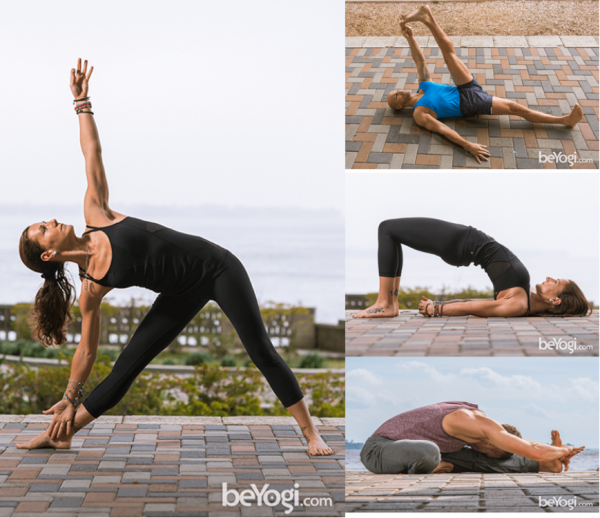
Four yoga asanas that helps in improving heart health.

Padangusthasana: Big Toe Pose

  1. Stand tall with feet hip-width apart place hands on the hips.
  2. Exhale and fold forward. Grab your big toes while folding forward or grab your opposite elbows.
  3. Draw belly inside and lift sit bonds toward sky.
  4. Let your head relax. Bend knees a slightly and tighten the hamstring. Hold for 5 breaths.

Benefits: This pose calms the brain, relieves stress, and reduces anxiety and depression. It is a therapy for high blood pressure.

Setu Bandha Sarvangasana: Bridge Pose

  1. Lie on your back on the floor.
  2. Bend your knees and set your feet on the floor, heels as close to the sitting bones as possible.
  3. Exhale and, pressing your inner feet and arms actively into the floor, push your tailbone upward toward the pubis, firming the buttocks, and lift the buttocks off the floor.
  4. Clasp the hands below your pelvis and extend through the arms to help you stay on the tops of your shoulders.
  5. Lift your buttocks until the thighs are about parallel to the floor. Keep your knees directly over the heels. Lift the pubis toward the navel.
  6. Lift your chin slightly away from the sternum. Firm the outer arms, broaden the shoulder blades, and try to lift the space between them at the base of the neck up into the torso. Hold for five breath cycles, exhale down, and repeat 2 to 3 more times.

Benefits:  Reduces anxiety, blood pressure, fatigue, backache, headache and insomnia.

Janu Sirsasana A: Head-to-Knee Forward Bend

  1. From a seated position with legs extended forward,
  2. Bend the right knee outward to a 90-degree angle
  3. Now press the right foot into the inner left thigh.
  4. Grab left foot or ankle, inhale, square the hips, and lengthen the torso over the straight leg.
  5. Exhale, fold forward slowly. Extend the spine and lengthen through the chest. Keep your back long and flat. Pull left toes back and extend through the left heel. Stay for 5 breath and shift sides.

Benefits: This reduces blood pressure, calms the brain, reduces anxiety and fatigue, and alleviates headaches and insomnia.

Supta Padangusthasana: Reclining Big Toe Pose

  1. Lie on your back with arms along sides and extended legs.
  2. While inhaling bend the right knee and clasp the right big toe with right fingers.
  3. Place the left hand on top of the upper left thigh.
  4. Exhale and straighten the right leg.
  5. Inhale; lift the head up toward the right leg and keep the left leg down.
  6. Hold for five breath cycles, inhale head back down to the floor, and exhale right leg down. Switch sides.

Benefits: Relieves backache and sciatica. Therapeutic for high blood pressure.

Trikonasana : Triangle pose

  1. Begin in Mountain Pose. Turn your right leg out by 90 degrees. Turn out your knee, ankle and foot in the same direction. Turn left leg by 15 degrees.
  2. Look to your right and stretch out your arms at shoulder level. Let the palms face the floor.
  3. Slowly bend down forward comfortably and place your right hand on your right shin. You’re your spine straight. Do not collapse in the pose.
  4. Now, lift and extend your body from the left hip.
  5. Raise your left arm towards ceiling. Alternatively you can fold your left arm at back and you’re your chest while doing so twist the spine little and look up to the extended arm or at ceiling.
  6. Hold the pose for 5 breath.

Benefits: This is yoga posture helps to promote cardiovascular health. It also increases stamina.

.

Reference:

All images used here are published with prior permission from https://beyogi.com/learn-yoga/poses/reclining-big-toe-pose/ You can visit beyogi.com for more poses and also mind and body category of www.healthylife.werindia.com


Author: Sumana Rao | Posted on: February 14, 2025
« »
« »

Recommended for you

Tuberculosis outbreak in Kansas city

Tuberculosis Outbreak In Kansas City

As of January 31, 2025, Kansas city in USA is experiencing a significant tuberculosis (TB) outbreak, primarily affecting the Kansas City metropolitan area. According to KDHE -The Kansas Department of Health and Environment ‘outbreak is larger than normal for Kansas, the risk remains low for the general’. KDHE public reports 67 confirmed active TB cases—60 in Wyandotte County and 7 in Johnson County. Additionally, there are 79 confirmed latent TB infections in the region.

This outbreak, which began in early 2024, has resulted in two fatalities. Health officials emphasize that the risk to the public remains low, as TB typically requires prolonged close contact for transmission. The KDHE, in collaboration with local health departments and CDC is actively conducting case investigations, contact tracing, and public health education to manage and contain the outbreak.

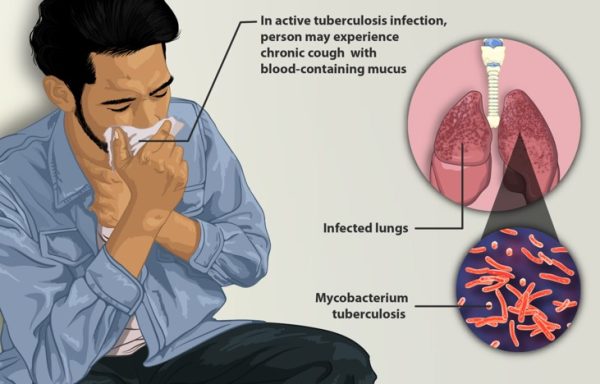
TB is an airborne bacterial infection that primarily affects the lungs. Symptoms of active TB include a persistent cough, chest pain, and fatigue. While TB is treatable with antibiotics, the treatment regimen is lengthy, often requiring several months of medication adherence. Individuals diagnosed with active TB are undergoing treatment, and many have completed their therapy successfully.

The KDHE continues to monitor the situation closely and advises residents to remain informed through official public health channels. Healthcare providers are reminded to report suspected TB cases promptly to facilitate timely public health interventions.

Do you know? Tuberculosis (TB) has been present in humans for thousands of years, but it was discovered as a bacterial disease in 1882 by Dr. Robert Koch, a German physician and microbiologist. He identified the bacterium responsible for TB, Mycobacterium tuberculosis, and presented his findings on March 24, 1882. This discovery was groundbreaking because it provided scientific proof that TB was caused by a specific microorganism, paving the way for further research, diagnosis, and treatment.Before Koch’s discovery, TB was known by various names, such as “consumption” or “phthisis,” and had been documented in ancient Egyptian mummies, indicating its presence for at least 4,000 years.

Tuberculosis (TB) symptoms and treatment :

Symptoms of TB :TB is a bacterial infection caused by Mycobacterium tuberculosis, primarily affecting the lungs but sometimes spreading to other organs. It can be active (symptomatic and contagious) or latent (dormant and non-contagious).

Symptoms of Active TB:

  • Persistent cough (lasting more than three weeks)
  • Coughing up blood or mucus
  • Chest pain or pain when breathing and coughing.
  • Fever and night sweats
  • Unexplained weight loss
  • Loss of appetite
  • Fatigue and weakness

Symptoms of Latent TB:

  • No symptoms (the bacteria are present but inactive)
  • Not contagious, but it can become active later.

Prevention and public health measures:

  • BCG vaccine (given in some countries, but not widely used in the U.S.)
  • Early detection and treatment of infected individuals
  • Wearing masks and good ventilation in high-risk areas
  • Regular screening for healthcare workers and those in close contact with TB patients

What is the treatment for TB? Is it curable?

TB is treatable and curable with antibiotics, but treatment must be followed strictly to prevent resistance.

Standard treatment for Active TB: A 6-month regimen of antibiotics, typically:

  1. First 2 months (Intensive Phase): Rifampin (RIF), Isoniazid (INH), Pyrazinamide (PZA) Ethambutol (EMB)
  2. Next 4 months (Continuation Phase): Rifampin (RIF) Isoniazid (INH)

Treatment for Latent TB: Isoniazid (INH) for 6-9 months, Rifampin (RIF) for 4 months and Combination therapy (INH + Rifapentine) for 3 months

Who is at high risk for TB? Certain groups of people should be especially careful about tuberculosis (TB) because they are at higher risk of infection or developing active TB disease. These include:

1. People with weakened immune systems:

  • HIV/AIDS patients – TB is a leading cause of death among people with HIV.
  • Cancer patients – Those undergoing chemotherapy or radiation therapy.
  • Organ transplant recipients – Taking immunosuppressive drugs increases susceptibility.
  • People with autoimmune diseases – Those on biologic drugs for conditions like rheumatoid arthritis or lupus.
  • Diabetics – Poorly controlled diabetes increases TB risk.
  • Malnourished individuals – A weakened immune system makes it harder to fight off TB.

2. Close contacts of TB patients: Family members, roommates, or healthcare workers exposed to TB patients. And People living in overcrowded places like prisons, homeless shelters, or refugee camps.

3. Elderly individuals: Weakened immune function with age makes TB more dangerous.

4. Smokers and heavy alcohol/drug users: Smoking damages the lungs, making them more vulnerable. Excessive alcohol and drug use weaken the immune system.

5. Healthcare workers: High exposure risk due to contact with infected patients.

6. Travelers to high-TB regions: Countries with high TB rates include India, China, South Africa, Indonesia, and parts of Eastern Europe.

Since TB treatment requires months of strict adherence, directly observed therapy (DOT) is often recommended, where healthcare providers monitor patients taking their medications to ensure successful treatment.

References:

Image credit: https://www.myupchar.com/, CC BY-SA 4.0 <https://creativecommons.org/licenses/by-sa/4.0>, via Wikimedia Commons


Author: Sumana Rao | Posted on: February 7, 2025
« »
« »

Recommended for you

Happy cooking

Ways To Enjoy Daily Cooking

Now a days there are many videos and blogs are available featuring various types of cooking. Obviously, these people enjoy cooking and experimenting new recipes every now and then.  Some people find cooking relaxing and fun, while others see it as a chore. Daily cooking can feel boring for these reasons.

  1. Repetitiveness – Making the same meals over and over can drain the excitement.
  2. Lack of inspiration – If you’re not discovering new recipes, it can feel like a chore rather than a creative process.
  3. Time pressure – Cooking under time constraints makes it feel more like work than enjoyment.
  4. Mental load – Constantly deciding what to cook and ensuring you have the right ingredients can be exhausting.
  5. Cleanup fatigue – The thought of doing dishes and tidying up afterward can kill motivation.
  6. Eating alone or unappreciated effort – If you’re cooking just for yourself or for people who don’t express appreciation, it might not feel rewarding.
  7. Lack of variation in Ingredients – Using the same pantry staples without experimenting with new flavors can make meals feel dull.

If cooking is a daily routine for you, then learn to enjoy cooking for your wellbeing.  Enjoying cooking is all about shifting your mindset, making the process easier, and adding elements of fun.

Here are some ways that could help love cooking:

1. Create the right atmosphere

  • Play your favorite music, podcast, or an audiobook.
  • Keep your kitchen clean and organized so cooking feels less like a chore.
  • Use good lighting to make the space inviting.

2. Make it easy

  • Invest in good-quality knives and kitchen tools – this makes a big difference.
  • Keep kitchen cabinets clean, tidy and arrange ingredients in an easily accessible way
  • Prep ingredients in advance make cooking less stressful.
  • Cook simple meals first, then gradually experiment with new recipes.

3. Turn it into a ritual

  • Cook with a drink you enjoy—tea, coffee, juice or a refreshing mocktail.
  • Create a cozy vibe by lighting a candle or using essential oils.
  • Try cooking at the same time each day to build a habit.

4. Experiment and be creative

  • Try new recipes or cuisines to keep things exciting.
  • Use fresh herbs and spices to enhance flavors.
  • Treat cooking as a creative process rather than a task.

5. Cook with others

  • Involve family, friends, or a partner for a fun experience.
  • If alone, video call someone or share your meal virtually.
  • Join a cooking class (online or in-person) to learn and socialize.

6. Cook for pleasure, not just necessity

  • Make meals you truly enjoy eating.
  • Arranging your food nicely makes the experience more satisfying.
  • Reward yourself with a delicious homemade treat.

Remember -Eating out or getting food delivered should not be your routine. You don’t know the ingredients that goes in when you order food from outside.  Daily cooking at home with fresh produces and known ingredients keeps your health in best condition. 

Image credit: Image by natalianovikova from Pixabay (Free to use under Pixabay content license)


Author: Sumana Rao | Posted on: February 4, 2025
« »
« »

Recommended for you

Lizard pose hip opener

Release Tension By Practicing Hip Opener Uttahan Pristhasana Lizard Pose

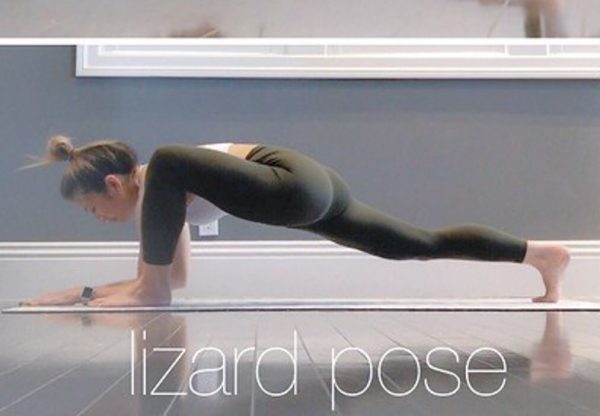
Uttahan Pristhasana known as Lizard Pose is intermediate yoga pose that opens hip muscles. The pose resembles standing lizard hence it is known as lizard pose. This pose is recommended for those who wants to stretch hamstring and hip flexors and especially recommended for athletes who have tight hips. Stretching with this pose helps to relax and strengthens quadriceps.

Benefits of lizard pose:

When we are stressed out, it reflects on our hips and hip and thigh muscle gets tensed. Practicing lizard pose helps to relax and releases the stress from big muscles. It calms mind and helps to focus on mind and body. Improves digestion and strengthens core, quadriceps, thigh muscles and arms. Helps to open hips, chest and stimulates internal organs. It is also a pose that prepares for poses that require much deeper stretches and eventually a person can sit easily on floor without any pain.

How to get into Lizard pose?

  1. Start withTadasana or Standing Mountain Pose mountain pose
  2. Bend and move to downward facing dog pose. Keep your feet slightly wider than the shoulder.
  3. Slowly lift right leg up into air, to three-legged dog pose and bring the lifted leg front and place outside the right hand.
  4. Slowly bring your hands forward and come down on forearms and place both forearms on the mat. If you cannot bring down on forearms keep your hand lifted.
  5. Open the chest and lengthen the spine.
  6. Draw shoulder blades together.
  7. Stretch the left leg, keep the right knee hugging towards midline and right hip and left hip should be in same line.
  8. Keep left leg up or if you find it difficult, go on knee. Advantage of keeping left leg up is it gives some more stretch.
  9. Now look straight, hold on to the pose for three to five breath.
  10. To come out of the pose, slowly come on arms and move right leg back and come to a  table top pose.
  11. Repeat the steps on left side.
  12. After completing the steps, get into child pose and relax.

Contradictions:

People who suffer from sciatica and lower back pain should avoid practicing this pose. In case,  Dyou want to practice the pose, keep your knee on the floor and use blocks for support.

If you find any discomfort doing the pose, back off and relax.

Image credit: https://www.flickr.com/photos/jennycu/33541652323 (https://creativecommons.org/licenses/by/2.0/)


Author: Sumana Rao | Posted on:
« »
« »

Recommended for you

Madhukeshwara Hegde beekeeping

Success Story Of Dr Madhukeshwara Janaka Hegde Beekeeping Pioneer

Beekeeping is crucial for many reasons, from supporting biodiversity to ensuring food security. No bees, no food—at least not the way we know it. Bees are responsible for pollinating about one-third of the food we eat, including many fruits, vegetables, and nuts. Without them, global food production would collapse, leading to shortages and higher prices.

Some key impacts of bee loss:
Fewer Crops – Apples, almonds, avocados, berries, cucumbers, and even coffee depend on bee pollination.
Nutritional Decline – Without bees, diets would lack essential vitamins and minerals from fruits and veggies.
Rising Food Costs – Hand-pollination or artificial methods would be expensive and inefficient.
Ecosystem ImbalanceBees support biodiversity, and their decline could disrupt entire food chains.

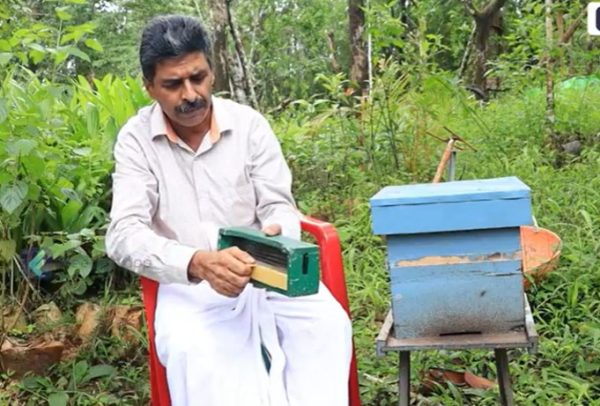
Dr. Madhukeshwara Janaka Hegde, hailing from Sirsi Taluk in Uttara Kannada District, Karnataka, India is a distinguished beekeeper and entrepreneur. Despite having formal education only up to the eighth grade, he earned an honorary doctorate for his significant contributions to bee farming. His journey into beekeeping began with a modest loan of ₹20,000, which he utilized to establish his honey farming venture. Over time, his dedication and innovative approaches have led to the management of over 1,000 beehives, transforming his enterprise into a multi-million-rupee business.

Madhu bee nursery and research center-

Beyond his personal success, Dr. Hegde is committed to empowering other farmers. He offers training programs and shares his extensive knowledge of beekeeping, aiming to uplift new agricultural enthusiasts. His efforts have been recognized at the national level, including a mention in Prime Minister Narendra Modi’s “Mann Ki Baat” program.

Dr. Hegde’s entrepreneurial spirit is evident in his development of various honey-based products, such as Honey Kokam Juice, Honey Jam, and Honey Ashwagandha products, which cater to contemporary markets. He has established a society to market these products across India and internationally, enhancing the value of honey and expanding its reach.

In addition to his work in product development, Dr. Hegde is a skilled apitherapist, utilizing bee products for therapeutic purposes. He provides treatments for various conditions, including joint pains, allergies, and blood diseases, leveraging his knowledge of Ayurveda and medicinal plants.

Dr. Hegde’s journey from humble beginnings to becoming a leader in beekeeping exemplifies the impact of dedication and innovation in agriculture. His commitment to sharing knowledge and empowering others continues to inspire many in the farming community.

Entrepreneurial Impact:

  • Established a society for marketing honey products across India and internationally.
  • Utilizes apitherapy, treating joint pains, allergies, and blood diseases using bee products and Ayurvedic knowledge.

Dr. Hegde continues to inspire and uplift farmers by sharing his expertise, proving that dedication and innovation in agriculture can lead to extraordinary success. For those interested in learning directly from Dr. Hegde, he offers mentorship through platforms like the ffreedom app, where he shares insights into beekeeping and its associated business opportunities.

References:

https://madhukeshwarhegde.com/?utm_source=chatgpt.com

https://inshorts.com/

https://krishijagran.com/

https://ffreedom.com/


Author: Sumana Rao | Posted on: February 3, 2025
« »
« »

Recommended for you

Guillain Barre Syndrome

Guillain Barre Syndrome

Pune city in Maharashtra India is in news for the appearance of rare condition called Guillian Bare Syndrome. So far there are 73 cases are reported including 47 males and 26 females. One death is also reported. Doctors are suspecting that the food and water infection are triggers for the syndrome appearance. So far, cases are reported mainly in Pune’s Kirkatwadi, Nandoshi, Nanded, Dhayari, and Sinhagad Road.

What is Guillain Barre syndrome?

Also known as GBS, Guillain Barre syndrome is not contagious or inherited. It is a rare neurological disorder in which body’s immune system mistakenly attacks part of its peripheral nervous system. The nervous system that is located outside spinal cord and brain.

Other names for GBS are: Acute Inflammatory Demyelinating Polyneuropathy and Landry’s Ascending Paralysis.

When a person develops GBS it can range from mild case with brief weakness to devastating paralysis leaving the person unable to breath independently. In most cases people do recover from severe GBS and will continue to have some weakness after recovery.

GBS will not affect anyone. However, it can strike any person at any age of both sexes. GBS is an autoimmune disease because antibodies and white blood cells that protect us from microorganism’s invasion, mistakenly attacks healthy nerves of our body. The symptom starts few days or weeks of following a gastrointestinal or respiratory viral infection. Sometimes a surgery can trigger the GBS. According to reports worldwide number of GBS is increased following infection with Zika virus.

Symptoms of GBS:

  • Muscle weakness, difficulty in vision
  • Difficulty in speaking, swallowing and chewing
  • Pricking sensations in hands and feet
  • Severe body pain particularly at night
  • Having hard time focusing, coordination problem and unsteadiness
  • Abnormal heart rate and blood pressure
  • Indigestion, bladder control problem.

The intensity of the symptoms increases over hours and days until certain types of muscles in the body cannot be used and person can almost paralyzed. At this stage the disease can be life threatening with heart rate increase, blood pressure increases and trouble in breathing.

What is the impact of GBS on health?

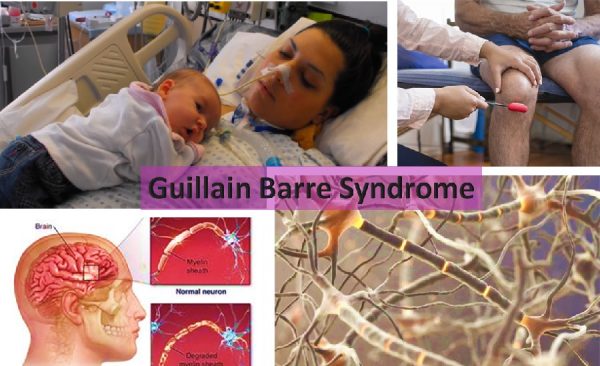
The central conducting core in the nerves called axon and it carries signal to various body parts. The axon is covered by a sheath called myelin. Myelin helps the axon to speed up the transmission of nerve signals. In patients with GBS, the body immune system damages myelin sheath of the axons of peripheral nerves and it also might damage axon. This results in improper or no signal transmit from the nerves and muscles begin to lose their ability to respond brain’s commands. When this happens body weakens. This can happen in hours or days. Once the nerves are damages brain also receives abnormal sensory signals from the body. This causes tingling, bugs crawling sensation a pain in the body.

Diagnosis of GBS:

There are many health conditions that are like GBS in the initial status. Doctors therefore might find it difficult to diagnose Guillain Barre syndrome. As the disease advances, doctors will keep patient under observation to see the symptoms that appear on both sides of body.

A nerve velocity test provides clue for further diagnosis. Cerebrospinal fluid that bathes spinal cord and brain will be collected to check protein level. The key diagnostic finding includes:

  • Further abnormal sensation of numbness, tingling and pain will be noted
  • Diminished deep tendon reflexes in limbs
  • Elevated cerebrospinal fluid protein without elevated cell count
  • Slow nerve signal conduction
  • Viral infection and or diarrhea from recent health issue

Treatment:

There is no known cure for GBS. Certain treatment will help patient to recover and get back to normal life. GBS syndrome is a devastating disorder because of the way the disease spreads – rapid, sudden and weakness with paralysis. With good intensive care patient can recover steadily. Studies show nearly 70% of GBS patients eventually experience full recovery and get back to normalcy with assistance and aid. So far there is no known cure for GBS. Some therapies can help to lessen the severity of illness and speed up recovery time. Because of the paralysis type of complications, patients who has GBS are usually admitted and treated in hospitals under doctor care.

Supportive care will monitor breathing, heartbeat and blood pressure. In case patient breathe is impaired hospital will put patient on ventilator.

Plasma exchange or plasmapheresis and high -dose immunoglobulin therapy or IVIg are two treatments that are effective if the treatment starts two weeks of onset of GBS.

When the patients start showing improvement then they are transferred to rehabilitation center for further strength treatments. It helps resume their daily activities. Specific exercises selected by therapist will help to improve and strengthen the muscles and nerves.

Guillain Barre Syndrome is life threatening condition. Like many other diseases, early detection of GBS followed by proper treatment will help patients to recover fast. If not attended and not taken care, person who has GBS might take many months to recover and it can be life threatening too.

Image: At age of 26 Holly Geralch was pregnant with her first child. Within few weeks of her daughter’s birth Holly was diagnosed with GBS. After 2.5 months of hospitalization and one year treatment, Holly started responding and slowly recovered.

References:

  • https://www.ninds.nih.gov
  • https://www.who.int/news-room/fact-sheets/detail/guillain-barr%C3%A9-syndrome
  • https://www.gbs-cidp.org/gbs/
  • https://www.gbsas.org/holly-gerlach/

Author: Sumana Rao | Posted on: January 29, 2025
« »
« »

Recommended for you

Black and white sesame seeds

Black And White Sesame Seeds Are Beneficial For Women’s Health

Both black and white sesame seeds are highly beneficial for women’s health, thanks to their rich nutrient profile. They are small but mighty seeds loaded with essential nutrients like calcium, magnesium, zinc, healthy fats, fiber, and plant-based protein.

White and black sesame seeds are small, nutrient-rich seeds that have been used in various cuisines and traditional medicine practices for centuries. While they come from the same plant (Sesamum indicum), they have distinct characteristics, uses, and nutritional profiles.

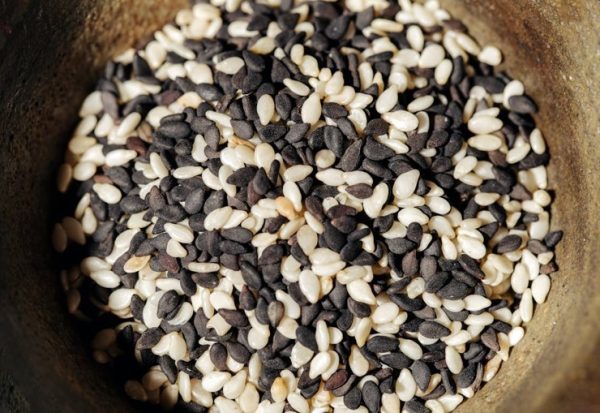
White sesame seeds: These are hulled seeds, which give them a lighter color.  White sesame seeds are mild, slightly sweet, and nutty. Commonly used in baking (bagels, bread), as a garnish, and in dishes like tahini and sesame oil. The nutritional value of white sesame seeds is rich in calcium, magnesium, and zinc. Known for promoting bone health and supporting the immune system.

Black sesame seeds: Unhulled seeds, retaining their outer shell, which contributes to their darker color and higher nutrient content. Flavor is stronger, nuttier, and slightly more bitter compared to white sesame seeds. These are popular in Asian cuisines, often used in desserts, rice dishes, and black sesame paste. Nutritional value of black sesame seeds is: Higher in antioxidants sesamol and sesamin, which may have anti-aging and heart-health benefits. Also rich in iron and calcium.

Which one to choose? Use white sesame seeds for mild flavor and aesthetic appeal. Use black sesame seeds for a bolder flavor and added antioxidant benefits.

Benefits of sesame seeds for women’s health:

  1. Hormonal balance: Sesame seeds are rich in lignans, a type of phytoestrogen that can support hormonal balance, particularly during menopause, by mimicking estrogen in the body.
  2. Bone health: They are an excellent source of calcium, magnesium, and phosphorus, which are crucial for maintaining strong bones and preventing osteoporosis, especially in postmenopausal women.
  3. Skin and hair health: Packed with vitamin E, zinc, and healthy fats, sesame seeds promote glowing skin and strong, shiny hair.
  4. Heart health: The seeds contain healthy unsaturated fats and antioxidants, like sesamin, which can help lower bad cholesterol (LDL) and improve cardiovascular health.
  5. Anti-inflammatory properties: Sesame seeds have anti-inflammatory and antioxidant properties that can alleviate joint pain and support overall health.
  6. Rich in Iron: Black sesame seeds are an excellent source of iron, which can be beneficial for women dealing with anemia.
  7. Boosts fertility: Zinc in sesame seeds supports reproductive health by promoting egg quality and regulating menstrual cycles.

How to use sesame seeds? Here are some easy and tasty ways to incorporate sesame seeds into your diet:

  1. Sprinkle on dishes: Add sesame seeds to salads, soups, stir-fries, or roasted vegetables for a crunchy texture.
  2. Sesame butter: Also known as tahini – it can be used as a spread, in dressings, or in smoothies for a creamy and nutrient-rich boost.
  3. In baked goods: Mix sesame seeds into bread, muffins, or cookie recipes.
  4. Sesame milk: Blend sesame seeds with water, strain, and enjoy as a calcium-rich dairy-free milk alternative.
  5. Roasted sesame seeds: Lightly roast sesame seeds and sprinkle them on rice, noodles, or avocado toast.
  6. Sesame laddoo -energy balls: Combine sesame seeds with dates, nuts, and coconut to make no-bake energy balls.
  7. Smoothies: Add a spoonful of sesame seeds or tahini to your morning smoothie for extra nutrition.
  8. Seasoning mix (Gomasio): Mix roasted sesame seeds with salt to create gomasio, a Japanese seasoning that can be sprinkled on dishes for flavor.
  9. Sesame oil: Use sesame oil for cooking or as a salad dressing to reap its health benefits.
  10. Sesame rice: Add red chilis, asafetida and salt to white sesame seeds, coarse grind. Mix this with rice and have. No need to roast sesame seeds.

Image credit: Close-Up Shot of Sesame Seeds-Photo by Ivan Samkov: https://www.pexels.com/photo/close-up-photo-of-a-bowl-with-sesame-seeds-8951047/ (Free to use)


Author: Sumana Rao | Posted on: January 28, 2025
« »
« »

Recommended for you

Benefits Of Eating Refrigerated Rice

Benefits Of Eating Refrigerated Rice

Eating refrigerated rice with a lower glycemic index (GI) can have positive health impacts, especially for people managing blood sugar levels, weight, or metabolic health. However, there are also important safety considerations when eating refrigerated rice. 

1. Improved blood sugar control: The reduced GI means glucose enters the bloodstream more gradually, preventing spikes and crashes in blood sugar. This is particularly beneficial for people with diabetes or insulin resistance. A steady blood sugar response reduces hunger cravings and stabilizes energy levels. 

2. Supports weight management: Resistant starch in refrigerated rice acts like fiber, promoting satiety and reducing calorie intake by slowing digestion. Resistant starch has a lower caloric value than digestible carbohydrates (2 kcal/gram vs. 4 kcal/gram). It also increases fat-burning due to its fermentation in the gut, which produces short-chain fatty acids. 

3. Enhanced gut health: Resistant starch feeds beneficial gut bacteria, functioning as a prebiotic. It helps produce short-chain fatty acids like butyrate, which Improve colon health. Reduce inflammation in the digestive tract. Protects against conditions like colorectal cancer. 

4. Lower glycemic load for the whole meal: Refrigerated rice combined with other low-GI foods (e.g.: veggies, lean proteins) results in a meal with a lower overall glycemic load, reducing the risk of metabolic syndrome. 

5. Potential for better heart health: Reduced blood sugar spikes and improved insulin sensitivity are associated with a lower risk of heart disease. Resistant starch consumption may help lower cholesterol levels. 

Image credit: Photo by Robert Moutongoh: https://www.pexels.com/photo/a-bowl-of-cooked-rice-8923092/ (Free to use) 


Author: Sumana Rao | Posted on: January 27, 2025
« »
« »

Recommended for you