






 Fusion
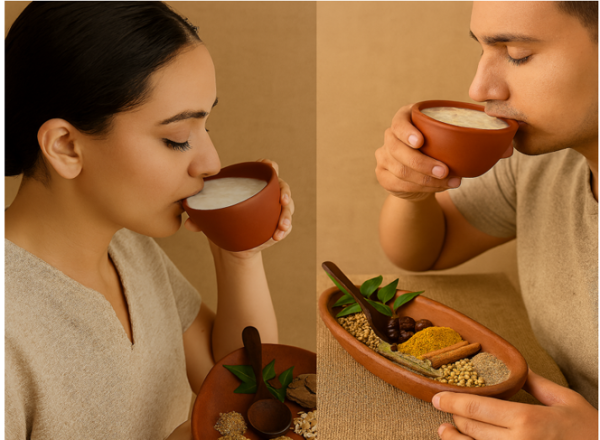
Ayurvedic Dietary Regime In Vata, Pitta, Khapha Conditions
Ayurvedic dietary regime moves from lightest to heaviest (Manda – Peya – Vilepi – Yavagu – Odana), so they’re introduced depending on type of illness and body type.
- Manda- the thin supernatant of cooked rice water, is light and easily digestible, making it ideal for acute conditions or severe Vata or Pitta imbalance, when digestion (Agni) is weak.
- Peya- slightly thicker rice gruel, provides gentle nourishment and hydration, suitable for moderate Vata and Pitta disorders, helping restore strength without taxing digestion.
- Vilepi –is thicker and more nourishing than Peya, making it useful when Vata is aggravated but the digestive fire is moderately strong grounds and lubricates the system.
- Yavagu- a semi-solid preparation with balanced liquid and solid parts, can be modified with herbs or spices to balance any dosha—waterier for Pitta, thicker and oily for Vata, or lighter with pungent herbs for Kapha.
- Odana- the firm cooked rice dish, is heavier and nourishing, best suited for Kapha balance when made with light grains or spices, or for Vata when enriched with ghee.
- In Vata disorders– slightly oily and warm versions of these preparations (like Vilepi or Yavagu with ghee) help pacify dryness and coldness.
- In Pitta conditions– cooling versions (like Manda or watery Peya made with cooling herbs) calm heat, while in Kapha conditions, light, spicy, and warm forms (like thin Yavagu or Odana with ginger) reduce heaviness and sluggishness.
Image credit – All images in this article created using AI Copilot (8-10-2025)
Author: Sumana Rao | Posted on: October 8, 2025
« Previous Article
Next Article »
« Odana Cooked Rice Preparation And Benefits Anti Inflammatory Vegetarian Diets For Chronic Inflammation »
« Odana Cooked Rice Preparation And Benefits Anti Inflammatory Vegetarian Diets For Chronic Inflammation »








Write a comment