







 Fusion
When Traditional Indian Vegetarian Food Meets Modern Nutrition
Traditional Indian vegetarian food is not outdated—it is ahead of its time. By combining ancestral wisdom with modern nutrition, we can nourish our bodies and protect the planet.
In India, vegetarian food has never been a trend—it has been a way of life shaped by ecology, culture, and ethics. Long before plant based diets became global headlines, Indian kitchens were quietly practicing what modern nutrition now celebrates: diversity, balance, and sustainability.
But today, as ultra-processed foods and industrial agriculture reshape how we eat, revisiting traditional Indian vegetarian food is no longer just nostalgic—it is a form of activism.
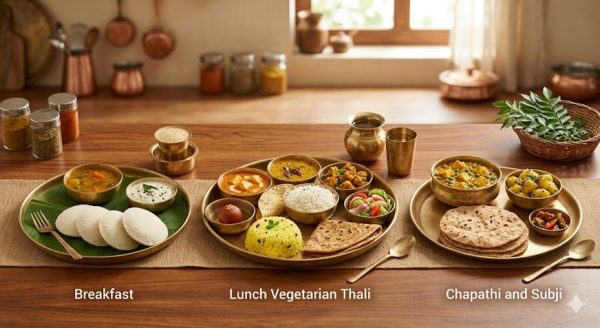
At the heart of Indian cooking lies a powerful nutritional framework. Staples like lentils, whole grains, seasonal vegetables, nuts, and seeds create meals that are naturally rich in fiber, plant protein, and essential micronutrients. Dishes like khichdi, sambar with rice, or roti with sabzi are not accidental combinations—they reflect an intuitive understanding of nourishment that aligns with what modern science now calls a “complete meal.”
Take the pairing of rice and dal. Together, they form a complementary protein- providing all essential amino acids—something nutrition science only formally explained much later. Similarly, traditional thalis emphasize variety: bitter, sweet, sour, salty—each taste contributing not just to flavor, but to digestive balance and satiety. Similarly, talk about world’s healthiest breakfast Idli– a perfect combination of carbohydrate, protein and fats which helps in gut health.
Spices play a vital role as well. Turmeric, cumin, mustard seeds, coriander, and ginger are not just culinary tools, they are functional ingredients with anti-inflammatory, digestive, and immune-supporting properties. Today, research continues to validate what generations have practiced intuitively.
From an activism lens, Indian vegetarian food also challenges the environmental cost of modern diets. Plant based traditional meals typically require fewer resources—less water, less land, and produce fewer greenhouse gas emissions compared to meat-heavy systems. In climate crisis, returning to these foodways is not just healthy, it is necessary.
There is also a powerful connection to biodiversity. Traditional Indian diets rely on a wide range of crops—millets, pulses, indigenous greens, and heirloom vegetables. Supporting these foods means supporting farmers who cultivate diverse crops, rather than monoculture driven by industrial demand. It also helps protect pollinators like bees, whose survival is closely tied to agricultural diversity.
However, food activism today is not about blindly preserving the past—it is about evolving it thoughtfully. Modern nutrition helps us address gaps where needed: improving iron absorption, ensuring adequate vitamin B12 in vegetarian diets, or adapting recipes to reduce excessive oil or refined grains. The goal is not perfection, but alignment—honoring tradition while embracing evidence.
At its core, Indian vegetarian food activism is about reclaiming power over what we eat. It’s about resisting homogenized, processed food systems and choosing meals that are rooted in culture, community, and care for the planet.
Because when traditional Indian food meets modern nutrition, it becomes more than just a meal—it becomes a movement.
Image credit: Created using AI Gemini 23-4-2026 at 5:44 pm
Author: Sumana Rao | Posted on: April 24, 2026
« Previous Article
Next Article »
« The Pancha Tatva Approach: How Rajasthan Farmer Vinod Dashora Cultivates Papayas Sustainably What Is Climate Farming? How India Is Adopting Climate Smart Agriculture »
« The Pancha Tatva Approach: How Rajasthan Farmer Vinod Dashora Cultivates Papayas Sustainably What Is Climate Farming? How India Is Adopting Climate Smart Agriculture »












Write a comment