








 Fusion
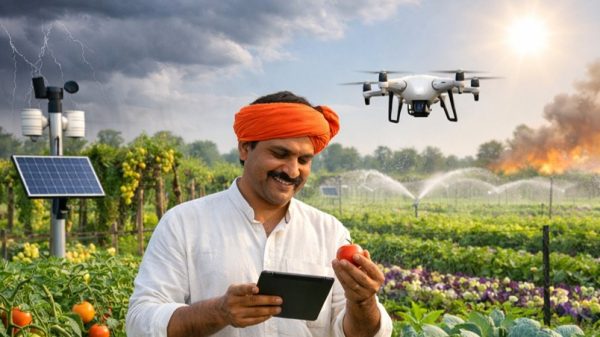
What Is Climate Farming? How India Is Adopting Climate Smart Agriculture
Climate farming, also called climate-smart farming or climate-resilient agriculture, refers to farming methods designed to reduce environmental damage while helping farmers adapt to climate change. It focuses on improving productivity, protecting natural resources, lowering greenhouse gas emissions, and making agriculture more resilient to extreme weather conditions such as droughts, floods, heatwaves, and irregular rainfall.
What Is Climate Farming? Climate farming combines traditional agricultural knowledge with modern sustainable practices. The main goals are:
- Conserving water
- Improving soil health
- Reducing chemical dependence
- Increasing crop resilience
- Lowering carbon emissions
Some common climate-smart farming methods include:
- Drip irrigation
- Rainwater harvesting
- Organic farming
- Crop diversification
- Agroforestry
- Mulching
- Precision agriculture
- Drought-resistant seeds
For example, using drip irrigation reduces water wastage, while planting trees alongside crops helps absorb carbon dioxide and protect soil moisture.
Why Climate Farming Is Important for India? India is highly vulnerable to climate change because a large part of its population depends on agriculture for income and food security. Rising temperatures, delayed monsoons, water scarcity, floods, and soil degradation are already affecting crop production across many states.
Farmers in states like Maharashtra, Punjab, Rajasthan, Karnataka have increasingly faced climate-related challenges in recent years.
How India Is Adopting Climate Farming? India has gradually expanded climate-smart agriculture through government schemes, technology, and local farming innovations.
1. Micro-irrigation and water conservation: The government has promoted drip and sprinkler irrigation under schemes such as the Pradhan Mantri Krishi Sinchayee Yojana (PMKSY). These systems help farmers use less water while improving crop yields.
2. Natural and organic farming: Several states are encouraging low-chemical farming methods. Programs supporting:
- natural farming
- organic farming
- bio-fertilizers
- composting
These programs aim to improve soil health and reduce environmental damage. Sikkim became India’s first fully organic state, often cited as a model for sustainable agriculture.
3. Millet promotion: India has been promoting traditional grains such as: ragi, jowar and bajra because they require less water and tolerate heat better than some water-intensive crops like rice. The International Year of Millets in 2023 also increased awareness of climate-resilient crops.
4. Solar-powered farming: Farmers are increasingly using solar pumps, solar dryers, and renewable energy systems to reduce dependence on diesel and electricity.
5. Digital and weather technologies: Mobile apps, satellite monitoring, and weather forecasting systems now help farmers:
- track rainfall
- manage pests.
- choose sowing times.
- reduce crop losses.
What are some of the challenges India is still facing?
Despite progress, climate farming in India still faces major obstacles:
- small landholdings
- limited farmer awareness
- high initial costs
- groundwater depletion
- dependence on monsoon rains
- excessive chemical fertilizer use
- many farmers also struggle to access climate-resilient technologies and financial support.
The future of climate farming in India: Experts believe climate-smart agriculture will become increasingly important for India’s food security and rural economy. Sustainable farming methods may help:
- reduce environmental damage.
- improve farmer incomes.
- Conserve water
- protect biodiversity.
- strengthen resilience against climate change.
As climate risks continue to grow, India’s shift toward climate farming is likely to become a key part of the country’s agricultural and economic strategy.
Image credit: Image created using AI Copilot 22-5-26
Author: Sumana Rao | Posted on: May 22, 2026
« Previous Article
Next Article »
« When Traditional Indian Vegetarian Food Meets Modern Nutrition Cauvery Calling: How Saving Rivers Can Secure Our Food Future »
« When Traditional Indian Vegetarian Food Meets Modern Nutrition Cauvery Calling: How Saving Rivers Can Secure Our Food Future »













Write a comment