








 Fusion
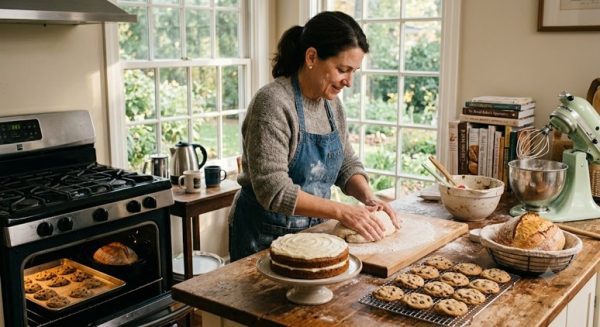
15 Home Baking Tips: How to Bake Perfect Cakes, Cookies, and Bread
Are you a baker and fond of baking at home? Baking can be a relaxing and rewarding hobby. Baking at home has its own advantage. When you bake you have control over the ingredients especially the sugar. Freshly baked food tastes better and more economical than buying at store. In addition, you can customize the recipes according to your family’s dietary needs like low sugar, egg or nut free versions.
Here are few tips for baking cake, cookies and bread at home.
For cakes preparation:
1.Room temperature ingredients: Do you know? eggs, butter, and milk blend more smoothly and evenly when they are not cold, giving you a better crumb.
2. Do not overmix once flour is added: overmixing develops gluten and deflates air bubbles, leading to dense, tough cakes.
3. Measure flour correctly: Spoon it into your measuring cup and level it off. Scooping directly compacts the flour and adds too much.
4. Use the right pan size: Too small pan means it overflows or bakes unevenly. Too large and the cake turns out thin and dry.
5. Check doneness with a toothpick: Insert toothpick in the center. Aa few moist crumbs mean cake is ready.
For cookies preparation:
6. Chill your dough: Resting dough (30 minutes to overnight) firms up the fat, so cookies spread less and flavor deepens.
7. Use parchment paper or silicone mats: These will prevent sticking and promote even browning compared to a bare greased sheet.
8. Cream butter and sugar properly: Beat the mix until pale and fluffy for at least 2-3 minutes, to incorporate air for better texture.
9. Space dough balls generously: Cookies spread more than you would expect. Crowding cookies causes them to merge.
10. Slightly underbake: Pull cookies out when the edges are set but the center looks a bit soft. Cookies will continue cooking on the hot pan.
For bread preparation:
11. Proof your yeast first: Dissolve yeast in warm water with a pinch of sugar. It should foam within 5-10 minutes, confirming yeast is active.
12. Knead until smooth and elastic: This develops gluten structure, which gives bread its chew and rise. Do the “windowpane test”. Stretch a small piece of dough, it should form a thin, translucent membrane without tearing.
13. Let dough rise in a warm, draft free spot: Ideal temp is around 24-27°C or 75-80°. In cold temperature it rises slowly, too hot can kill the yeast.
14. Do not skip the second rise proofing: This shapes the final texture and structure before baking.
15. Always preheat your oven fully: Preheat oven and consider using an oven thermometer, since built-in dials are often inaccurate by 25°F or more, which can throw off timing and texture across all three categories.
Keeping these tips handy, enjoy baking at home!
Image credit: Image created using Gemini on 5-8-2026 @6:30pm
Author: HealthyLife | Posted on: August 6, 2026
« Previous Article
Next Article »
« Why Indian Achar or Pickle varieties Does Not Go Bad For A Long time? Ways To Use Corn Starch For Various Purposes At Home »
« Why Indian Achar or Pickle varieties Does Not Go Bad For A Long time? Ways To Use Corn Starch For Various Purposes At Home »











Write a comment