







 Fusion
Why Eating Red Rice Is Better For Our Health?
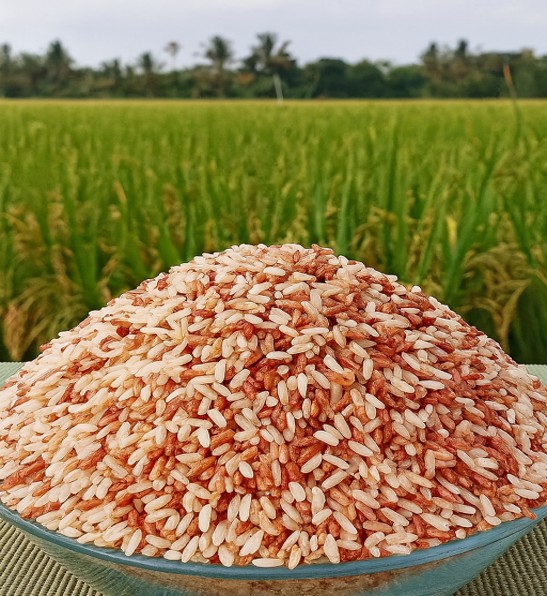
Do you prefer eating rice over rotis? You are not alone. Rice is staple food for many of us. If you would like to include rice in your daily diet, then consider eating red rice than white rice. Raktashali Rice also called Raktashali Chaval or “Red Rice,” is a rare and ancient variety of rice mentioned in Ayurvedic texts. It is prized for its medicinal value, unique reddish-brown color, and nutrient density.
Origin of Raktashali -Red rice:
- Ayurvedic Heritage: Raktashali is described in classical Ayurvedic texts like Charaka Samhita and Sushruta Samhita, where it is considered “Shastika Shali” (a superior type of rice).
- Historical cultivation: Traditionally grown in Kerala, Karnataka, Tamil Nadu, and parts of Eastern India, particularly in regions with Ayurvedic practice.
- Name meaning: In Sanskrit “Rakta” = red; “Shali” = rice. The red pigment comes from anthocyanins and natural antioxidants in the bran.
Health benefits of Raktashali rice:
- Rich in antioxidants: Contains anthocyanins and polyphenols that help combat oxidative stress and reduce inflammation.
- Supports heart health: High in magnesium and dietary fiber, which may lower cholesterol and support healthy blood pressure.
- Diabetes friendly: Lower glycemic index compared to polished white rice, helps regulate blood sugar.
- Boosts immunity: Packed with iron, zinc, and essential minerals that enhance immunity.
- Bone and joint health: Mentioned in Ayurveda as strengthening for bones and muscles.
- Digestive benefits: The fiber aids digestion, prevents constipation, and nourishes gut health.
- Skin and blood purification: Traditionally believed to improve complexion, vitality, and purify the blood.
Nutrients in red rice (per 100g uncooked raktashali rice):
- Calories: Approx. 350 kcal
- Fiber: 4–5 g
- Protein: 7–9 g
- Iron: About 2–3 mg
- Magnesium and Potassium: high compared to white rice.
- Anthocyanins: gives reddish color
Varieties of Red rice in India
- Matta rice from Kerala
- Kuzhiyadichan from Tamil Nadu
- Lal Swarna / Swarna red rice -West Bengal and Odisha
- Bao-Dhaan -Assam red rice
- Chakhao Amubi -Manipur Blackish-red rice
- Raktashali-Ayurvedic heritage rice -Central India
- Jhilli Rice -Chhattisgarh
- Rajamudi rice- from Karnataka
- Kottaram red rice – Tamil Nadu
- Bhattambari / Tambada Ukda – Maharashtra
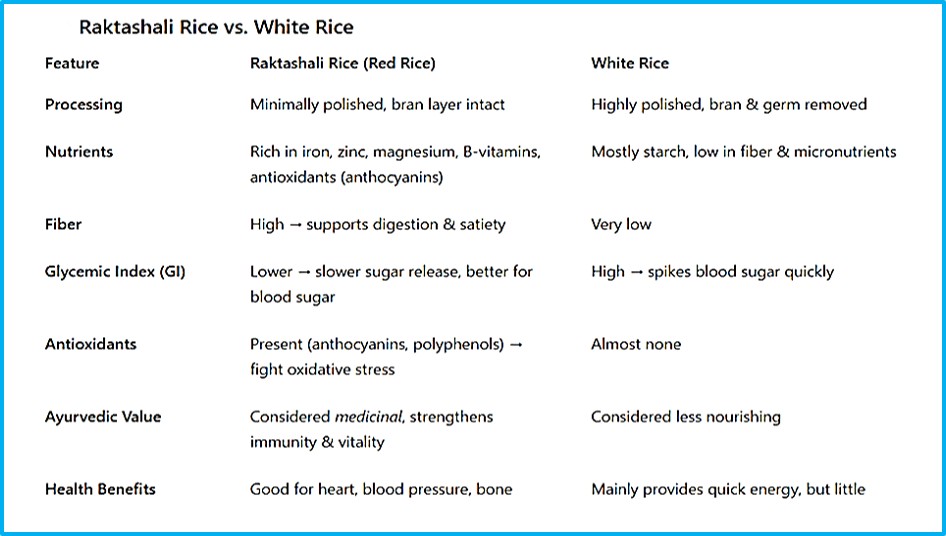
The main difference between Raktashali Rice and regular white rice comes down to nutrient retention and health benefits.
Why choosing Raktashali over white rice can be a better option for most people?
Health and red rice:
- Better blood sugar control – Helps prevent insulin spikes, making it a better choice for people with diabetes or metabolic concerns.
- Richer in minerals – Supports red blood cell formation, bone health, and immunity.
- Natural antioxidant power – Protects against inflammation and chronic diseases -heart disease, premature aging.
- Keeps you full longer – The fiber and protein help manage weight by improving satiety.
- Traditional ayurvedic superfood – Revered for balancing body energies, improving vitality, and purifying blood.
- Whole grain advantage – Unlike white rice, which is “empty calories,” Raktashali is a nutrient-dense whole grain.
White rice = quick energy but poor nutrition
Raktashali rice = sustained energy and healing nutrients
Raktashali Rice is considered rare and premium rice today because traditional cultivation declined with the spread of hybrid high-yield rice. Now, it is being revived in organic farming and Ayurvedic wellness for its multiple health benefits.
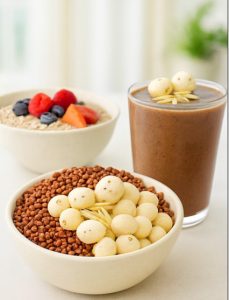
Image credit: Rajamudi rice (created using AI Copilot tool, 4-10-2025)
Author: Sumana Rao | Posted on: October 24, 2025
« Previous Article
Next Article »
« Cough Syrup Crisis In India: What Parents Should Know What Is Digital Detoxification And Dopamine Detoxification? »
« Cough Syrup Crisis In India: What Parents Should Know What Is Digital Detoxification And Dopamine Detoxification? »







Write a comment