








 Fusion
Can Yoga Help In Overcoming Stomach Acidity Problem?
Yoga can help control stomach acidity (acid reflux or hyperacidity) by improving digestion, reducing stress -a major trigger for acidity, and strengthening the digestive system. Stress, irregular eating habits, and poor digestion are often linked to acid reflux, and yoga helps address these at their root.
Yoga asanas and pranayama practices are known to help reduce acidity by-
- Improving digestion – Certain asanas stimulate the digestive organs and regulate acid secretion.
- Reducing stress – Stress often triggers acidity; yoga promotes relaxation and lowers cortisol.
- Enhancing blood circulation – Better circulation helps maintain healthy digestion.
- Promoting mindful eating – Yoga improves body awareness, reducing overeating which is a common cause of acidity.
Yoga poses for acidity relief:
1. Vajrasana (thunderbolt pose / diamond pose)
• Sit on your heels with spine straight, hands on thighs.
• Best done after meals to aid digestion.
• Helps prevent acid reflux by promoting proper digestion.
2. Pavanamuktasana (wind-relieving pose)
• Lie on your back, hug knees to chest.
• Relieves bloating, gas, and pressure in the stomach.
• Improves gut motility and reduces acidity symptoms.
3. Ardha matsyendrasana (seated spinal twist)
• Twist while sitting with one leg bent over the other.
• Stimulates abdominal organs, enhances digestion.
4. Supta baddha konasana (reclining bound angle pose)
• Recline back with soles of feet together and knees apart.
• Calms the nervous system and eases stress-induced acidity.
5. Paschimottanasana (seated forward bend)
• Stretch forward while sitting with legs extended.
• Massages abdominal organs help regulate digestion.
Breathing and relaxation to reduce acidity:
Anulom vilom (alternate nostril breathing) – Calms mind, balances acid-alkaline levels.
- Right thumb closes right nostril, inhale left.
- Close left nostril, exhale right.
- Inhale right, exhale left.
- Continue gently for 8–10 rounds.
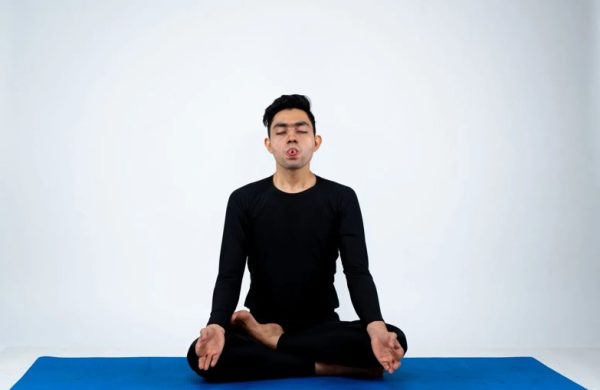
Sheetali pranayama (cooling breath) -Reduces internal heat and acidity.
- Roll tongue into a tube (or purse lips if tongue rolling is not possible).
- Inhale through mouth, exhale through nose.
- Very calming and reduces “heat” in stomach.
Bhramari (bee breath) – Reduces stress and nervous tension.
- Sit comfortably with your spine straight. Close your eyes, relax your shoulders, and place your hands on your knees.
- Close your ears gently with your thumbs, rest your fingers lightly over your eyes/forehead if comfortable, and take a slow deep breath in through your nose.
- As you exhale slowly, make a steady humming sound like a bee – “mmm.” Feel the vibration in your head and chest. Repeat 5–7 rounds.
Keep in mind-
- Avoid yoga poses that compress the abdomen right after eating.
- Practice on an empty stomach (except Vajrasana, which is good after meals).
- Combine yoga with mindful eating: smaller meals, less spicy, fried food, and staying hydrated.
Do this sequence daily, preferably morning or evening, and use Vajrasana after meals if acidity is a recurring issue. While it is not an instant cure, regular practice of above-mentioned yoga poses, breathing techniques, and lifestyle adjustments can calm the digestive system, reduce stress, and improve overall gut health.
Image credit: Akshay Gupta Sheetali Pranayama (Cooling Breath) – PixaHive (CC 0 Free to use)
Author: Sumana Rao | Posted on: September 30, 2025
« Previous Article
Next Article »
« Improve Your Spine Health By Strengthening Multifidus Muscles Through Yoga Your Best Defense Against Obesity Is Not A Diet — It Is Your Healthy Habits »
« Improve Your Spine Health By Strengthening Multifidus Muscles Through Yoga Your Best Defense Against Obesity Is Not A Diet — It Is Your Healthy Habits »












Write a comment