Don't worry about the people in your past; There's a reason they didn't make it to your future.
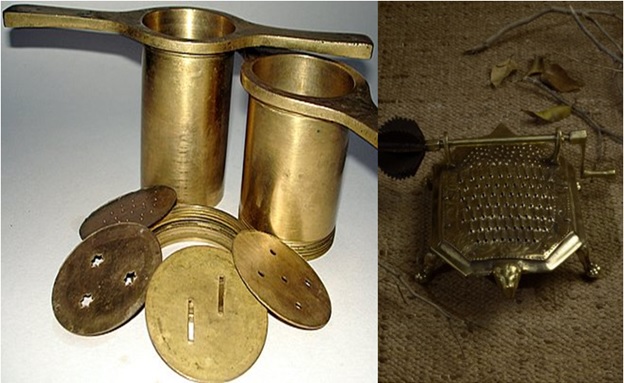
Murukku Press
This is a very essential tool in indian kitchen. Murukku / Chakli press comes in stainless steel, wood, brass materials. These murukku or chakli molds comes with few other mold plates form which we can also make ribbon pakoda, sevai or traditional rice noodles. For the festival this multitasking murukku press comes in handy. It helps to make various items and saves time!
Carrot and dry coconut grater
Attractive and beautiful old carrot and dry copra grater is still in use in many modern kitchens. In case no electricity and one cannot use food processors to grate vegetables or cheese – these old fashioned graters will come handy. Many Indian dishes calls for dry coconut -copra in recipe particularly sweets. Many times the food processer does not give good flakes of copra. In this case one can use these graters.
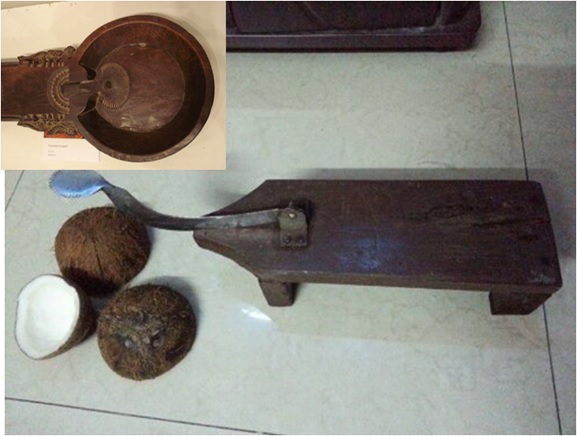
In many houses still we see this cutting and scraping stool namely “Eeeligemane”. It is also known as Bonti or Aruvamanai, which is mainly used to cut vegetables and scrape coconut. The wooden base acts as a support to the vertically fixed sharp knife. The uppermost part of knife is used to scrape coconut. It sure requires good practice to perfect the skill of scraping coconut. The person has to sit down on the floor, and press the wooden base with their foot/knee to maintain balance. It requires good balance to cut the vegetables perfectly. The person has to hold the vegetable at it tip ends with both hands and slide it against knife with cutting stool comes coconut grater. Coconut grater will be always on the tip of the cutting stool. One can grate coconut and cut vegetables using same tool !
Butter was probably first created accidentally when whole milk carried in skin bags was carried by horseback and naturally “churned” while traveling over rough terrain.
The first documented mention of butter making was in the sacred songs of the dwellers of Asiatic India, dating back to 1,500-2,000 B.C.E.
There is historical mention of ancient tribes creating primitive churns by horizontally agitating cow, yak and horse milk. Butter back then was not only eaten, but used as an illumination oil, for medicinal purposes and also as skin coating to insulate the tribe members from the harsh winter cold.
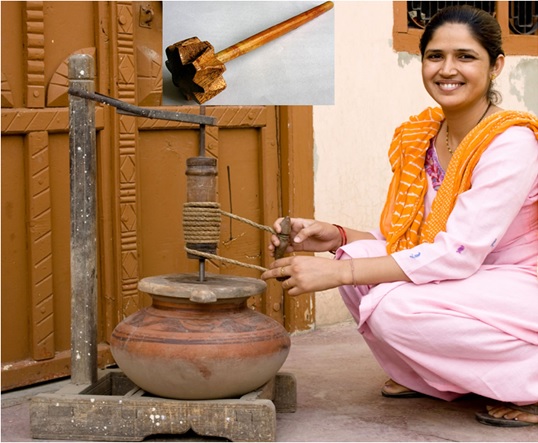
According to Hindu mythology Lord Sri Krishna was very fond of freshly churned butter! In many Indian house holds both in North and Southern states one can see traditional churning of the butter by women of the houses !
AMRIT : GOOD NEWS! Affordable drugs for cancer and heart diseases by Govt of India
A new scheme helps all Indian citizens to get better treatment for cancer and cardiovascular disease. The pharmacy AMRIT – Affordable Medicines and Reliable Implants for Treatment – will sell 202 drugs to cure cancer and cardiovascular diseases with prices much lower than that in the open market. The government will also provide 148 cardiac implants that will be sold at 50-60 per cent discount at the pharmacy. Under the AMRIT scheme, drugs will be sold at a fraction of the market price. Docetaxel 120mg, used for chemotherapy cycle, will be priced at Rs 888.75 (93 per cent rebate for one cycle), while the MRP of the injection is Rs 13,440. Similarly, Carboplatin 450 mg would be sold at Rs 1,316.25 while its MRP is Rs 2,561.57.
“Under the AMRIT programme, we want to give medicines at an affordable cost. We have identified 202 drugs of cancer and cardio-vascular diseases where the price is going to reduced on an average by 60 to 90 percent. In the same way, 148 cardiac implants will be given from the centre and sold here and their cost will be reduced by 50 to 60 percent,” Union Health Minister JP Nadda, India.
The government’s move comes amid statistics that peg Indians diagnosed with cancer at 700,000 every year. About 2.8 million people have cancer at any point of time and half a million die of the disease each year. The annual figure of women being diagnosed with breast cancer in India is 145,000, according to the World Health Organization. A significant number of patients (nearly over 50 per cent) stop visiting hospitals after two or three cycles of chemotherapy due to unaffordable costs.
With the aim to reduce the expenditure incurred by patients on treatment of cancer and heart diseases, first Affordable Medicines and Reliable Implants for Treatment (AMRIT) outlet at All India Institute Of Medical Sciences AIIMS was opened on Sunday. It will be run by HLL Lifecare. To begin with, HLL will dispense 195 oncology drugs, 186 cardiovascular drugs and 148 cardiac implants through AMRIT pharmacy. According to HLL chairman and managing director Dr M Ayyappan- Initially, the pharmacy will retail cancer drugs. By end of November month, it will commence the dispensing of cardiovascular drugs and implants in line with cancer drugs. Based on the outcome of the AIIMS outlet, this initiative will be taken to other central government hospitals and Regional Cancer Centres.
Lice!!! – The very thought of this creature sends you reaching for your head in dismay. No matter how careful, clean and particular you are at home, children can very easily get lice from classmates and while playing with friends. Do not wait until your child starts scratching her head before you check for lice. Often, your child has had lice for a while before her scalp starts itching, and as a result, lice can go unnoticed for days – unless you check your kids head regularly. Make it a matter of routine to check your child’s hair for lice once a week. It doesn’t take more than five minutes. The earlier you find out your child has lice, the easier it will be for you to get rid of them, and the lesser the chances that the lice may spread. You need to use a variety of techniques to kill not only adult lice, but also their tiny eggs (called nits), which are glued to the hair shaft. The nits can survive treatments that kill the adults and vice versa.
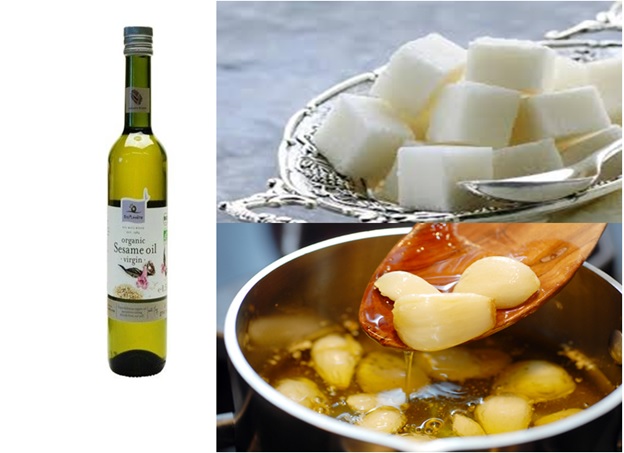
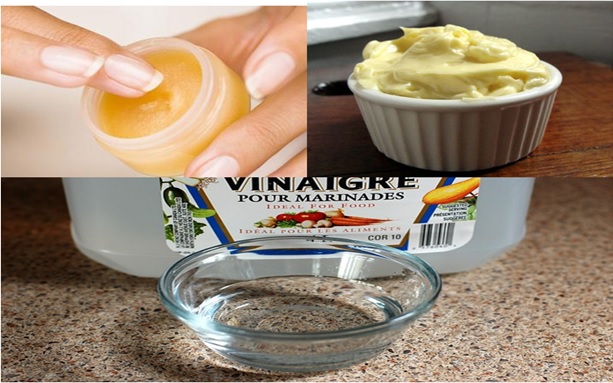
There are several medicated treatments are available in the market that kill the lice, but the problem is that lice are developing immunity to these products all too soon. Here are few home tips to control and get rid of the lice from your child’s hair.
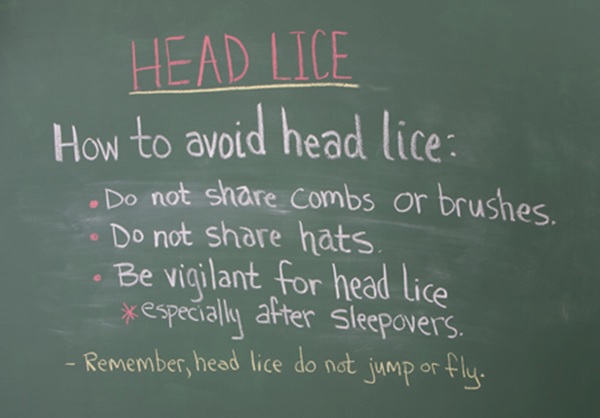
The best advice to control lice is to avoid head-to-head contact. If your child likes long hair then keep long hair in a tight ponytail or braid. Do not share or borrow – combs, brushes, towels, hats, hair bands, scarves or bed spreads or pillows.
In case you feel itchy in your scalp then chances that the lice would have transferred to your head too. Shampoo hair, and blow dry, concentrating on the scalp. Follow up with a hair iron. If any of the lice has passed on to you, this should kill it. Never use hot air after applying a chemical lice treatment. Some may contain flammable ingredients.
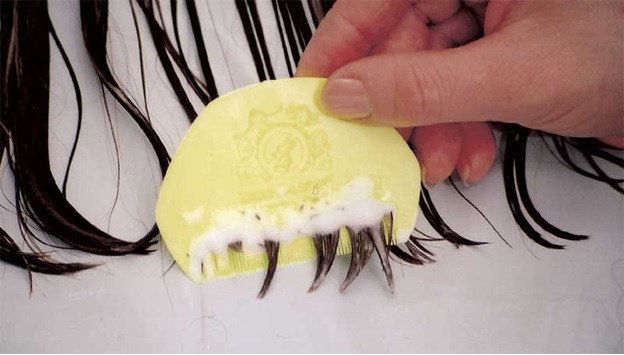
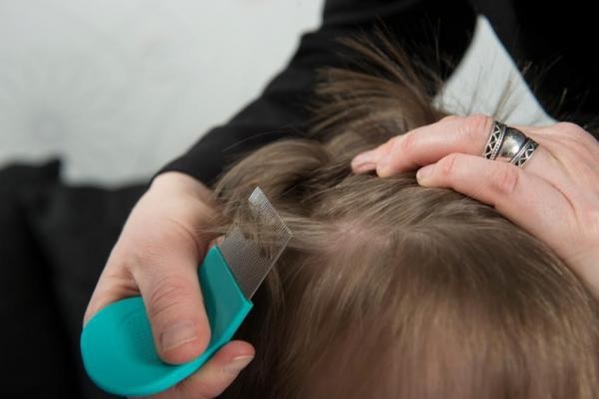
To treat lice, there are times use lice comb to comb your child’s hair every morning and evening for few weeks. First you comb hair section by section with a special lice comb to remove lice and nits. Divide the hair to several section, have patience and pickup the nits and kill them using traditional method – crushing using nails or collect in waste paper and burn them! You can combine the combing with other home remedies.