All posts by Sumana Rao

Don't worry about the people in your past; There's a reason they didn't make it to your future.
Tomato peeling

Make your life easy in the kitchen with these tips

  • If your fridge is smelling because of stored vegetables try this. Take a potato, remove skin and cut into half. Add little boiling water and a tsp of salt. Store this in refrigerator for a day. Smell goes away!
  • If you preparing lemon rice, pulav or cumin rice – add a tsp of cooking oil while cooking the rice. Rice won’t be overcooked and will be perfect for these dishes!
  • While boiling milk, keep the milk container slightly moisturized. Cream that comes while boiling the milk will not get stick to the container.
  • Add little baking soda to scrubber and clean the stainless stove surface. It gives shine to the surface.
  • Sometimes vegetables can loosen the freshness and become bit dry. Don’t throw them. Wash and soak these vegetables in salt water overnight. You will get fresh look in vegetables next day morning.
  • Do not throw extra chopped herbs. Instead, store them in ice cube trays with little olive oil. Use them when you need.
  • If you have extra curry leaves, dry and store leaves in an air tight container.
  • To peel tomato skin – Slice the top off and then make an X mark at the opposite side – bottom. Boil them in boiling water for few seconds and peel the skin after cooling !
  • To freeze food – soup, curry, rice use flat and wider containers. This will freeze dishes faster and defrost also will be faster.
  • To extend lifespan of washed herbs, cut the root and store them in damp paper towel inside zipper-lock bags. Keep seals left open slightly and place it in vegetable drawer.

Grandma’s tips: www.werindia.com

Image credit: Photo by Karolina Grabowska from Pexels


Author: Sumana Rao | Posted on: November 29, 2017
« »
« »

Recommended for you

Beauty with a purpose Miss World 2017 Manushi Chhillar

Beauty with a purpose Miss World 2017 Manushi Chhillar

India’s Manushi Chhillar from Haryana won Miss World 2017 crown, which is India’s 6th win.  Manushi, 20-year-old medical student is beauty with brain and is into very strict fitness regime. The competition was tough with 121 beauties participated and gave stiff competition. In final question and answer round Manushi was asked: “Which profession deserves the highest salary and why?” And her answer was “I think a mother is of highest respect. I don’t think its just about cash but love and respect she gives to someone. She is the biggest inspiration in my life. Mother should get highest respect.”

Manushi won the title not only because of her final answer but also for her dedication and fitness. She is a classical dancer, poet and painter. For her miss world 2017 project Beauty with a purpose, Manushi worked on spreading awareness on menstrual hygiene through her initiative Project Shakti. She is equally passionate about outdoor sports such as paragliding, bungee jumping, snorkeling and scuba diving. Manushi’s  fitness Guru Nmami Agarwal who is also a celebrity nutritionist recently revealed Manushi’s diet plan.

Diet plan of Miss World 2017 Manushi Chhillar:

  1. Never skip breakfast: Skipping breakfast increases hunger pangs by the end of the day.

2.Always eat regular meals and us smaller plates: Eating regular meals helps to reduce the temptation to snack on food that is high in fat and sugar.

  1. Avoid refined sugar. Avoid Sugar!

Sample menu:

  1. Early morning: Water two to three glasses (warm with or without lemon squeezed)
  2. Breakfast: Plain/unflavored yogurt with oatmeal or wheat flakes and fresh fruits and seeds, or two to three egg whites with avocado, carrot, beets and sweet potato.
  3. Mid-meal: Coconut water followed by fruits.
  4. Lunch: Quinoa/rice/chapatti with a bowl of vegetables and shredded chicken/lentils.
  5. Evening: Unsalted nuts followed by fruit or banana and fig smoothie
  6. Dinner: Chicken/fish (grilled/roasted) with sautéed vegetables (broccoli/carrots/beans/mushrooms/beets).

Apart from winning the title of Miss world 2017, Manushi also won Head to head challenge and Beauty with a purpose title in the competition!

References:


Author: Sumana Rao | Posted on: November 19, 2017
« »
« »

Recommended for you

kids safety

Important safety rules for kids

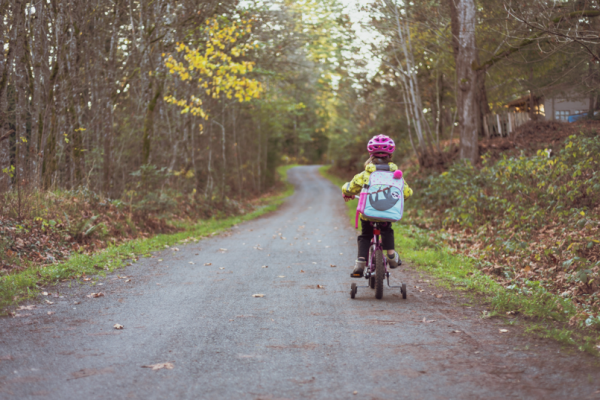
It is very critical and important to give information about personal safety tips to kids. Once they start understanding what you are trying to tell them, talk to your kids clearly and slowly how to take care of their safety and why you may not accompany them all around.  Talking often and repeating the importance of safety will help them to act and take care of themselves during emergency. This is not about instilling fear in children, it is about helping kids understand the importance of safety and not getting hurt.

Safety #1 : Know your full name, home address and phone number:

It is very important to teach kids their basic contact information. Do not think that your kids are small and may not remember. Teach and ask them every day -name and address. They will remember and answer. In case of an emergency – like lost in the crowd they should be able to express themselves.  In addition tell and show kids which is the closest landmark to your home.  When you take them in a crowd insert a note of your address in kids pocket in a plastic envelop. Help kid to memorize parents name, grandparents name, nanny’s name and school name.

Safety #2 Do Not talk to stranger and do not eat anything given by a stranger:

  • Teach your kids about not eating chocolates, candies or ice cream from hands of a stranger. Tell them not to receive anything from a stranger. Explain them who is a stranger – whom the kid has not met so far, someone from the street and give examples. Tell them no matter how tempting is the treat it is dangerous accept food from anyone.  Tell them to refuse to take and teach them to move away from the person.  If a stranger offers to drop at home ask them to refuse. Tell them not to talk to stranger. Ask them to be in the midst of friends always.
  • Teach kid a secret code. If stranger tells them “your mom/dad asked you to pick you up” in return ask stranger about the secret code. When stranger unable to tell – it means to move away or call someone to help. Always send a known person to pick up the kid from games, schools and other places. Never ask strangers help.
  • Tell kids not to meet someone without or invite them home without parents’ permission
  • Tell them not to write to someone who has made them uncomfortable or scared.
  • Tell kids that if someone tries to contact on internet not to talk to them and inform parents immediately. A person who says that he might be a 11 year old boy can be an older man!
  • Tell kids not to send a photograph, give phone number or address to any strangers whom they find on internet.
  • They should not give passwords to anyone else – even to best friends
  • Without your permission they should not download and install any software to computers.

Safety #3 Do not walk alone:

It is important for your kids to know that they should not walk alone home or cross the yard alone. There should be always a known adult should be accompanying them.  Tell them not to walk alone in the woods, playground, in parks and give examples what can happen. Narrate them the difference between walking in park and walking on road sides.

Safety #4 Playing with fire is not good:

Teach kids not to play with fire and tell them it is absolutely not allowed anywhere. If they want to cook something let them know that you will need to supervise them.  Teach them how to be safe in presence of fire.  Forbid them to play with match boxes, lighters, stove, candles etc. Tell them to step out if the smoke alarms goes off  and be with an adult – neighbors, teachers – known people.

Safety #5 No one has right to touch your kids body:

Once the kid understands the basics, it is very important to teach about this safety. Tell about good touch and bad touch of body parts. Tell kid no one is allowed to touch the body except mommy and may be daddy. If anyone else touched the kids body then, kid should immediately shout for help to alert people around and inform parents about it.

Safety #6 If you get lost what to do?

In case the kid gets lost in a mall, super markets, function or public place ask them to stay right where they are.  If they find a cop /police, tell kid to seek their help. Or if there is a customer service desk available tell them to approach the customer service desk and stay there. Or tell them to stay inside the shop and not to move.

Children mind is very fragile and they believe what they see. We cannot blame them because they have not yet seen or experienced the world like us. To protect your kids from any harm set these safety rules and keep your kids safe.

References:

  • https://archives.fbi.gov/
  • http://www.momjunction.com/
  • http://www.safekids.com/kids-rules-for-online-safety/

Image credit: Photo by Vladislav Vasnetsov from Pexels (Free for commercial use)


Author: Sumana Rao | Posted on: November 16, 2017
« »
« »

Recommended for you

Seven best and easy yoga poses for immediate stress relief

Seven best and easy yoga poses for immediate stress relief

For many of us, relaxation means sitting in front of the TV at the end of a stressful day or sleeping.  This, however  does little to reduce the damaging effects of stress. To effectively combat stress, we need to activate the body’s natural relaxation response. We can do this by practicing relaxation techniques such as deep breathing, meditation, rhythmic exercise and yoga. Fitting these activities into our lives will help us to reduce everyday stress and boost your energy and mood. Try these easy yoga poses to relax the body as well as mind.

1) Child pose (Balasana)

The calming child’s pose is a resting posture that can help quiet the mind, easing stress and anxiety while gently stretching the back. It is also good for the nervous system and lymphatic system.

2) Setu Bandha (Sarvangasana)

the bridge pose provides gentle stretching of the back and legs while alleviating stress and tension. The pose can reduce anxiety, fatigue, backaches, headaches and insomnia, and is even thought to be therapeutic for high blood pressure.

3) Eagle pose (Garudasana)

The active and empowering eagle pose can help ward off stress by improving concentration and balance, and also by opening up the shoulders, upper back and hips. Eagle pose is also an empowerment pose because it releases tension in the shoulders, legs and back, and it does require focus for you to remain balanced in it.

4) Extended Triangle Pose (Utthita Trikonasana)

One of the foundational postures, the triangle pose is an excellent stress-reliever and full-body stretch, according to Yoga Journal. It can also help to improve digestion, and potentially mitigate the symptoms of conditions like anxiety, osteoporosis and sciatica.

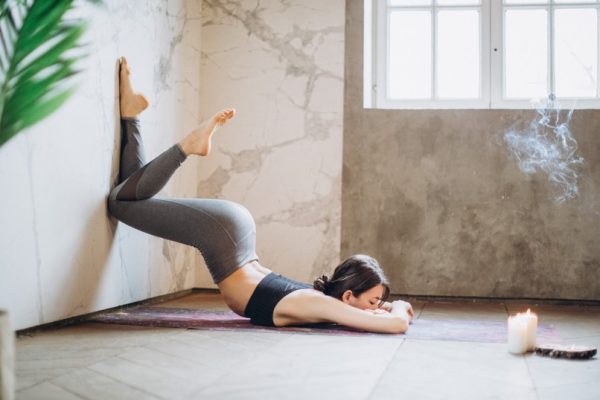
5) Legs-Up-The-Wall Pose  (Viparita Karani)

Resting legs up the wall pose for stress reduction. The pose is traditionally thought to slow the aging process.  It helps renew blood and lymph drainage back into the heart area.

6) Cat Pose (Marjaryasana)

The cat pose soothes and stretches the lower back, relieving stress while gently massaging the spine. Try arching and rounding the back 10 times in a row while focusing on deep inhaling and exhaling.

7) Shavasana (corpse pose)

Corpse pose may look like a nap, but it actually allows you to quiet your thoughts and feel your body melting into the floor. You will learn to control your emotions and mind will focus on your body and on your good thoughts (third eye). In this pose all the tensions and negative thoughts will melt away.

Image credit: Photo by Elly Fairytale from Pexels (Free for commercial use)


Author: Sumana Rao | Posted on: November 14, 2017
« »
« »

Recommended for you

Natural Remedies for Sinus Problems

Natural Home Remedies for Cold, Congestion and Sinus Problems

The fall, winter and cold seasons are in front of us. Change in weather acts on our body various ways.  People generally suffer from cold, cough, congestion and eventually sinus infections because of the exposure of body to cold conditions. How to reduce these conditions natural way – Let us see…

When your nasal passages become infected, that is a sinus infection. In addition, they’re harder to get rid of. Viruses, bacteria, or even allergies can lead to sinus infections. There are two types of sinus infections: acute and chronic.  Acute sinusitis can last for up to four weeks while chronic sinusitis can last for more than three months, and even persist for years. The most common triggers for sinus infection are the common cold, allergic rhinitis (hay fever), nasal polyps, dust and pollen allergies. Typical signs and symptoms of sinusitis include; facial pressure and pain, nasal discharge and/or stuffiness, cough, headache, and loss of taste and smell. Many herbs and spices are worthy natural remedies for sinus infection and cold.  Some sinus, cold and congestion natural remedies are listed below:

Turmeric: Turmeric contains a potent anti-inflammatory substance called curcumin. Curcumin does not just reduce the swelling and symptoms of your sinusitis quite quickly, it also gives your immune system a powerful and welcome boost. You can make turmeric smoothie or mix turmeric powder in warm milk -boil and drink with little sugar.

Turmeric Milk: Add Turmeric powder – 1/4 tsp , Pepper powder – 1/8 tsp, Honey -1 tsp or palm jaggery to water and boil.  When it starts to boil, stir in a cup of milk and boil it. Remove from heat, add a tsp of honey and drink it a little hot. It can be had 2 times a day until you get relief.

Garlic: Garlic is still one of nature’s best antibiotics and as a home remedy for sinus infection, it works a real treat. Garlic contains allicin, a substance that is anti-viral, anti-bacterial and anti-fungal in nature. Therefore, whatever infections you have going on in  nasal cavities, garlic will clear them up quickly. Just make sure you eat fresh garlic (2-3 bulbs) by either cutting them up and taking with water or crushing them up and adding to your smoothie. Use garlic in soups and daily in the cooking as much as you can.

Soak 3-4 garlic cloves in water for 20 minutes and make paste by crushing the cloves. Inhale the vapors from the garlic paste to get relief from sinuses.

Camphor, garlic, eucalyptus oil: Add crushed garlic cloves to one-ounce eucalyptus oil and add one camphor. Leave it for half an hour and filter the oil to clean bottle. Take a drop of this oil in hand and inhale the oil. This helps to clear the sinuses.

Oregano oil:  Even though little expensive oregano oil is excellent to get rid of sinuses condition. It works better than any other treatments.

There are two ways to use this oil.  Place a drop or two of the oil under the tongue; do not worry about the taste. Do this 2-3 times daily. The second way is to use it as a vapor relief. Put few drops of oregano oil to  steaming water pot. Drape a towel over your head and lean over the pot, breathing in the vapors through your nose and repeat this few times to get relief.

Cinnamon: Cinnamon has been in use for many conditions from centuries and particularly to treat respiratory problems such as nasal congestion and sore throat. Cinnamon is also terrific for breaking up and removing mucous from the sinuses. Mix ½-1 teaspoon of cinnamon with 1 teaspoon of honey in a glass of warm water or add it to your smoothie.

Onions and Horseradish: Both of these are very good home remedies for sinus infection. They are both high in sulphur and contain strong antibiotic, antihistamine and anti-inflammatory properties. Be sure to use them in your cooking, especially soups, as much as you can. Also try chopping up a couple of small slices of onion and gently place them up your nostrils. Start breathing deeply and your nose will be clear in a few minutes.

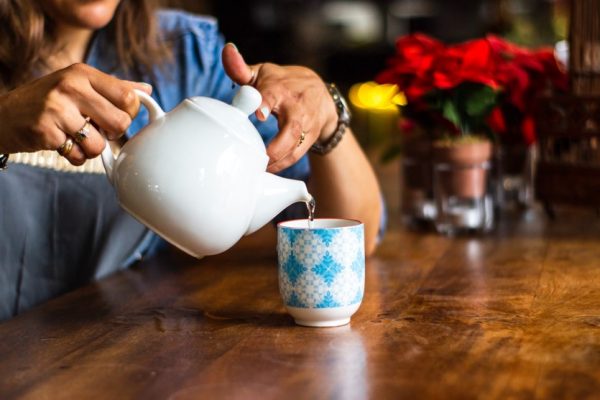
Ginger: Another great folk home remedy for colds and flu and sinus problems. Ginger is anti-mucous and anti-inflammatory in nature and boosts the immune system quite powerfully. Use it in your cooking and make yourself a nice hot lemon and ginger tea for extra benefit and relief from your sinusitis.

Steam the room: Add a vaporizer in the room. It helps to add the required moisture to the nasal tract  which reduces the breathing difficulty associated with chest congestion. 

Khashayam: Take whole black pepper – 1 tsp,  cumin seeds – 1 tsp and Holy basil leaves (tulsi)- 4-5. Dry roast cumin and pepper on medium heat until it splutters. Add a cup of water and tulsi leaves. Let it boil on medium heat until it reduces to half. Drink it hot 2 times a day until symptom subsides.

Rasam: Prepare hot rasam. Have like soup or with hot rice. It helps to reduce cold nd congestion. Best is Garlic rasam or lemon rasam . To little ghee or oil add 1tsp crushed pepper, 1 tsp.cumin seeds, 1 inch grated ginger, asafoetida and few mustard seeds. Add crushed 4-5 garlic cloves. Allow it to cool and to this slowly add water followed by turmeric and salt. Boil and turn off the heat. Add lemon juice and drink.

References:

Image courtesy: Photo by Louis Hansel @shotsoflouis on Unsplash


Author: Sumana Rao | Posted on:
« »
« »

Recommended for you

Namaste or Anjali Mudraa

Namaste and Anjali Mudra

Namaste is a sacred gesture often used by Hindus, Buddhists, Sikhs, and other religions. It is a day-to-day greeting gesture of India, Nepal, Sri Lanka, Bhutan and many other countries. Namaste is also revered within meditation and yoga classes, and it is being embraced far beyond its South Asian origins.

Unfortunately, this posture of prayer is often done without conscious thought or mind-fullness. People often use this gesture without knowing the meaning of it.

Namaste or Namaskara means:
• The divine light in me acknowledges the divine light in you.
• I bow to the God in you while respecting my God.
• I honor the spirit in you and the spirit in me.
• The divine wisdom in me recognizes and acknowledges the divine wisdom in you.

Namaskar is translated from ‘namoh’ and ‘sanskar’ translating loosely into English as “I bow to godly/good qualities within you,’ .

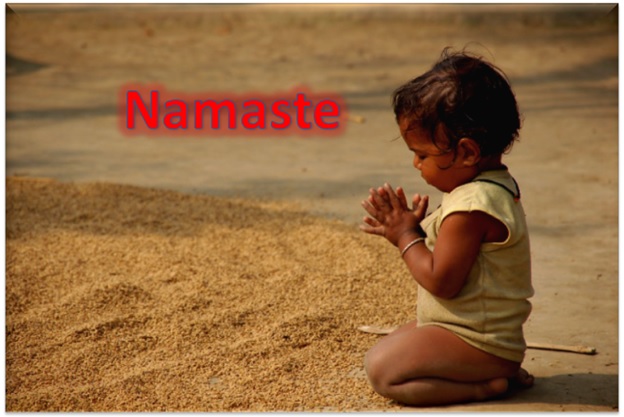
Both Namaste and Anjali mudra are performed by pressing the palms of the hands. When we say Namaste or Namaskara -it is usually performed during greeting the other person or during pranam by pressing palms on heart chakra and bowing head. Namaste honors the light, goodness, or divine of the other person. Namaste is not the same as saying “hello”. This gesture is used in India and Nepal for both greetings and farewells while carrying a deeper and more significance than a simple hello or goodbye. The joining of the two palms can also be taken as the coming together of the right and left hemispheres of the brain representing the unification.

Mudra means seal or sign. The translation or the meaning of the phrase “Anjali Mudra” is “salutation seal” or a “greeting seal”. The word Anjali means a gesture of reverence, benediction, and salutation.

Anjali mudra honors the Sat (sa-The) Guru which would be the inner teacher – that light or divine within. Anjali Mudra most openly translates for the uninitiated into a simple symbol for reverence, benediction or celebration. However, it is secretly a request or declaration for the opening of the seal of self or heart. Anjali mudra is performed by pressing the palms of the hands together. The fingers are together with fingertips pointing up. The hands are pressed together firmly and evenly. In the most common form of anjali mudra, the hands are held at the heart chakra with thumbs resting lightly against the sternum. Anjali mudra is also known as Namaste mudra or Prayer mudra.

Krishnamacharya defines Anjali mudra as: This gesture signifies the potential for an intention to progress to greatest spiritual awakening. When done properly the palms are not flat against each other; the knuckles at the base of the fingers are bent a little, creating space between the palms and fingers of the two hands resembling a flower yet to open, symbolizing the opening of our hearts.

The benefit of practicing Anjali Mudra: It is an excellent way to induce a meditative state of awareness. Use Anjali mudra to start your meditation. One can use Anjali mudra in different way during other yoga postures to connect body and soul during yoga practice. Not only during the opening and closing of the class but it can also be applied to some other postures. Some of the yoga postures where one can use this mudra are: anjaneyasana (lunge) – with arms overhead, hanumanasana (monkey pose), malasana (garland pose), matsyasana (fish pose), prasarita padottanasana (wide-legged forward bend) -, tadasana/samasthiti (mountain pose) , Urdhva Hastasana (upward salute/extended mountain pose), virabhadrasana I (warrior I), vrksasana (tree pose).

In fact, Hindu God Hanuman’s statues are mostly exhibits God in Anjali mudra. Lord Hanuman himself is a devotee of Lord Sri Ram. One can see in Hindu temples Hanuman’s statues with palms together, closed eyes in a prayer pose with humbleness, dedication and bhakti. By doing namaskara we respect not only others but ourselves too.

Namaste:

  • With all the power of my arms,
  • With all the intelligence of my mind,
  • With all the love of my heart,
  • I honor and respect
  • The soul, spirit, beauty, light, power – within me.
  • Namaste

Image courtesy: http://itsallabouti.info/


Author: Sumana Rao | Posted on: November 13, 2017
« »
« »

Recommended for you

Do you wear hair bands

Are you wearing hair bands?

Sometimes we see hair entangling in hair bands and hair loss. This is because women put a lot of stress on their hair. Stress of tying the hair using hair bands or similar such accessories causes  strain and eventually damages the hair. Ponytails, parting hair or updos all cause some sort of stress to hair root and results in hair loss over time.

Here are some suggestions how to take care of hair when one use hair bands.

  • Never pull your hair too tightly back from your face: Over time this will put a strain on the finer hair around the front hairline and make it go thinner and become weak.
  • When you use a hair band/elastic, don’t wrap it around the hair so tightly: A good hair band will keep your hair in place without pulling.
  • Pulling hair band out of hair: The wrong band will snag hair and pull any damaged strands out with it. Choose a hair band that has no metal fasteners, is made of silicone, or is made of a no snag material.
  • Do not use accessories that are not meant for hair tying: Often people use items like regular rubber bands that aren’t meant for hair, causing breakage. Also, pulling the hair back too tightly can put too much tension on the hair, ultimately causing traction alopecia which could result in permanent hair loss.
  • Do not tie the a bun or top knot when hair is wet using hair band and do not tie wet hair when you go to sleep. Allow the hair to follow naturally on the pillow or bed.
  • Allow your hair to rest and play up your natural texture: Hair rest means includes avoiding pulling your hair up with tight elastics and holders. Wearing your ponytail in the same place can cause hair strands to weaken. It is the same type of damage you often associate with daily hot tool use.

How to avoid headaches associated with hair bands?

Most of the time, discomfort is caused by the headband fitting too snugly on the head. Headbands are meant to be fashionable and comfortable accessories that make our lives easier when it comes to styling our hair. The reason many women find headbands uncomfortable is that these hair accessories usually put pressure on sensitive spots right behind the ears, sometimes even leading to headaches . Wearing a too tight headband or ponytail can cause headaches that can radiant to your neck or shoulders. The tightness of your headband can put strain on your muscles and skin under your scalp, causing pain. If you wear headbands all the time, usually your head becomes used to this external pressure, but if you only wear headbands for special occasions, your scalp may be unfamiliar with the bands which further leads to discomfort.  Few suggestions to avoid headache associated with hair bands wearing…

  • The type of fabric you choose for a headband does have an effect. Wear silk or elastic headband. Hard, plastic headbands will be harder on your scalp than a scarf or turban style head piece. It is still a really practical way to keep your hair in place, without discomfort. In addition, there are so many different styles and patterns that you will never run out of options.
  • If plastic headband bother you too much, opt for a stretchy band that still holds your hair in place, but doesn’t put as much pressure right behind your ears. After time, these elastic headbands will stretch, giving you a looser fit.
  • Similarly, adding cushion will help to avoid headache. Cushion means, try putting some cotton or fabric on the ends to create space between your head and the hair band. It may not look pretty, but if you wear your hair down, no one will even be able to notice. This will soften the impact the headband has on your head, reducing the pain.
  • Do not wear hair bands for more than 8 hours. Even if you do not get headaches from wearing headbands, you should still only wear them for 8 hours. Putting pressure on your head for too long will ultimately cause a headache. Remove hair band while working (if it is allowed) and also before going to bed.
  • If you workout and sweat a lot, after work out leave the hair loose, do not tie with band. Tying sweat, wet hair causes headache.

Image courtesy: Photo by Rodion Kutsaev on Unsplash
References:

  1. https://www.aad.org
  2. http://www.huffingtonpost.com/
  3. http://stylecaster.com/

Author: Sumana Rao | Posted on:
« »
« »

Recommended for you

Early signs of Alzheimer’s disease

Early signs of Alzheimer’s disease

President Ronald Reagan designated November as National Alzheimer’s Disease Awareness Month in 1983. Alzheimer is memory loss that disturbs and disrupts daily life.

Person who suffers from Alzheimer disease will face a slow decline in memory.

The ten early signs and symptoms of Alzheimer’s are follows.

This checklist can help both patient and family to understand what is going on with the person and while discussing with doctor.

  1. Memory loss that disrupts day to day life: One of the most common signs of this disease is forgetting recently learned information. Person will forget dates, events and will ask for the information over and over. Will seek help of memory aids and family members for tasks that they used to do on their own.
  2. Planning and solving problems challenge: Ability to develop or plan on task and work with number becomes difficult. Will forget monthly bill numbers and concentration reduces. Making mistakes becomes often.
  3. Challenge with familiar tasks: Forgetting daily tasks, trouble driving to familiar location, managing budget or remembering familiar rules. Occasionally needing help to use the settings on a microwave or to record a television show.
  4. Confusion with time or place: Losing track of dates, season and passage of time. Trouble in understanding why things are not happening immediately. Sometimes might forget where they are.
  5. Vision related problems: For some patients, difficulty in reading, judging distance and color determination or contrast can be painful. Trouble understanding visual images and spatial relationships is also a sign of Alzheimer’s disease.
  6. Problems in communication: Person may stop in the middle of the conversation as they have no idea what is the conversation about and may repeat themselves. Vocabulary problem – finding right words or calling wrong names, addressing wrong person can happen.
  7. Misplacing things and forgetting: Keeping things in places where they cannot remember and finding it difficult to digest that they have forgotten is a symptom too.
  8. Poor or decreased judgment: Understanding situation, what is going on and who people are or dealing with money can be difficult.
  9. Withdrawal from social activities: No interest in hobbies, social activities as they find it difficult to remember things around them. They may not want to take work projects and not participating in sports or events.
  10. Change in mood and personality: Confused, suspicious, fearful, depressed, anxious and not believing in people are changes one can see. They will get upset if they are in places where it does not give them familiarity and comfort. They may start approaching things in a different way and can be irritable when things get disrupted.

All these symptoms usually develop slowly and get worse over time, becoming severe enough to interfere with daily tasks. What we need to keep in mind is; Alzheimer’s is not a normal part of aging.

The risk factor is of course the age – 65 and older people suffer more with Alzheimer’s.

However, it is not just restricted to old age. Do you know? The fact is, approximately 200,000 Americans under the age of 65 have younger-onset Alzheimer’s disease and it is called early-onset Alzheimer’s.

If you or a loved one has been diagnosed with Alzheimer’s or a related dementia, you are not alone. There are sources that can help to assist you and your family with Alzheimer’s. Contact your doctor and find out how to get help.

Visit:

Image credit: Image by Gerd Altmann from Pixabay (Free for commercial use)


Author: Sumana Rao | Posted on: November 2, 2017
« »
« »

Recommended for you