Whether it is old or new, your home could be harboring unhealthy (and invisible) toxins. These chemical compounds are present in emissions from paint, plastics, carpet, cleaning solutions, and numerous building materials. During the late 1980’s, NASA began studying houseplants as a means of providing purer and cleaner air for space stations. What they learned is that there are different indoor houseplants that can help to purify the air. The plants filter out certain harmful compounds in the air and make it much healthier to breathe. The good news is that these plants can be easily found and you can add them to your home to provide yourself and your family with air that is much purer and free from harmful agents.
Three major offenders found in the home include:
Formaldehyde: in carpets, upholstery, glues, paint, and more
Benzene: in plastics, synthetic fibers, lubricants, rubber, pesticides etc.
Trichloroethylene: in paint removers, rug cleaning solution, adhesives etc .
Plants can be good friends, companions and taking care of plants can be soothing!
Image: www.healthylife.werindia.org
Aloe (Aloe vera)
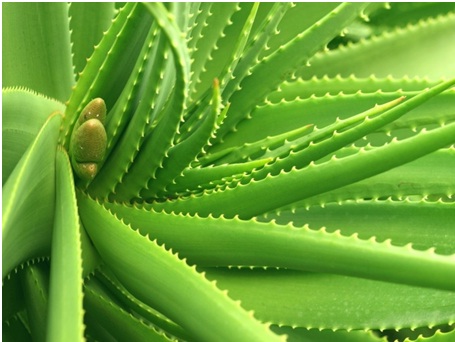
This easy-to-grow, sun-loving succulent helps clear formaldehyde and benzene, which can be a byproduct of chemical-based cleaners, paints and more. Aloe is a smart choice for a sunny kitchen window. Beyond its air-clearing abilities, the gel inside an aloe plant can help heal cuts and burns.
Image: http://www.noiseys.com
Dracaena species
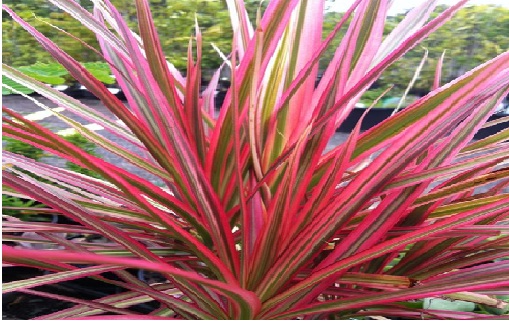
This large group of houseplants offers selections in all shapes, sizes, and colors. The tall corn plant (D. fragrans ‘Massangeana’) looks at home in a corner, while the colorful striped leaves of ‘Lemon Lime’ (D. deremensis ‘Lemon Lime’) and the day-glow ‘Limelight’ (D. deremensis ‘Limelight’) brighten up a dark spot. These selections flourish in low light, while the Madagascar Dragon Tree (D. marginata) prefers bright light.
Care: There is a dracaena for every light situation. Keep the soil damp but not soggy. A pot sitting in a water-filled saucer is the kiss of death for this plant. Feed monthly during spring and summer with an all-purpose liquid fertilizer.
Image: https://s-media-cache ak0.pinimg.com/
Peace lily (Spathiphyllum sp.)
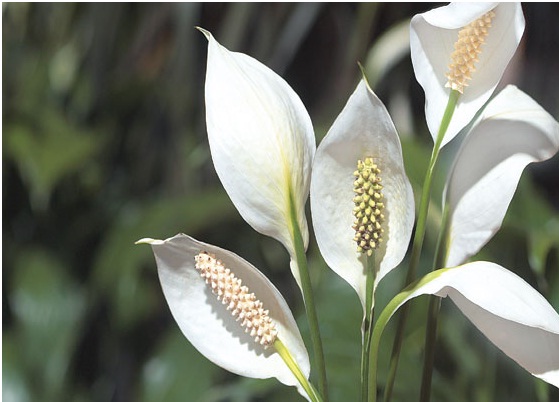
Shade and weekly watering are all the peace lily needs to survive and produce blooms. It topped NASA’s list for removing all three of most common VOCs — formaldehyde, benzene and trichloroethylene. It can also combat toluene and xylene.
Image: http://gardenclub.homedepot.com/
Golden pothos (Scindapsus aures)
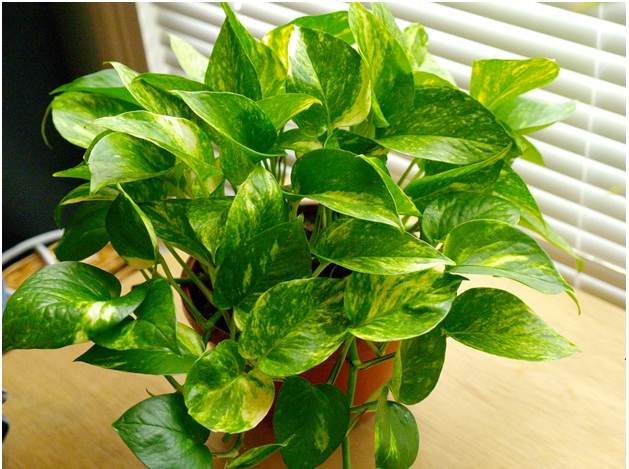
Another powerful plant for tackling formaldehyde, this fast-growing vine will create a cascade of green from a hanging basket. Consider it for your garage since car exhaust is filled with formaldehyde. (Bonus: Golden pothos, also known as devil’s ivy, stays green even when kept in the dark.)
Care: Golden pothos grows in any light situation except direct sunlight. Water it when the soil becomes dry to the touch. Feed monthly with an all-purpose liquid plant food and trim long tendrils when the plant becomes too large.
Image: https://c1.staticflickr.com/
English ivy (Hedera helix)
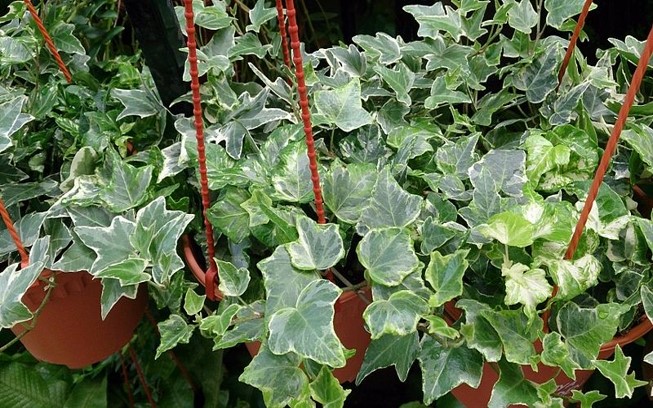
A study found that this plant reduces airborne fecal-matter particles. It has also been shown to filter out formaldehyde found in some household cleaning products. English Ivy is recommended for removing allergens such as mold and animal feces.
Care: Green-leaved varieties will grow in bright indirect light and low-light situations. Pale, variegated forms need bright, indirect light to thrive. Water generously during growth and keep compost moist but not waterlogged through the winter months. Apply a balanced liquid fertilizer monthly during growth.
Image: http://myindoorhouseplants.com/
Spider Plant (Chlorophytum comosum)
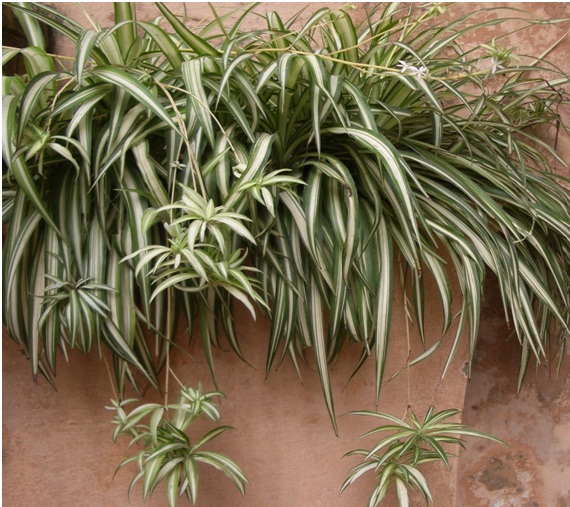
The spider plant is a commonly found houseplant and is one that is really easy to grow. Within just two days, this plant can remove up to 90 percent of the toxins in your indoor air. The leaves grow quickly and help to absorb harmful substances like mold and other allergens so it is the perfect plant for those who have common dust allergies. It also helps to absorb small traces of formaldehyde and carbon monoxide.
Image: https://oxygenforthesoul.files.wordpress.com/2010/07/spiderplant.jpg
Asparagus species
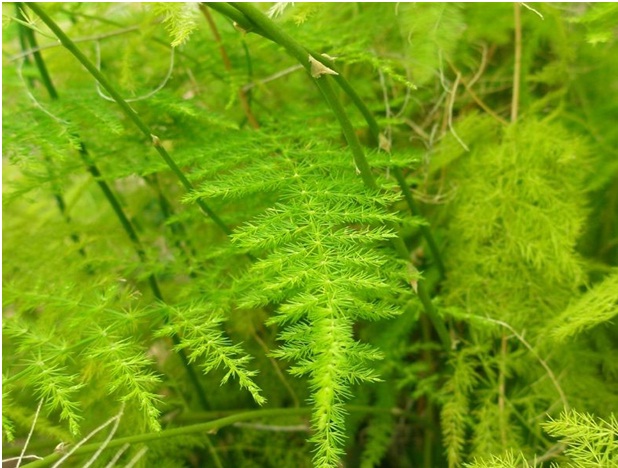
The asparagus fern plant (Asparagus aethiopicus syn. Asparagus densiflorus) is normally found in a hanging basket, decorating the deck or patio in summer and helping to clean indoor air in winter. The asparagus fern plant is not really a fern at all, but a member of the Liliaceae family. When growing asparagus ferns outside, place them in a part sun to shady location for best foliage growth. While the asparagus fern plant may sometimes flower, the tiny white flowers are small and not necessary for the beauty of growing asparagus fern. Asparagus too can remove several chemical particles floating in the air.
Image: http://www.gardeningknowhow.com
Chinese evergreen (Aglaonema Crispum ‘Deborah’)
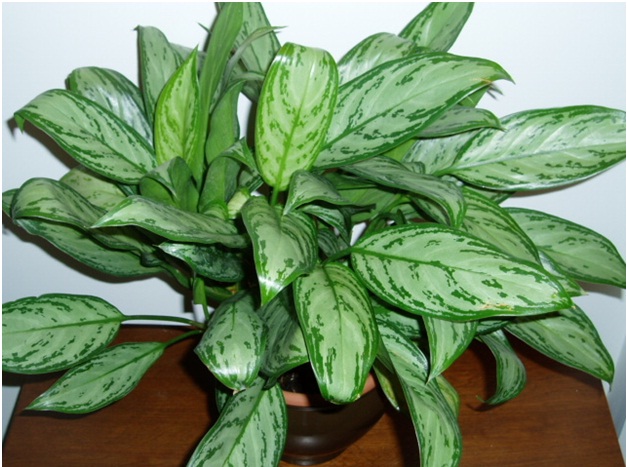
This easy-to-care-for plant can help filter out a variety of air pollutants and begins to remove more toxins as time and exposure continues. Even with low light, it will produce blooms and red berries.
Care: Grow in well-drained potting soil in filtered light and provide high humidity by placing plants above trays of water or by regularly misting with water. Water moderately and allow compost to almost dry out before watering. During the growing season, provide a balanced liquid fertilizer. Repot every two to three years.
Image: http://myindoorhouseplants.com/wp-content/uploads/2010/10/Chinese-evergreen-picture.jpg
Bamboo palm (Chamaedorea sefritzii)
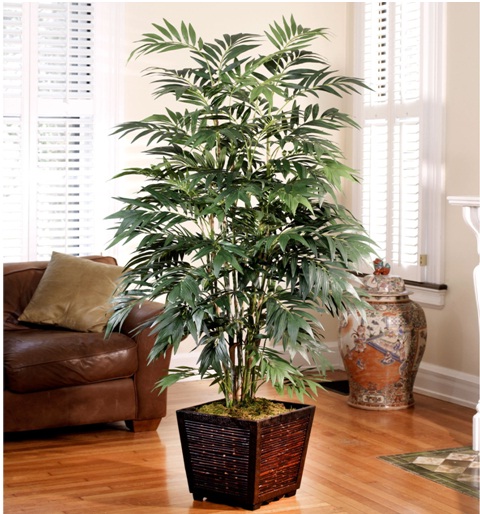
Also known as, the reed palm, this small palm thrives in shady indoor spaces and often produces flowers and small berries. It tops the list of plants best for filtering out both benzene and trichloroethylene. They are also a good choice for placing around furniture that could be off-gassing formaldehyde.
Care: Although this palm requires bright light to flourish, do not place it in direct sunlight. Keep the soil moist and feed your plant monthly during summer with an all-purpose liquid fertilizer. Placing the plant where air circulates freely and occasional misting both help deter spider mites.
Image: http://www.silkflowers.com/files/imagesSF/product/750/trc117-06_zoom.jpg
Rubber Plant (Ficus elastica)
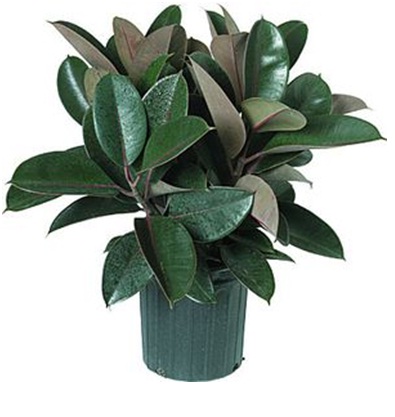
Rubber plants are evergreen trees from India. Tropical in appearance, they make handsome container specimens. Leaves are typically broad, deep green and shiny. However, some varieties exhibit cream variegated and purple tinged foliage. Roots are produced ‘aerially,’ which oftentimes entwine around the trunk forming interesting entangled shapes and buttressing. Tests have shown that rubber plants are especially efficient at removing formaldehyde from the air.
Care: Grow in full or bright, filtered light. When in growth, water moderately and apply a high nitrogen fertilizer monthly. Keep the compost moist in winter. Some pruning may be necessary to reduce plant size. Retain leaf shine by wiping with a damp cloth periodically.
Image: http://www.angelplants.com/_ccLib/image/plants/DETA-102.jpg
Boston Fern (Nephrolepis exaltata)
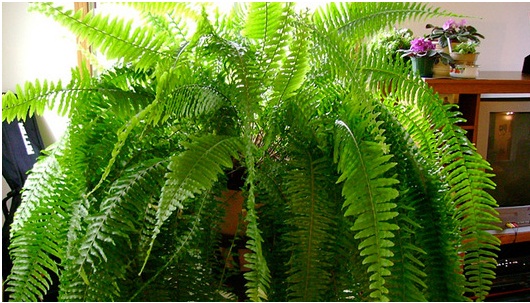
Boston ferns remove more formaldehyde than any other plant. They are also highly efficient at removing other indoor air pollutants, such as benzene and xylene.
Care: The downside is that they can be finicky. You need to feed them weekly in seasons when they are growing, monthly during the winter, and they like to be watered regularly. Depending on the humidity and moisture levels in your home, you may need to water them or mist their leaves daily.
Image: http://bomets.com/wp-content/uploads/2015/02/fern530.jpg
Maidenhair fern (Adiantum sp.)
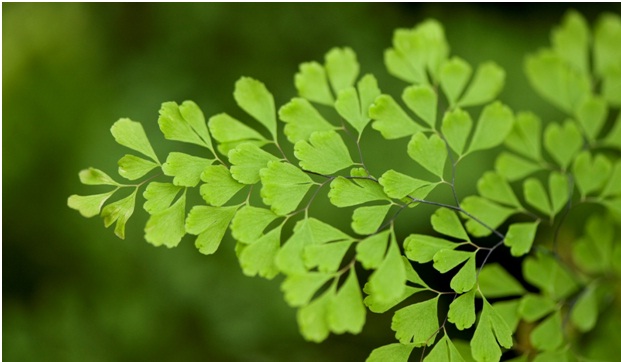
Maidenhair fern requires high humidity, no heat, no drafts, and bright light. Never let it dry out, but do not keep it wet either. Place the plant atop a pebble-filled saucer, water from the top, and empty the saucer once the plant has drained. Similar to Boston fern these ferns can remove benzene, xylene particles from the indoor.
Image: http://23.253.106.247/plant-talk/wp-content/uploads/2012/02/Maidenhair-fern.jpg
Flowering Air Purifiers
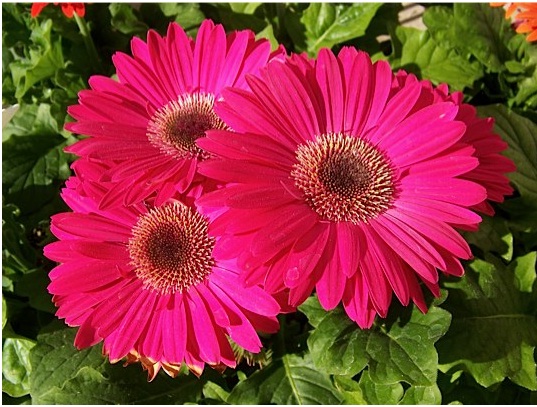
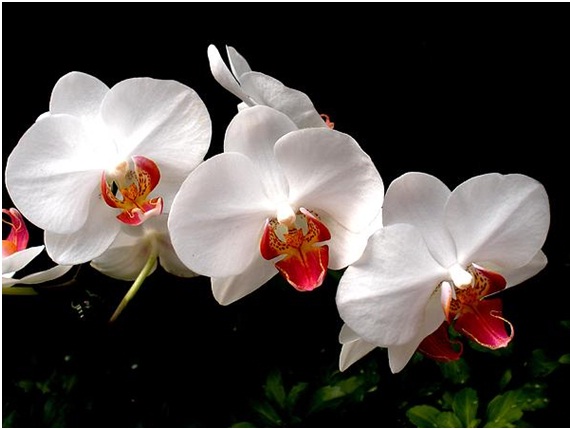
Nothing is better at beating the winter blues—dirty air, and lackluster décor—than a flowering houseplant. Florist’s chrysanthemum and Gerbera daisies are the best at removing formaldehyde, with tulips not far behind. Orchids also are very good indoor plants.
Care: Flowering plants require more careful watering and feeding, and most prefer cool temperatures (below 65 degrees). In addition, unless you are a good indoor gardener, you have to toss the plants after the flowers die.
Image: http://www.arboretum.wsu.edu/garden_blog_files/Pink%20Gerbera%20Daisies.jpg